
In contemporary industrial output, промышленные водоохладители represent indispensable cooling machinery-very much in use across the electronic, chemical, food, and beverage sectors, among others. However, high-performance industrial coolers may also face a myriad of challenges during daily usage. Apart from lowering the general efficiency of production, these issues can result in damage to the equipment as well as raise its maintenance costs. In line with this article, three common problems will be discussed together with effective preventative measures that can help you maintain your equipment running on a stable note.
I. Coolant Leakage: Affecting Cooling Efficiency and Equipment Safety
1. Problem Description
Coolant leakage is one of the most common problems in industrial chillers. Leaks not only waste coolant but also reduce the efficiency of the cooling system and may even cause corrosion and damage to equipment. In some extreme cases, coolant leakage can also lead to safety accidents, especially in environments involving electrical equipment.
2. Cause Analysis
Coolant leakage is usually caused by the following reasons:
- Corrosion of pipes and joints: After long-term use, chemicals in the coolant may corrode pipes and joints, leading to leakage.
- Seal Aging: Seals gradually age and lose their sealing performance during long-term operation.
- Improper Installation: Loose pipe connections or inadequate sealing measures during equipment installation can also lead to leaks.
3. Preventive Measures
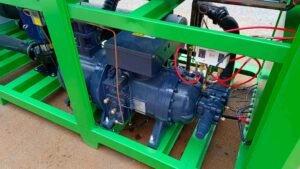
Regular Inspection and Maintenance: Regularly inspect the cooling system, especially pipes, joints, and seals, to promptly identify and repair potential leaks.
- Use High-Quality Materials: Select corrosion-resistant pipe and joint materials to extend the equipment’s service life.
- Professional Installation and Commissioning: Ensure the equipment is installed and commissioned by qualified professionals to avoid problems caused by improper installation.
II. Poor Cooling Effect: Affecting Production Efficiency and Product Quality
1. Problem Description
Poor cooling effect is one of the common problems in the operation of industrial chillers, which can lead to decreased production efficiency and even affect product quality. In industries with strict temperature control requirements, such as electronics manufacturing and food processing, a poor cooling effect can lead to serious production accidents.
2. Cause Analysis
Poor cooling effect is usually caused by the following reasons:
- Insufficient Coolant Flow: Insufficient coolant flow will prevent heat from being carried away in time, thus reducing the cooling effect.
- High Coolant Temperature: If the coolant temperature is too high, its cooling capacity will significantly decrease.
- Cooling System Blockage: Blockage in the filters or pipes of the cooling system will affect the flow of coolant and reduce cooling efficiency.
3. Preventive Measures
Adjust the speed of the cooling pump or replace it with a suitable pump to ensure sufficient coolant flow. Check and adjust the coolant temperature regularly to ensure that it is within the appropriate range. Clean filters and pipes regularly to prevent blockage, so as to keep the cooling system unobstructed.
III. Frequent Start-up and Shutdown: Increased Energy Consumption and Equipment Wear
1. Problem Description
Frequent start-up and shutdown of industrial chillers not only increases energy consumption but also accelerates equipment wear. This phenomenon is particularly common in production environments sensitive to temperature fluctuations.
2. Cause Analysis
The reasons for frequent start-up and shutdown are usually as follows: Temperature sensor failure. If the temperature sensors are not accurate or become faulty, this information will be misjudged by the control system and resulting in frequent start-up and shutdown. Improper setting of the control system. If the temperature setpoint of the control system is not properly set, it may lead to frequent equipment start-up and shut-down. Variation in cooling load. Sudden change of cooling load during production may lead to frequent equipment start-up and shutdown.
3. Preventive Measures
- Regular Temperature Sensor Calibration: Regularly check and calibrate temperature sensors to ensure their accuracy.
- Optimize Control System Settings: Set the temperature parameters of the control system reasonably according to actual production needs.
- Stable Cooling Load: Reduce sudden changes in cooling load by optimizing the production process.
Ⅳ. Заключение
Industrial chillers play an indispensable role in modern industrial production. However, the stable operation of the equipment depends on effective maintenance and management. By focusing on three common problems—coolant leakage, poor cooling effect, and frequent starts and stops—and taking corresponding preventive measures, the operating efficiency and service life of the equipment can be significantly improved.
Furthermore, regular industrial chiller maintenance and professional обслуживание промышленных чиллеров are also key to ensuring long-term stable operation of the equipment. Only through scientific management and maintenance can the performance of industrial chillers be fully utilized, creating greater economic benefits for enterprises.


 Russian
  English
  Spanish
  Portuguese
  French
  Arabic
  Japanese
  German