
In industrial production, chillers are critical equipment ensuring the stable operation of machinery. Choosing the right industrial chiller manufacturer is paramount. This article outlines 7 key questions to help you make an informed decision among numerous manufacturers.
I. Quality and Reliability: Core Competitive Edge
Quality is the lifeline of industrial chillers, while reliability ensures their long-term stable operation. Leading manufacturers invest heavily in quality control to guarantee consistent performance across harsh environments. When evaluating manufacturers, consider whether their quality management systems hold international certifications (e.g., ISO 9001), along with customer reviews and industry reputation.
1. Component Selection
 Good parts make up the base for a chiller’s long life. Top makers often pick parts from well-known brands that have been tested, such as compressors, evaporators as well and condensers. These offer great work not only now but for a long time too. Also, makers test them with strict checks to ensure they work well together after being put in place. By using top-quality parts, breakdown rates are also lessened, and service needs are reduced; this boosts trust and increases the service period.
2. Production Processes and Technological Innovation
High-level production and constant technological upgrades are major factors that lead to better quality chillers. Top producers not only pay attention to standard production but also keep investing in the research and development of new technologies and materials. Improved welding methods and machine lines guarantee exactness in making as well as steady quality. At the same time, manufacturers come up with new refrigerants and cooling systems to boost both the cooling efficiency and environmental friendliness of the chiller. Through continuous technological innovation, more efficient energy-saving, environmentally friendly chillers reach the market, satisfying its need for high-end industrial solutions.
II. Energy Efficiency: The Green Pursuit
The energy efficiency of industrial water chiller manufacturers is another major rating. The more efficient a chiller is, the lower its energy consumption and operating expenses, which also falls within the concept of sustainable development. In this regard, focus on manufacturers whose chillers have high ratings for energy efficiency and advanced technologies in energy-saving applications that include variable frequency drive systems and intelligent control systems wherein the operating frequencies are automatically adjusted according to real load conditions to optimize refrigeration cycles and increase energy utilization efficiency. The high-efficiency chillers may require a relatively huge initial investment, but will save a lot of energy in the long run for an enterprise, hence providing economic benefits due to reduced operational costs.
1. Application of Energy-Saving Technologies
To enhance energy efficiency, manufacturers typically employ a range of advanced energy-saving technologies. Intelligent control systems continuously monitor chiller operation and automatically adjust cooling capacity based on actual demand, preventing unnecessary energy waste. Additionally, high-efficiency heat exchangers and optimized refrigeration cycles maximize energy efficiency while maintaining cooling performance. By integrating these technologies, manufacturers deliver more environmentally friendly and energy-efficient chillers that meet market demand for green industrial equipment.
2. Long-Term Cost-Benefit Analysis
High-energy industrial chiller systems may somewhat raise the initial purchase cost when compared with standard models. In the long run, however, energy savings turned into economics will make enterprises highly profitable. Within its lifetime (usually 10-15 years), these industrial chillers save a major portion of the electricity bill. Firms should carry out an exercise of comparing both the initial investment and long-run operational expenses to achieve dual benefits in economic performance as well as environmental sustainability by prioritizing energy-efficient chillers.
III. Customized Services: Meeting Individualized Needs
Different industrial production scenarios have different requirements for chillers, including cooling capacity, temperature control precision, and installation methods. Leading manufacturers should provide customized services to meet these specific needs. This includes designing and manufacturing chillers tailored to each client’s requirements.
Customization is not just about product design and manufacturing. It also covers installation commissioning, operational training, and after-sales support. Manufacturers should design the chillers to fit the customer’s available installation space. They should also provide professional training to ensure proper operation and prevent equipment failures. Additionally, personalized after-sales service plans, such as regular maintenance and remote monitoring, should be offered based on customer needs.
By doing so, customized chillers can better match production processes. This improves equipment operational efficiency and reliability while reducing overall operating costs.
1. Diversity of Personalized Requirements
Different industrial production scenarios require different cooling capacities, precision in temperature control, and installation methods of Chillers. An excellent Industrial Chiller Manufacturer must have the ability to provide customized services in designing and making chillers that would best fit your specific production processes. When discussing with manufacturers, share information regarding your production scale and process flow, cooling medium, and installation space so that they can come up with the best solution for you.
2. Advantages of Customized Services
Customized chillers better meet production demands, enhance equipment efficiency and reliability, and prevent energy waste and production delays caused by mismatched equipment. Manufacturers develop specialized chillers for industry-specific needs, such as explosion-proof chillers and low-temperature chillers. These customized solutions not only satisfy stringent industry requirements but also provide enterprises with more competitive options. By selecting industrial chiller manufacturers offering customization services, enterprises ensure seamless integration with production processes. This enhances productivity, reduces operational costs, and ultimately supports sustainable business development goals.
IV. Technical Support and After-Sales Service: Continuous Assurance
Промышленные чиллеры are complex equipment and may have operational issues. So, technical support and after-sales service are very important. A good manufacturer should provide full technical support. This includes installing and starting up the equipment, training operators, diagnosing faults, and doing maintenance. When you check out manufacturers, look at how professional their technical support team is, how fast they respond, and how complete their service network is.
1. The Importance of Technical Support
As complex mechanical equipment, industrial chillers inevitably encounter various issues during operation. Therefore, the manufacturer’s technical support capabilities are paramount. A responsible industrial chiller manufacturer should provide comprehensive technical support, including equipment installation and commissioning, operational training, fault diagnosis, and maintenance. When selecting a manufacturer, you need to understand whether they have a professional technical support team, whether they can provide timely response services, and whether they possess a comprehensive after-sales service network. Good technical support ensures your chiller remains in optimal operating condition, extends equipment lifespan, and reduces the total cost of ownership.
2. Comprehensive After-Sales Service
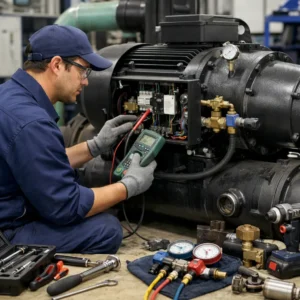
Robust after-sales service embodies a manufacturer’s commitment to customers. Leading industrial chiller manufacturers not only provide prompt repairs post-sale but also offer regular maintenance services to ensure long-term stable operation. Manufacturers continuously refine their after-sales processes based on customer feedback to enhance satisfaction. By delivering comprehensive support, manufacturers build customer trust, foster loyalty, and secure sustained business growth.
V. Product Diversity: A Reflection of Comprehensive Capabilities
As industrial production diversifies, different industries have varying demands for chillers. An outstanding manufacturer should possess a rich product portfolio, offering multiple chiller types—such as air-cooled, water-cooled, screw-type, and scroll-type—covering different cooling capacities to meet the cooling needs of enterprises of all scales. Furthermore, manufacturers should continuously pursue technological innovation and product development, creating specialized chillers for specific industry needs—such as explosion-proof or cryogenic models. This rich product diversity not only offers customers greater choice but also demonstrates the manufacturer’s technical prowess and market competitiveness, fulfilling the demands of diverse industries and clients.
1. Comprehensive Product Line
A top industrial water chiller manufacturer needs to have a wide range of products. They should offer different types of chillers, like air-cooled, water-cooled, screw-type, and scroll-type. Each type should come in different sizes to fit the cooling needs of businesses of all sizes. This way, customers have more options to choose from and can find the right chiller for their needs.
2. Technological Innovation and Product Upgrades
Manufacturers must continuously pursue technological innovation and product dynamics, and customer demands. They should develop specialized chillers for specific industry requirements, such as explosion-proof chillers and low-temperature chillers. These innovative solutions not only meet stringent industry standards but also provide enterprises with more competitive options. Additionally, manufacturers upgrade and optimize existing products based on market feedback and technological trends to enhance performance and reliability. Through innovation and product upgrades, industrial water chiller manufacturers continuously strengthen their market competitiveness and meet customer demands for high-quality chillers.
VI. Industry Experience and Reputation: Credibility Assurance
Industry experience and reputation are crucial factors when selecting an industrial water chiller manufacturer. Experienced manufacturers typically offer more mature, reliable products and solutions, demonstrating a deeper understanding of market demands and customer expectations. A strong industry reputation signifies widespread recognition for product quality, after-sales service, and corporate integrity. Evaluate manufacturers by reviewing industry reports, consulting trade associations, and engaging with peer companies to assess their experience and standing. Selecting an experienced, reputable manufacturer not only reduces collaboration risks but also opens more business opportunities, fostering long-term, stable growth.
1. The Importance of Industry Experience
When you choose an industrial chiller manufacturer, their experience and reputation are very important. A manufacturer with lots of experience in this field can use their knowledge to give you better products and solutions. They understand the market and what customers need, so they can meet your expectations. Their long experience also means they have good systems for research, quality control, and managing supplies. This helps make sure you get high-quality products on time.
2. Manifestation and Significance of Reputation
A reputable name in the trade speaks volumes about a manufacturer’s credibility; it means that many clients recognize their product quality, after-sales service, and corporate integrity. You can check industry experience and reputation by conducting a study through existing reports on the industry, through trade associations, and peer companies. Customer reviews are also standing—actually very vital too. Feedback from other clients will let you know how true their products perform and services stand up to test, thus helping make a better-informed decision.
VII. Compliance and Certification: Regulatory Safeguards
Safety and compliance are the top priorities in industrial production. Only from those manufacturers who have made sure that their units have been designed and manufactured to national and international (ISO, AHRI, ASHRAE) standards covering all aspects of safety performance, refrigeration efficiency, and environmental requirements can confidence be achieved. The manufacturer should also own the relevant certification, such as Special Equipment Manufacturing Licenses, that legally guarantee them to produce under standardization. Safe equipment operation not only eliminates legal risks but also builds up corporate image positively while gaining a competitive advantage in the market.
1. The Importance of Compliance
In industrial production, safety and compliance are paramount. Selecting an industrial chiller manufacturer that adheres to industry standards and regulations is essential. A compliant manufacturer must ensure their chillers meet relevant national and international standards like ISO, AHRI, and ASHRAE. These standards cover multiple aspects, including safety performance, refrigeration efficiency, and environmental requirements, providing robust assurance for your equipment procurement and usage. By selecting a compliant manufacturer, you can avoid legal risks and financial losses stemming from non-compliant equipment.
2. Types and Significance of Certifications
Beyond ISO certification, industrial water chiller manufacturers should hold other relevant certifications. For example, AHRI certification is important. It shows that a chiller’s refrigeration performance and energy efficiency ratio (EER) are approved by an authoritative body. Also, manufacturers need Special Equipment Manufacturing Licenses. These licenses make sure their production processes are legal and standardized. When selecting an industrial water chiller manufacturer, carefully review their certificates and qualifications. This ensures their products fit your needs and follow the law. Picking compliant and certified manufacturers keeps your equipment running safely and boosts your company’s image.
3. Long-Term Impact of Compliance and Certification
Compliant chillers ensure production safety and avoid legal risks and losses from non-compliant equipment. In the long term, choosing compliant and certified manufacturers builds trust and opens up more cooperation opportunities for enterprises. Large and multinational companies usually prefer manufacturers that meet international standards and certifications when buying industrial equipment. This is because these manufacturers’ products are recognized for their quality and safety by authoritative bodies. Compliance and certification also improve a company’s brand image and make it more competitive in the market. By choosing compliant and certified industrial chiller manufacturers, enterprises can ensure their equipment runs safely and reliably, boost their market competitiveness, and achieve sustainable development.
Ⅷ. Conclusion
Quality and reliability, energy efficiency, обслуживание промышленных чиллеров, technical support and after-sales service, product diversity, industry experience and reputation, compliance, and certifications are major factors to be considered while performing an assessment. Compare thoroughly to get the best fit for your requirements. This will lead to stable, efficient cooling solutions for your industrial production through the sustainable development of your company.


 Russian
  English
  Spanish
  Portuguese
  French
  Arabic
  Japanese
  German