
أن المبردات الصناعية usually does not fail all at once. More often, it starts sending small signals first — a slight drop in cooling, longer run times, a bit more noise than usual, maybe even a higher electric bill that seems too steady to ignore. Those details can be easy to brush off at first, but they often point to a refrigerant problem that is quietly growing.
Refrigerant is basically what keeps the whole cooling loop doing its job. When the charge is low, the system has to work harder to deliver the same result, and that extra strain shows up in different ways depending on the setup. In many facilities, the first clue is not a clear alarm, but a gradual change in behavior.
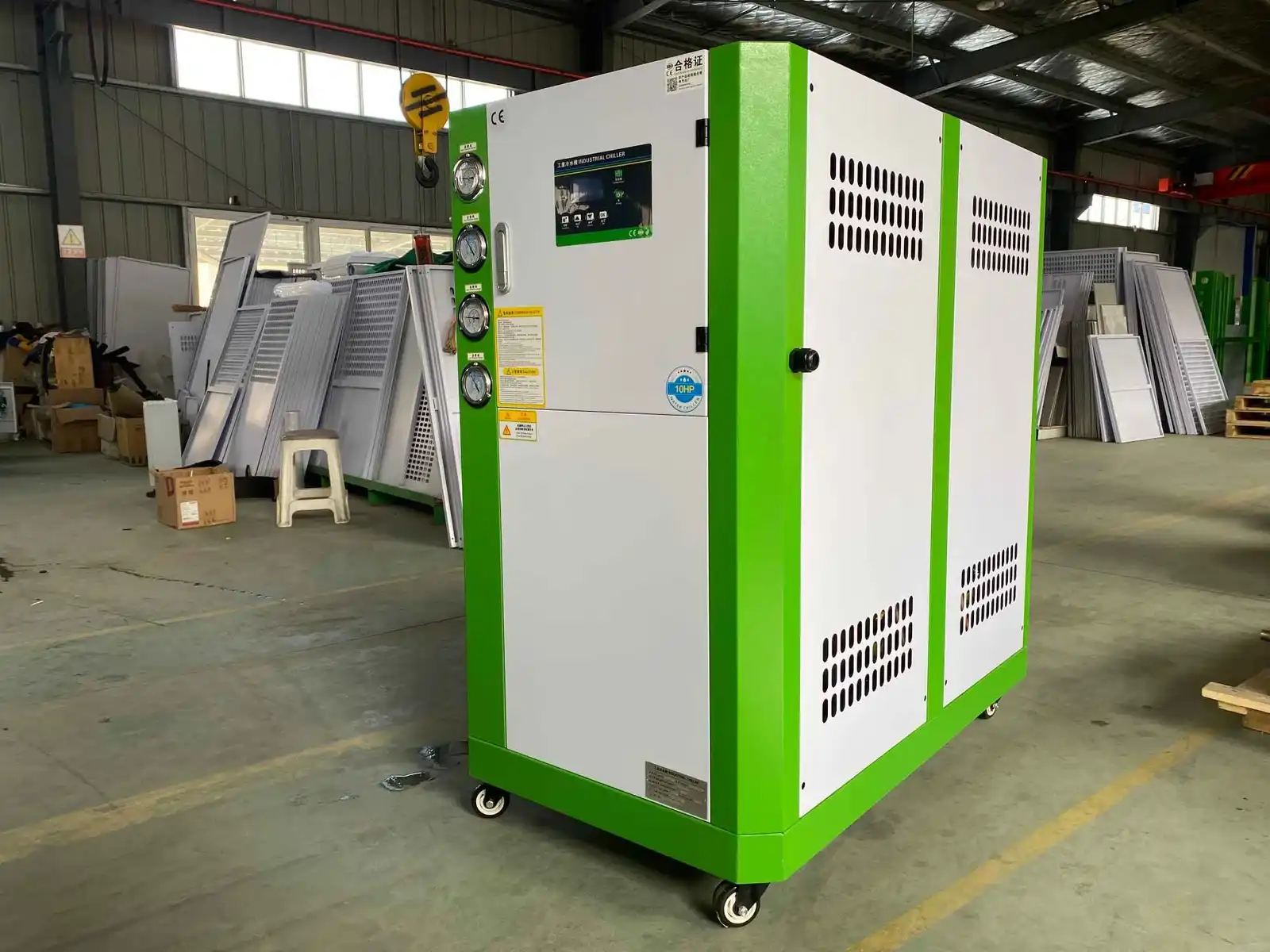
Why refrigerant issues are easy to overlook
A refrigerant shortage does not always look dramatic. The unit may still run, the compressor may still start, and the process may still stay within an acceptable range for a while. That is part of the problem. Operators sometimes adapt to a slow decline without realizing the system is drifting away from normal.
Low refrigerant can happen for a few reasons:
- Small leaks in fittings or service valves
- Vibration-related wear over time
- Loose connections after maintenance
- Previous service work that was incomplete or rushed
A refrigeration system is a little like a chain: if one part is off, the rest compensates. That compensation often creates the warning signs.
Common signs your industrial chiller may need a refrigerant recharge
1. Cooling performance feels weaker
This is often the first thing people notice. Process temperatures may begin to creep up, or the chiller may simply take longer to bring fluid back to setpoint. In some cases the difference is subtle, almost annoying rather than alarming. But that slow drift matters.
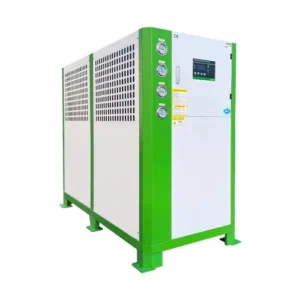
If the مبرد حلزوني مبرد بالهواء is struggling to maintain output under the same load it handled comfortably before, refrigerant loss is one possibility worth checking.
2. The system runs longer than normal
A healthy chiller reaches target conditions, shuts down, then cycles back on as needed. When refrigerant is low, that rhythm changes. The compressor may stay on longer, short-cycle strangely, or seem to “hunt” for the right temperature.
That extra runtime usually means the unit is compensating for poor heat transfer. Over time, it can raise energy consumption and wear on the compressor, which is not where anyone wants the budget to go.
3. Ice or frost appears where it should not
Frost on the evaporator, suction line, or nearby components is a classic warning sign. It does not always mean refrigerant is low, but it should definitely trigger a closer look. Airflow restriction, dirty coils, and low load conditions can also cause icing, so it is one of those symptoms that needs context.
For reference, the U.S. Department of Energy has a useful overview of refrigeration efficiency and system maintenance in its industrial refrigeration guidance And for general refrigeration safety and handling practices, the EPA’s refrigerant management resources are worth keeping on hand.
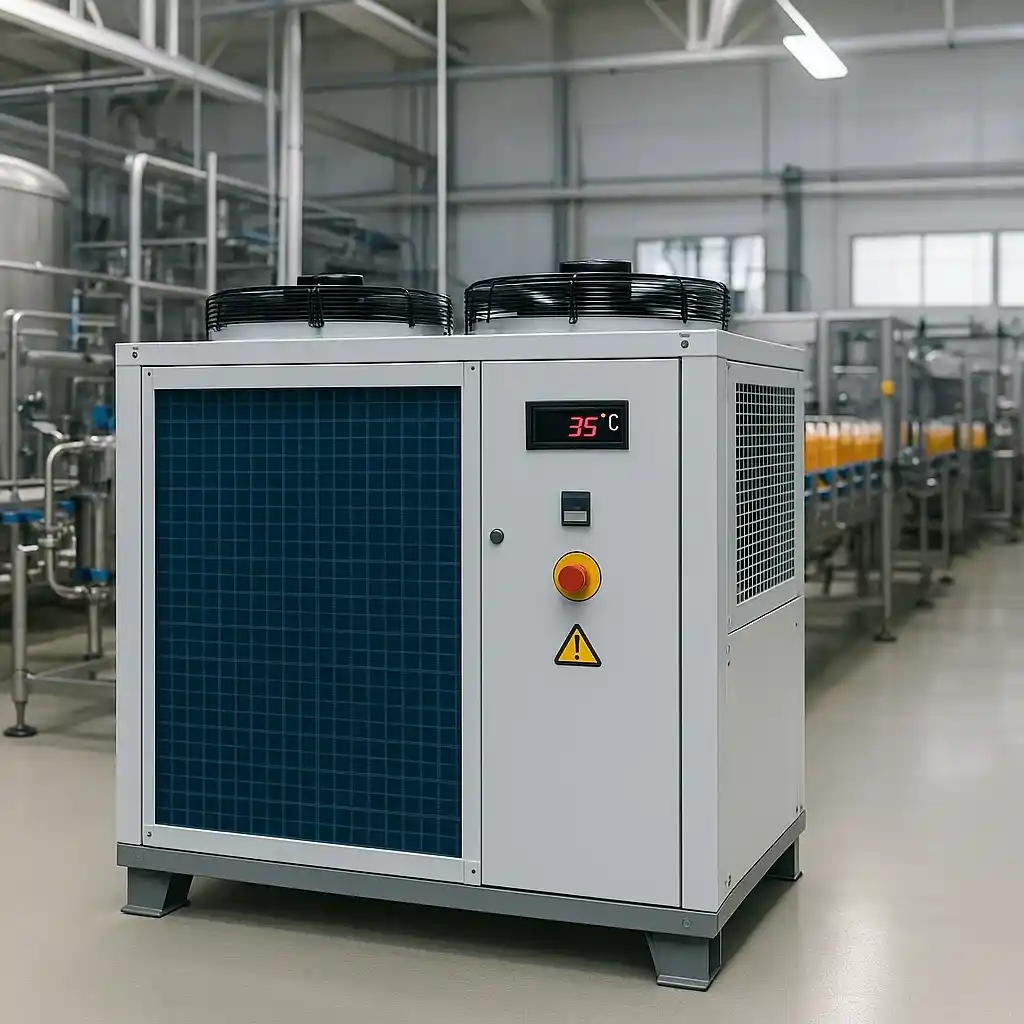
4. Energy use starts creeping upward
A refrigerant-starved system often draws more power because it has to run harder and longer to do the same work. This usually shows up as a slow rise in electricity costs rather than one dramatic spike.
The tricky part is that higher energy bills can be blamed on a lot of things — seasonal heat, production changes, dirty filters, and so on. Still, if the operating pattern has not changed much and the bill keeps climbing, the cooling system deserves a look.
5. Pressure readings look off
Low suction pressure is one of the more technical clues, and it is often one of the most reliable. Pressure gauges can tell a clearer story than surface symptoms, although they need to be interpreted properly. A low refrigerant charge often creates abnormal pressure behavior across the circuit.
This is one of those checks best handled by a qualified technician. Pressure readings alone do not prove a leak, but they do help narrow the issue faster than guesswork.
6. Noise or vibration changes a little
A compressor under stress can sound slightly different — sharper, rougher, or more uneven. Sometimes the change is subtle enough that only someone familiar with the machine notices it. But those small acoustic differences often arrive before a larger failure.
A noisy chiller is not automatically low on refrigerant, of course. But when noise comes together with weaker cooling or longer run times, the pattern becomes more meaningful.
Refrigerant loss versus other common cooling problems
Not every cooling issue comes from low refrigerant. Sometimes the symptoms overlap, which is why a careful check matters more than assumptions.
| الأعراض | Possible refrigerant issue | Other possible cause | What to check first |
|---|---|---|---|
| Weak cooling | Low charge | Dirty condenser, bad airflow | Coil condition and airflow |
| Longer run times | Reduced cooling capacity | High load, poor water flow | Load conditions and circulation |
| Frost or icing | Low refrigerant or low pressure | Blocked airflow, dirty filter | Air side and refrigerant circuit |
| استهلاك عالٍ للطاقة | Compressor working harder | Mechanical wear, fouling | Trend data and maintenance history |
| Pressure abnormalities | Leak or undercharge | Expansion valve issue | System diagnostics |
Sometimes the issue is not refrigerant at all. A clogged filter, poor water circulation, fouled heat exchange surfaces, or a faulty sensor can create a similar picture. That is why a full system review is usually smarter than a quick top-off.
Recharging is not the same as fixing the problem
A recharge may restore performance for a while, but it is not the final answer if the refrigerant escaped through a leak. Without finding the source, the system will likely drift low again. That becomes a cycle: recharge, lose charge, recharge again.
A more reliable approach usually includes:
- Leak detection and repair
- Verification of refrigerant charge after repairs
- Cleaning coils and checking airflow
- Reviewing pressure and temperature logs
- Inspecting fittings and service connections
In practice, the best maintenance teams treat refrigerant loss as a symptom, not the whole problem.
Choosing the right cooling equipment also helps
Stable cooling is easier to maintain when the system matches the process from the start. A production line using a آلة درجة حرارة القالب needs tightly controlled thermal behavior, while heavier process loads may be better served by a larger refrigeration system designed for steady operation.
That is where equipment selection matters. A well-matched chiller tends to operate within a healthier range, and that reduces stress on the refrigerant circuit. It does not eliminate maintenance, of course, but it can make the system less fragile overall.

A few habits that help prevent repeat refrigerant loss
Small maintenance routines go a long way here, even if they are not glamorous.
- Inspect connections during scheduled service
- Keep records of pressure and temperature trends
- Clean heat exchange surfaces regularly
- Verify repairs before returning equipment to full load
- Watch for repeat leaks at the same point
The pattern matters. A single top-off may solve today’s problem, but repeated loss usually means something deeper is being missed.
If you want to learn more about Industrial Chiller,you can read كيفية التخطيط للصيانة السنوية للمبردات الصناعية
الأسئلة الشائعة
How often should refrigerant levels be checked in an industrial cooling system?
There is no universal schedule, but many facilities review pressures and operating data during routine preventive maintenance. Systems in demanding environments often benefit from more frequent checks, especially if past leaks have occurred.
Can a chiller still seem normal if refrigerant is low?
Yes, at least for a while. Some units continue to run and cool adequately enough that the issue is easy to miss. The real clue is often a gradual shift in runtime, efficiency, or stability rather than a sudden shutdown.
Is it risky to keep running a chiller after a suspected refrigerant drop?
It can be. Continued operation may increase compressor stress, energy use, and the chance of secondary damage. If the signs are adding up, it is usually better to inspect the system sooner rather than later.

 Arabic
  English
  Spanish
  Russian
  Portuguese
  French
  Japanese
  German