
Las enfriadoras de aire realizan un trabajo que parece sencillo, pero que en realidad es un cuidadoso equilibrio entre el flujo de aire, el movimiento del refrigerante y la transferencia de calor. Extraen el calor no deseado de un proceso o circuito de un edificio y lo liberan en el aire circundante, normalmente en el exterior. Esta última parte es el truco: en lugar de enviar el calor al agua, el sistema utiliza el aire ambiente como disipador de calor. En la práctica, el aire caliente de descarga suele ser el signo más evidente de que la unidad funciona correctamente.
Básicamente, qué hace una enfriadora por aire
En un nivel básico, un Enfriadoras industriales enfría agua u otro fluido trasladando el calor de un lugar a otro. Un modelo refrigerado por aire sigue la misma lógica de refrigeración que muchos otros sistemas de refrigeración, pero expulsa el calor a través de un conjunto de serpentín y ventilador en lugar de una torre de refrigeración o un circuito de agua.
El ciclo suele describirse en cuatro pasos:
- El evaporador absorbe el calor del circuito de agua fría.
- El compresor eleva la presión y la temperatura del refrigerante.
- El condensador transfiere ese calor al aire exterior.
- El dispositivo de expansión prepara el refrigerante para que vuelva a absorber calor.
Así que cuando la gente pregunta cómo rechazan el calor las enfriadoras por aire, la respuesta corta es: empujando el calor del refrigerante hacia el aire en movimiento a través de una bobina del condensador. La respuesta más larga es donde las cosas se ponen interesantes.
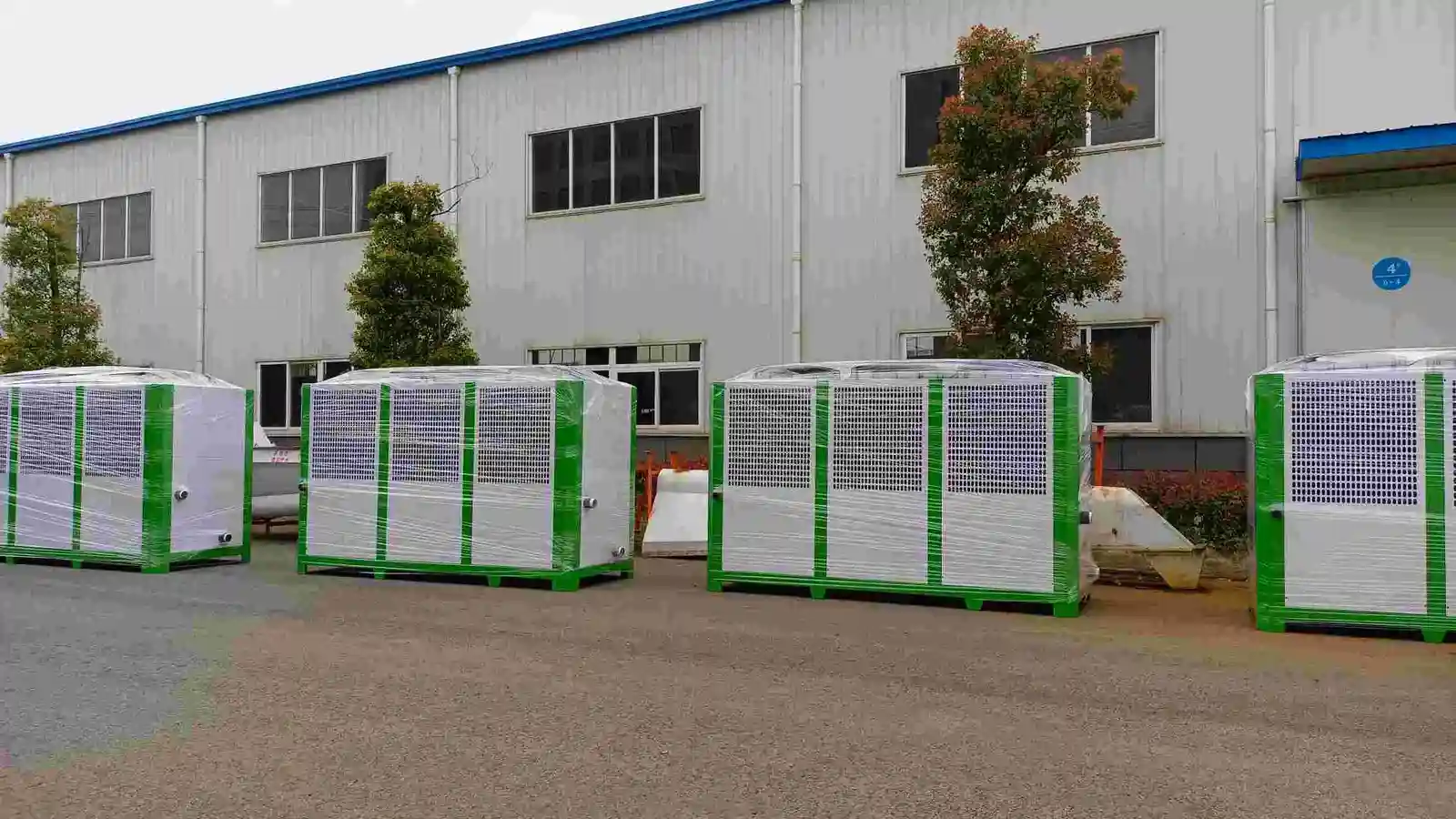
Cómo rechazan el calor las enfriadoras por aire
El refrigerante transporta el calor
Dentro del circuito de refrigerante, el calor recogido del agua enfriada hace que el refrigerante hierva o se vaporice en el evaporador. A continuación, ese vapor se comprime, lo que hace que se caliente y esté listo para ceder su calor. Este es uno de esos lugares donde el comportamiento del sistema es un poco contraintuitivo al principio: el refrigerante no está “haciendo frío” tanto como transportando calor lejos de la carga.
Los ventiladores empujan el aire ambiente a través de la batería del condensador
Una vez que el refrigerante llega al condensador, unos ventiladores axiales tiran o empujan el aire exterior por unos tubos con aletas. Esas aletas importan más de lo que parece; aumentan la superficie y ayudan a que el calor pase del refrigerante al aire más rápidamente.
Un típico refrigerador por aire utiliza uno o varios ventiladores para mantener un flujo de aire constante a través del serpentín. Si el flujo de aire es débil, está bloqueado o es irregular, la enfriadora tiene que trabajar más. Esto suele traducirse en una mayor presión, más consumo de energía y, a veces, alarmas molestas. No es exactamente el tipo de sorpresa que desea cualquier operador.
El calor sale por la superficie de la bobina
El calor pasa de forma natural del refrigerante más caliente al aire más frío. La batería del condensador actúa como puente entre ambos. Mientras el aire exterior esté más frío que el refrigerante y la batería esté lo bastante limpia para respirar, la transferencia se produce continuamente.
El refrigerante llega caliente al condensador, la batería distribuye el calor y los ventiladores lo barren. Nada dramático, sólo física eficiente haciendo su trabajo.
Principales piezas que intervienen en el rechazo del calor
| Componente | Trabajo en rechazo térmico | Por qué es importante |
|---|---|---|
| Bobina del condensador | Transfiere el calor del refrigerante al aire | Superficie del núcleo donde se produce el rechazo |
| Ventiladores axiales | Mover el aire exterior a través de la bobina | El caudal de aire afecta directamente a la eficiencia |
| Circuito refrigerante | Transporta el calor del evaporador al condensador | Sin ella, el calor no puede transportarse |
| Válvula de expansión | Controla el caudal de refrigerante y la caída de presión | Mantiene estable el ciclo de refrigeración |
| Sistema de control | Ajusta el funcionamiento del ventilador y supervisa las condiciones | Ayuda a la unidad a responder a los cambios de carga |
Cada una de estas piezas tiene una función, pero la bobina del condensador y los ventiladores suelen recibir la mayor atención porque son los que hacen el trabajo visible. El resto del sistema es más silencioso, aunque no menos importante.
Por qué las enfriadoras por aire funcionan bien en algunas aplicaciones
Hay una razón por la que los sistemas refrigerados por aire aparecen tan a menudo en fábricas, edificios comerciales y plantas de procesamiento. Son más fáciles de instalar que los sistemas refrigerados por agua y no requieren torre de refrigeración, bombas de agua de condensación ni tratamiento continuo del agua. En lugares donde el uso del agua es caro o limitado, es una gran ventaja.
Otras ventajas prácticas son:
- menor complejidad de fontanería
- menor consumo de agua
- reubicación más fácil en algunas configuraciones
- menores necesidades de infraestructuras
- acceso sencillo para el mantenimiento
Dicho esto, la contrapartida es real. Los sistemas refrigerados por aire dependen de las condiciones exteriores, por lo que las temperaturas ambiente muy elevadas pueden reducir el rendimiento. Para una visión más amplia de las categorías de sistemas y las opciones de dimensionamiento, la página Enfriadoras industriales es un punto de referencia útil.
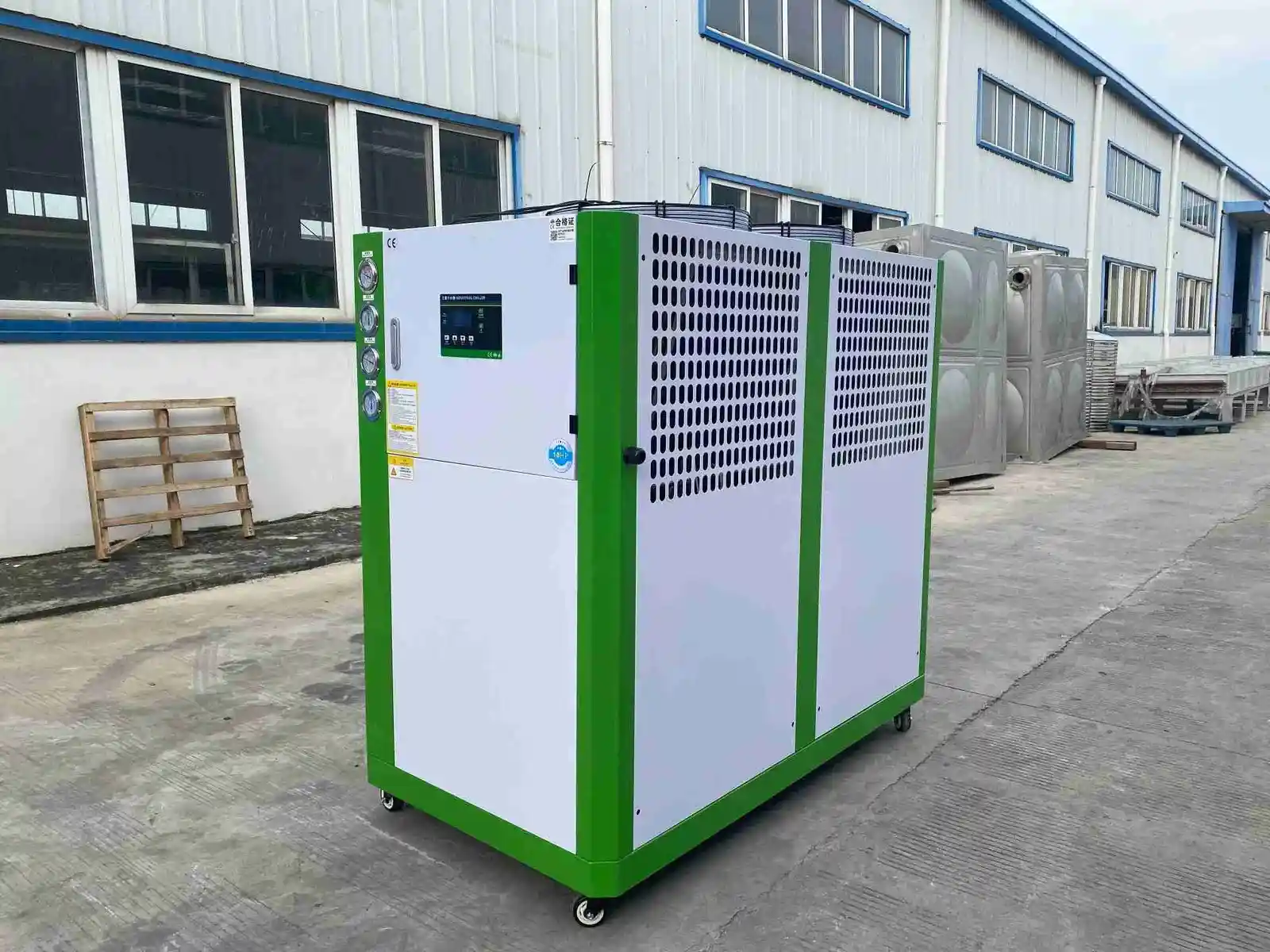
Factores que afectan al rendimiento del rechazo térmico
Temperatura ambiente
Esto es obvio, pero tiene mucha importancia. Cuando el aire exterior está más caliente, el condensador tiene menos diferencia de temperatura con la que trabajar. Eso dificulta el rechazo del calor y puede reducir la eficiencia. En un día templado, la unidad suele estar mucho más relajada que en pleno calor veraniego.
Estado de la bobina
Las baterías sucias son un problema clásico. El polvo, la neblina de aceite, el polen y los residuos bloquean el flujo de aire y aíslan la superficie de la batería. Incluso una fina capa de acumulación puede hacer que el intercambio de calor sea menos eficaz. Por eso, la limpieza de las baterías es una de las tareas de mantenimiento más prácticas.
Velocidad y diseño del ventilador
Algunos sistemas utilizan controles de ventilador más inteligentes o ventiladores de velocidad variable para adaptar el caudal de aire a la carga. Esto puede mejorar la eficiencia y reducir el ruido. En máquinas más antiguas o sencillas, los ventiladores se encienden y se apagan, lo que funciona bien pero no siempre es lo ideal.
Condiciones de carga y refrigerante
Si el circuito de agua refrigerada soporta una carga de proceso pesada, el condensador tiene que rechazar más calor. La carga de refrigerante, los ajustes de recalentamiento y el equilibrio del sistema influyen en la suavidad con la que esto ocurre. Una enfriadora con una carga o un control ligeramente incorrectos puede seguir funcionando, pero no tan limpiamente como debería.
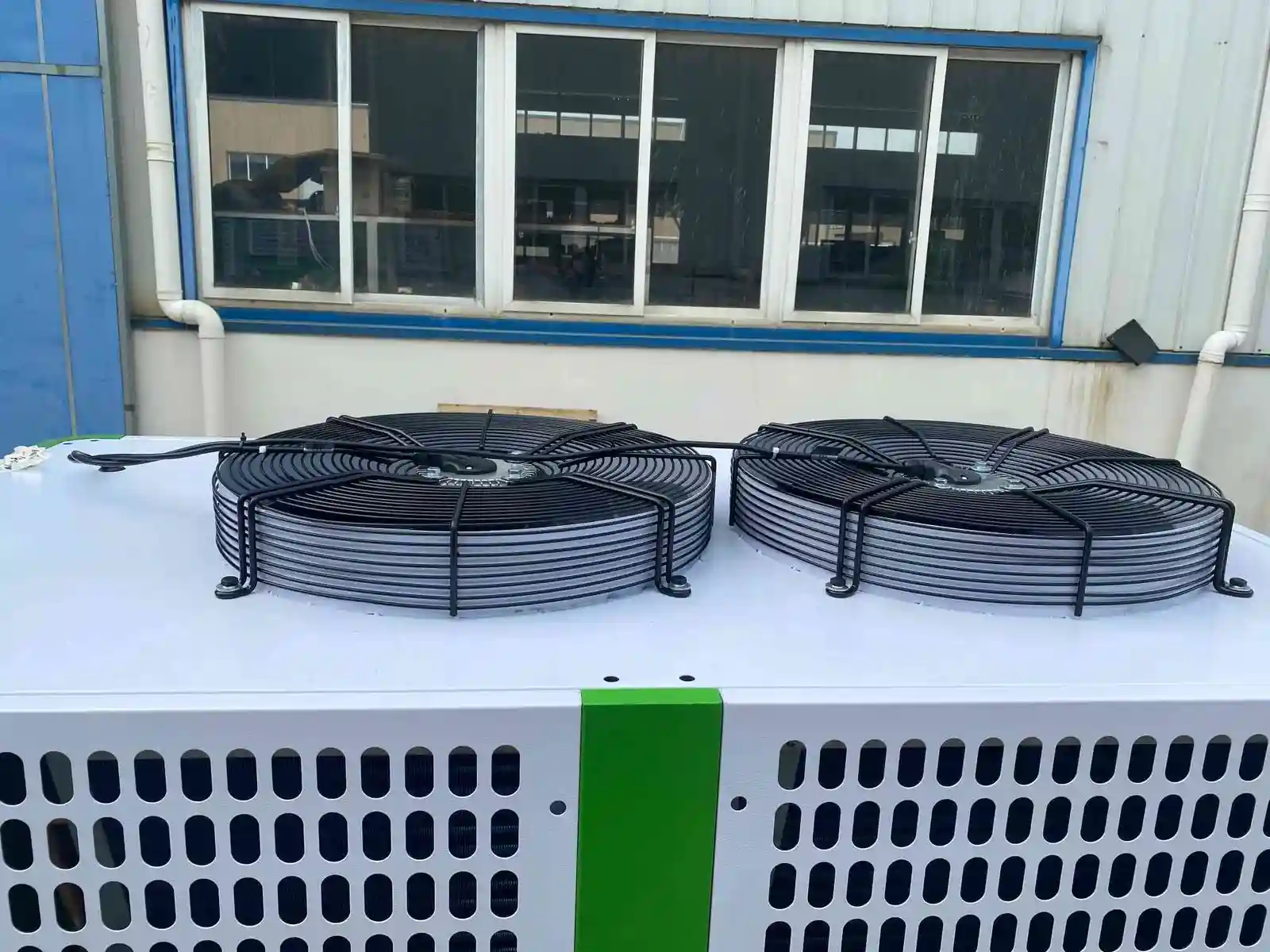
Enfriadora de tornillo refrigerada por aire vs. Enfriadora estándar refrigerada por aire
Para aplicaciones pequeñas y medianas, suele bastar con una enfriadora estándar refrigerada por aire. Para cargas mayores o ciclos de trabajo más exigentes, un enfriadora de tornillo refrigerada por aire suele ser la mejor opción, ya que los compresores de tornillo son conocidos por su funcionamiento estable y su buen comportamiento con cargas parciales.
En general, la diferencia se reduce a la escala y el patrón de funcionamiento:
- Las unidades estándar son habituales en cargas comerciales o industriales ligeras.
- Los diseños de enfriadoras de tornillo suelen ser preferibles cuando la capacidad, la fiabilidad y el control son más importantes.
- Las instalaciones más grandes pueden beneficiarse de la modulación más suave que puede proporcionar un compresor de tornillo.
La elección correcta suele depender de la demanda del proceso, el espacio disponible y el funcionamiento del sistema a lo largo del año. No existe una única respuesta óptima, aunque el patrón suele ser fácil de detectar una vez que se conoce el perfil de carga.
Una forma sencilla de concebir el proceso
Un modelo mental útil es el siguiente: el refrigerador actúa como una lanzadera de calor.
- Absorbe el calor del circuito de agua.
- Comprime y traslada ese calor a un estado refrigerante más caliente.
- Utiliza ventiladores para difundir ese calor al aire exterior.
- Restablece el refrigerante para que el ciclo pueda repetirse.
Ese es el proceso completo, aunque la ingeniería del interior de los armarios hace mucho más de lo que sugiere la simple secuencia. Aun así, la idea básica sigue siendo muy humana: coger calor de algún lugar útil, trasladarlo a otro menos útil y dejar que el aire se lo lleve.
PREGUNTAS FRECUENTES
¿Necesitan agua los refrigeradores por aire?
La mayoría no necesita agua para la parte del condensador, que es la principal ventaja. Algunas instalaciones pueden seguir utilizando agua en otras partes de la instalación, pero la propia enfriadora rechaza el calor al aire.
¿Por qué los refrigeradores por aire pierden eficacia cuando hace calor?
Porque el condensador depende de que el aire exterior esté más frío que el refrigerante. Cuando aumenta la temperatura ambiente, la diferencia de temperatura se reduce y la unidad tiene que trabajar más para expulsar el calor.
¿Qué mantenimiento ayuda a mantener estable el rechazo térmico a lo largo del tiempo?
La limpieza periódica de la batería, la inspección del ventilador, la comprobación del refrigerante y mantener despejada la zona que rodea la unidad son medidas de gran ayuda. En muchos casos, las medidas de mantenimiento más sencillas evitan las caídas de rendimiento más molestas.

 Spanish
  English
  Russian
  Portuguese
  French
  Arabic
  Japanese
  German