
There’s a saying in the chiller world: a water cooled chiller doesn’t die, it gets murdered. Usually by neglect. Seen it happen more times than one would like—a unit that ran fine for years, then slowly lost efficiency, started tripping on high pressure, and finally failed because nobody cleaned the tubes or treated the water.
The truth is, an industrial water cooled chiller is remarkably durable. But it needs attention. Not constant attention, but regular, predictable care. This checklist is based on watching what works in facilities that keep their chillers running for 20 or 30 years.
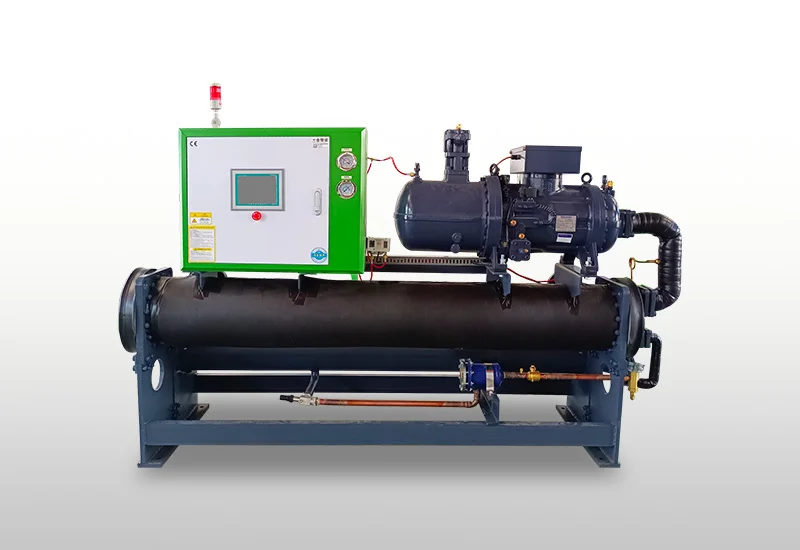
Daily Checks for an Industrial Water Cooled Chiller
Every day, someone should walk past the chiller and look. Not a deep inspection—just a few seconds of observation. Small problems are easier to fix than big ones.
What to Look At Daily
Leaving chilled water temperature: Is it at setpoint? If not, something changed.
• Operating pressures: Discharge and suction pressures. Compare to yesterday’s numbers.
• Oil level and pressure: Low oil or low oil pressure means a leak or a problem.
• Unusual noises: Rattling, hissing, or loud compressor operation.
• Water flow: Check the sight glass on the evaporator and condenser water lines.
A logbook helps. Writing down pressures and temperatures takes two minutes. When something drifts, the log shows it early.
Cooling Tower Check
The cooling tower is part of the industrial water cooled chiller system. A quick daily look at the tower basin water level and spray pattern catches problems before they affect the chiller.
Weekly Maintenance Tasks
Once a week, a bit more attention is worth the time.
Visual Inspections
• Check for leaks around the chiller, piping, and pump seals.
• Inspect the condenser water strainer pressure drop. A rising drop means debris is collecting.
• Look at the cooling tower fan belt tension and condition.
• Check the tower water distribution for even flow.
Water Treatment Check
Water treatment is critical for an industrial water cooled chiller. Weekly testing should include:
• pH level (typically 7.0–8.5)
• Conductivity (cycles of concentration)
• Biocide and inhibitor levels
Poor water treatment leads to scale in the condenser tubes. Scale kills efficiency. A thin layer of scale—just 1/32 of an inch—can increase energy use by 10–15%.
Monthly Maintenance Checklist
Monthly tasks go a bit deeper. These are often done by facility staff or a service contractor.
| Componente | Task | Why It Matters |
|---|---|---|
| Evaporador | Check refrigerant level, inspect for oil logging | Low refrigerant reduces capacity; oil in evaporator hurts heat transfer |
| Condensador | Measure approach temperature | High approach indicates fouling or low water flow |
| Compresor | Listen for unusual sounds, check vibration | Early warning of bearing or valve issues |
| Oil system | Check oil level, pressure, and temperature | Low oil or high discharge temp indicates problems |
| Controls | Verify sensor readings, test safeties | Faulty sensors cause inefficient operation or nuisance trips |
| Pumps | Check seal leaks, motor amperage, bearing noise | Pump failure stops the whole system |
| Cooling tower | Clean basin, inspect fill, check fan operation | Tower problems directly affect chiller performance |
Approach Temperature
This is one of the most useful measurements. Approach temperature is the difference between refrigerant condensing temperature and leaving condenser water temperature. A clean condenser might have a 2–4°F approach. When approach climbs to 8–10°F, the condenser tubes are fouled. Time to clean them.
Quarterly Maintenance Tasks
Every three months, a more thorough inspection makes sense.
Water Analysis
Send a water sample from the condenser loop to a lab. They’ll check for hardness, dissolved solids, biological activity, and corrosion potential. The results guide adjustments to the chemical treatment program.
Electrical Inspection
• Tighten all electrical connections (loose connections cause heat and failure)
• Check contactor condition (pitted or burned contacts need replacement)
• Measure voltage imbalance (should be under 2%)
• Test crankcase heaters (prevent refrigerant migration in cold weather)
Safety Device Testing
Test the high-pressure cutout, low-pressure cutout, flow switches, and freeze protection sensors. A safety that doesn’t trip when it should is a danger to the equipment and personnel.
Annual Maintenance for an Industrial Water Cooled Chiller
Once a year—typically during a planned shutdown—the chiller needs more significant attention.
Tube Cleaning
The evaporator and condenser tubes should be cleaned annually, more often if water quality is poor.
There are two methods:
• Mechanical cleaning: Using a brush or bullet pushed through each tube with water pressure.
• Chemical cleaning: Circulating a descaling solution through the tubes (requires careful neutralization).
Most facilities do mechanical cleaning annually. Chemical cleaning every few years if scale is present.
Refrigerant Analysis
Take a refrigerant sample and send it to a lab. The analysis shows:
• Acid level (high acid means moisture and potential compressor damage)
• Moisture content
• Non-condensable gases (air in the system reduces efficiency)
• Oil condition
Compressor Oil Change
Oil degrades over time. Most manufacturers recommend changing the oil every 10,000–15,000 operating hours or annually. The oil analysis tells the real story.
Cooling Tower Overhaul
The cooling tower needs annual attention:
• Clean or replace fill if fouled
• Inspect and lubricate fan bearings
• Check gearbox oil level and condition
• Inspect drift eliminators
• Clean and repair basin as needed
The Cost of Skipping Maintenance
What happens when an industrial water cooled chiller doesn’t get this attention? The pattern is predictable.
Year 1-2: Slight efficiency loss. Higher energy bills. Nobody notices much.
Year 3-4: Approach temperature climbs. The chiller runs longer to meet load. More maintenance calls for nuisance trips.
Year 5-6: Compressor failure or tube leak. Major repair costing tens of thousands. The chiller is down for weeks.
Beyond: Replacement, often years before the chiller’s design life.
A good maintenance program costs money. But it’s a fraction of the cost of a major failure. A few thousand dollars per year in preventive maintenance avoids a $50,000–$100,000 emergency repair.
Record Keeping and Documentation
One thing that separates well-run facilities from struggling ones is records. A binder or digital file with:
• Daily operating logs (pressures, temperatures, amperages)
• Maintenance records (what was done, when, by whom)
• Water treatment reports
• Tube cleaning dates and approach temperatures
• Repair history
When a chiller starts acting strangely, those records help diagnose the problem. Without them, every issue is a guess.
Working with the Larger System
An industrial water cooled chiller is part of a larger sistema de refrigeración industrial that includes cooling towers, pumps, piping, and controls. Maintenance on those components is just as important as maintenance on the chiller itself.
A chiller with clean tubes and proper refrigerant charge will still struggle if the cooling tower is fouled or the condenser water pump is worn. The system is only as strong as its weakest link.
That said, the chiller is usually the most expensive component. Giving it the attention it deserves—daily logs, weekly checks, monthly inspections, annual overhauls—pays back in reliability and energy savings.
If you want to know more about industrial water cooled chiller, please read What Is a Water Cooled Industrial Chiller? How It Works.
PREGUNTAS FRECUENTES
How often should an industrial water cooled chiller be serviced?
Daily visual checks, weekly water treatment tests, monthly inspections, quarterly electrical and safety checks, and annual tube cleaning and oil change. The level of service depends on runtime and water quality.
What's the most common cause of chiller failure?
Poor water treatment leading to scale in the condenser tubes. Scale reduces heat transfer, raises condensing pressure, and eventually causes compressor failure.
Can I do chiller maintenance myself or need a specialist?
Daily and weekly tasks (logs, visual checks, water treatment tests) can be done by facility staff. Annual tube cleaning, refrigerant handling, and compressor work should be done by qualified chiller technicians.

 Spanish
  English
  Russian
  Portuguese
  French
  Arabic
  Japanese
  German