
Les refroidisseurs à air effectuent une tâche qui semble simple mais qui est en fait un équilibre minutieux entre la circulation de l'air, le mouvement du réfrigérant et le transfert de chaleur. Ils prélèvent la chaleur indésirable d'un processus ou d'une boucle de bâtiment et la libèrent dans l'air ambiant, généralement à l'extérieur. C'est cette dernière partie qui fait toute la différence : au lieu d'envoyer la chaleur dans l'eau, le système utilise l'air ambiant comme puits de chaleur. Dans la pratique, l'air chaud évacué est souvent le signe le plus évident du bon fonctionnement de l'unité.
Ce que fait fondamentalement un refroidisseur à air
Au niveau le plus élémentaire, un Refroidisseur industriel refroidit l'eau ou un autre fluide en déplaçant la chaleur d'un endroit à un autre. Un modèle refroidi par air suit la même logique de réfrigération que de nombreux autres systèmes de refroidissement, mais il rejette la chaleur par l'intermédiaire d'un serpentin et d'un ventilateur plutôt que d'une tour de refroidissement ou d'un circuit d'eau.
Le cycle est généralement décrit en quatre étapes :
- L'évaporateur absorbe la chaleur de la boucle d'eau glacée.
- Le compresseur augmente la pression et la température du réfrigérant.
- Le condenseur transfère cette chaleur à l'air extérieur.
- Le dispositif d'expansion prépare le réfrigérant à absorber à nouveau de la chaleur.
Ainsi, lorsque les gens demandent comment les refroidisseurs à air rejettent la chaleur, la réponse courte est : en poussant la chaleur du réfrigérant dans l'air en mouvement à travers un serpentin de condenseur. C'est dans la réponse plus longue que les choses deviennent intéressantes.
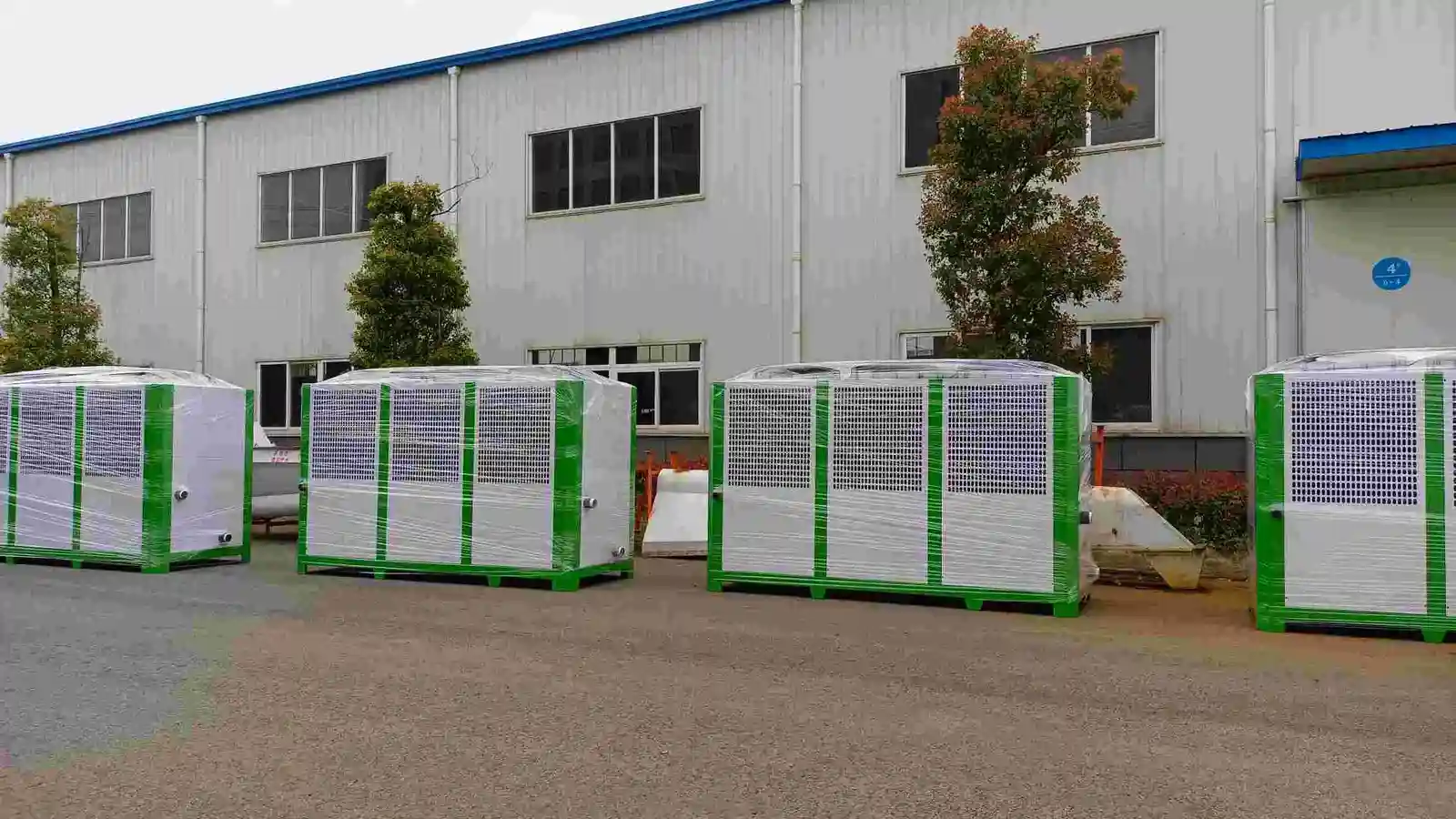
Comment les refroidisseurs à air rejettent la chaleur
Le réfrigérant transporte la chaleur
Dans le circuit du réfrigérant, la chaleur de l'eau réfrigérée fait bouillir ou se vaporiser le réfrigérant dans l'évaporateur. Cette vapeur est ensuite comprimée, ce qui la rend chaude et prête à céder sa chaleur. C'est l'un des endroits où le comportement du système est un peu contre-intuitif à première vue : le réfrigérant ne “fait pas de froid” mais transporte de la chaleur loin de la charge.
Les ventilateurs poussent l'air ambiant à travers le serpentin du condenseur.
Lorsque le réfrigérant atteint le condenseur, des ventilateurs axiaux tirent ou poussent l'air extérieur sur des tubes à ailettes. Ces ailettes ont plus d'importance qu'il n'y paraît ; elles augmentent la surface et permettent à la chaleur de passer plus rapidement du réfrigérant à l'air.
Un exemple typique refroidisseur à air utilise un ou plusieurs ventilateurs pour maintenir un flux d'air régulier à travers le serpentin. Si le flux d'air est faible, bloqué ou irrégulier, le refroidisseur doit travailler plus dur. Cela signifie généralement une pression de tête plus élevée, une consommation d'énergie plus importante et parfois des alarmes intempestives. Ce n'est pas exactement le genre de surprise qu'un opérateur souhaite avoir.
La chaleur s'échappe par la surface du serpentin
La chaleur se déplace naturellement du réfrigérant le plus chaud vers l'air le plus frais. Le serpentin du condenseur sert de pont entre les deux. Tant que l'air extérieur est plus froid que le réfrigérant et que le serpentin est suffisamment propre pour être respiré, le transfert s'effectue en continu.
Une façon simple de l'imaginer : le réfrigérant arrive chaud au condenseur, le serpentin répartit cette chaleur et les ventilateurs l'évacuent. Rien d'extraordinaire, c'est juste de la physique efficace qui fait son travail.
Principales parties impliquées dans le rejet de la chaleur
| Composant | Travail dans le domaine du rejet de la chaleur | Pourquoi c'est important |
|---|---|---|
| Bobine du condenseur | Transfère la chaleur du réfrigérant à l'air | Surface centrale où se produit le rejet |
| Ventilateurs axiaux | Déplacer l'air extérieur à travers le serpentin | Le débit d'air a une incidence directe sur l'efficacité |
| Circuit frigorifique | Transporte la chaleur de l'évaporateur au condenseur | Sans elle, la chaleur ne peut être transportée |
| Soupape d'expansion | Contrôle le débit du réfrigérant et la chute de pression | Maintient la stabilité du cycle de refroidissement |
| Système de contrôle | Ajuste le fonctionnement du ventilateur et surveille les conditions | Aide l'unité à répondre aux changements de charge |
Chacune de ces pièces a un rôle à jouer, mais le serpentin du condenseur et les ventilateurs retiennent généralement l'attention parce qu'ils effectuent le travail visible. Le reste du système est plus silencieux, mais n'en est pas moins important.
Pourquoi les refroidisseurs à air fonctionnent-ils bien dans certaines applications ?
Ce n'est pas pour rien que les systèmes refroidis par air sont si souvent utilisés dans les usines, les bâtiments commerciaux et les sites de traitement. Ils sont plus simples à installer que les systèmes refroidis à l'eau et ne nécessitent pas de tour de refroidissement, de pompes pour l'eau du condenseur ou de traitement continu de l'eau. Dans les endroits où l'utilisation de l'eau est coûteuse ou limitée, c'est un grand avantage.
Parmi les autres avantages pratiques, citons
- moins de complexité au niveau de la plomberie
- réduction de la consommation d'eau
- relocalisation plus facile dans certaines configurations
- réduction des besoins en infrastructures
- accès facile pour l'entretien
Cela dit, le compromis est réel. Les systèmes refroidis par air dépendent des conditions extérieures, de sorte que des températures ambiantes très élevées peuvent réduire les performances. Pour un aperçu plus large des catégories de systèmes et des choix de dimensionnement, la page sur les refroidisseurs industriels est un point de référence utile.
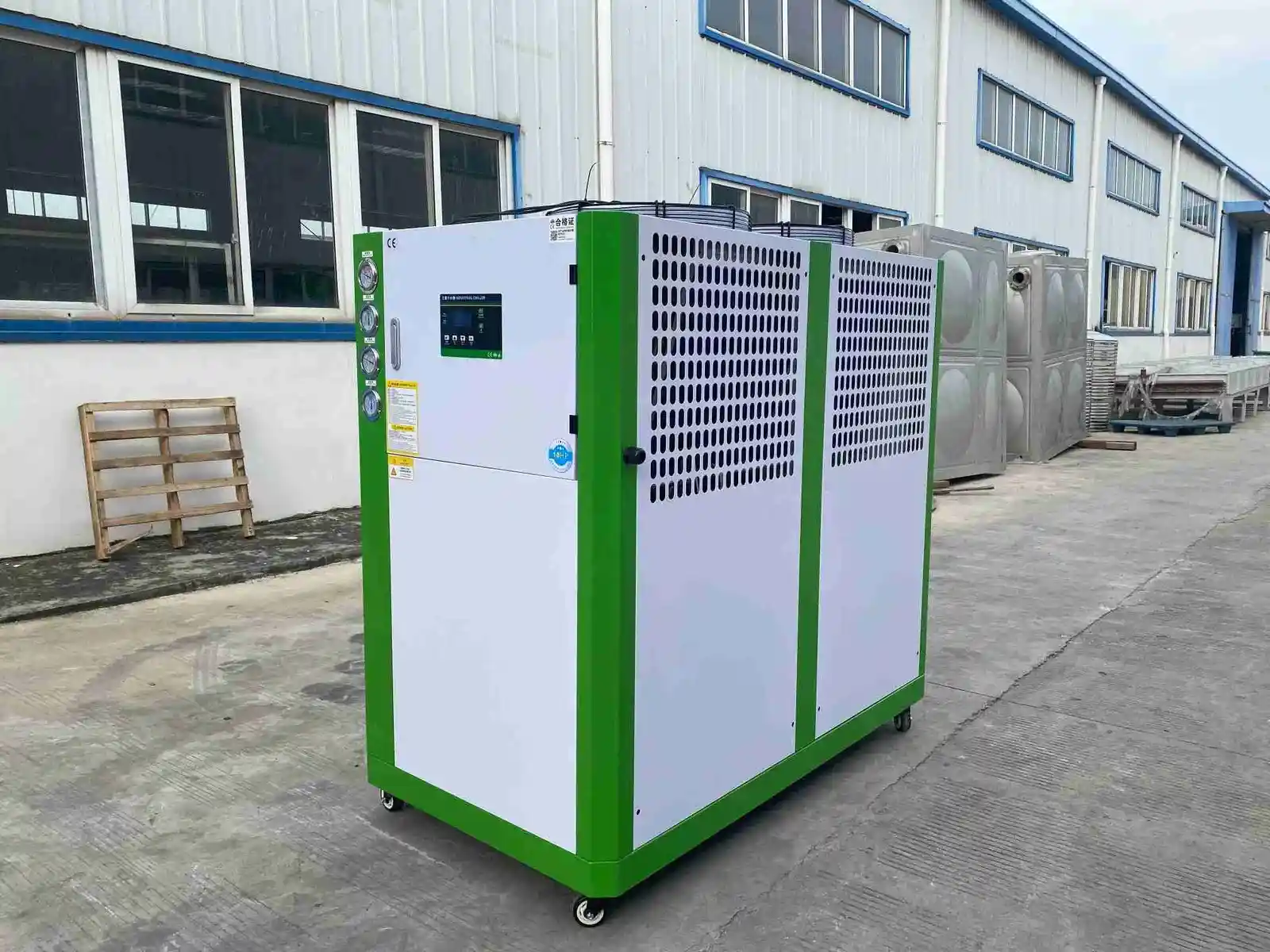
Facteurs affectant les performances de rejet de la chaleur
Température ambiante
Ce point est évident, mais il a beaucoup d'importance. Lorsque l'air extérieur est plus chaud, le condenseur a moins de différence de température à gérer. Cela rend le rejet de la chaleur plus difficile et peut réduire l'efficacité. Par temps doux, l'unité semble souvent beaucoup plus détendue qu'elle ne l'est en pleine chaleur estivale.
État de la bobine
Les serpentins encrassés constituent un problème classique. La poussière, le brouillard d'huile, le pollen et les débris bloquent le flux d'air et isolent la surface du serpentin. Même une fine couche d'accumulation peut rendre l'échange de chaleur moins efficace. C'est pourquoi le nettoyage des serpentins est l'une des tâches d'entretien les plus pratiques.
Vitesse et conception du ventilateur
Certains systèmes utilisent des commandes de ventilateur plus intelligentes ou des ventilateurs à vitesse variable pour adapter le débit d'air à la charge. Cela permet d'améliorer l'efficacité et de réduire le bruit. Dans les machines plus anciennes ou plus simples, les ventilateurs peuvent simplement s'allumer et s'éteindre, ce qui fonctionne bien mais n'est pas toujours idéal.
Charge et conditions du réfrigérant
Si la boucle d'eau glacée supporte une charge importante, le condenseur doit rejeter plus de chaleur. La charge de réfrigérant, les réglages de surchauffe et l'équilibre du système influencent tous la fluidité de ce processus. Un refroidisseur dont la charge ou le contrôle est légèrement erroné peut toujours fonctionner, mais pas aussi proprement qu'il le devrait.
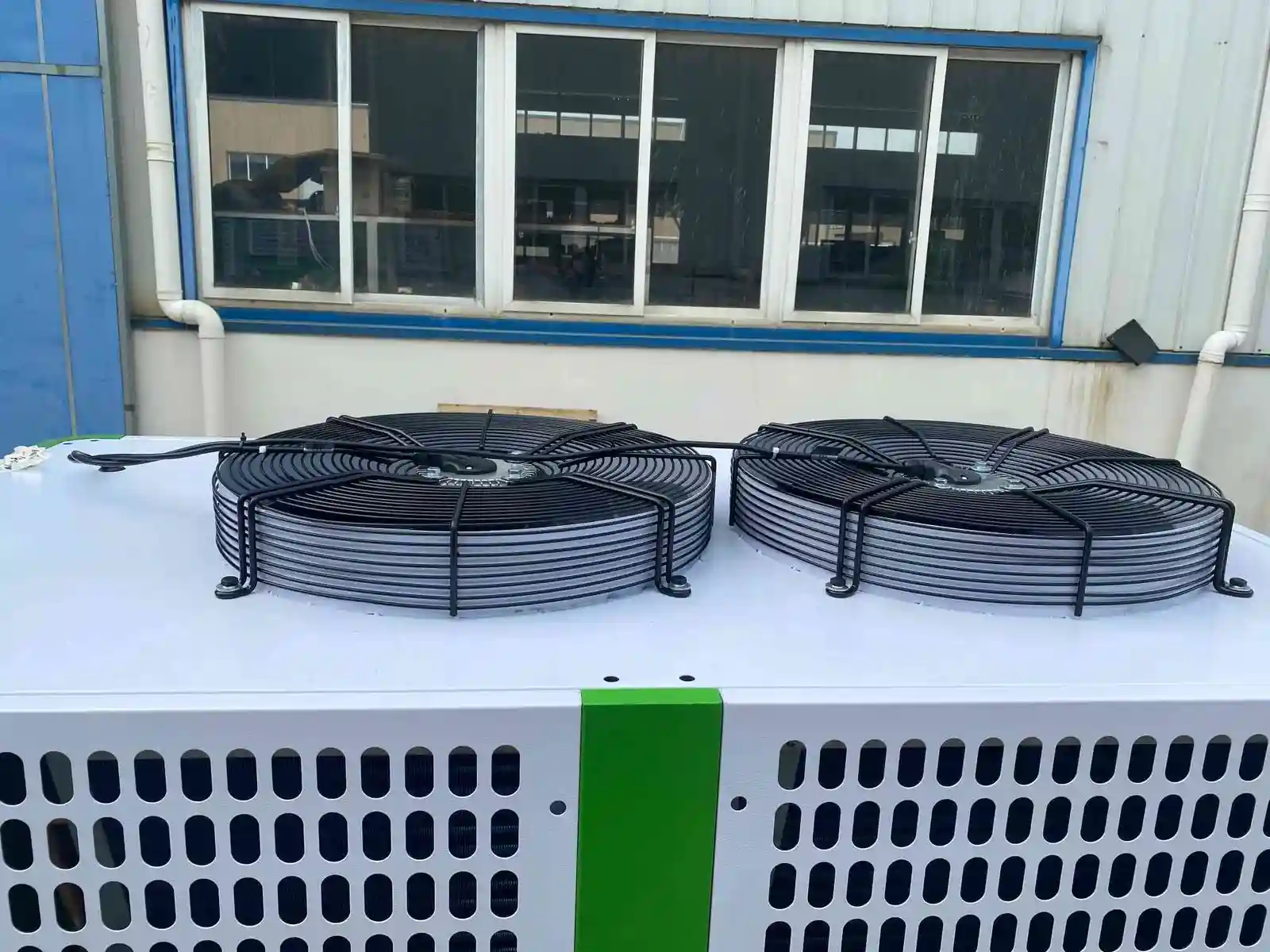
Refroidisseur à vis refroidi par air vs. refroidisseur standard refroidi par air
Pour les applications de petite et moyenne taille, un refroidisseur à air standard est souvent suffisant. Pour des charges plus importantes ou des cycles d'utilisation plus exigeants, un refroidisseur à air standard est souvent suffisant. refroidisseur à vis refroidi par air est souvent la meilleure solution car les compresseurs à vis sont connus pour leur fonctionnement stable et leur bonne tenue à charge partielle.
En général, la différence se résume à l'échelle et au mode de fonctionnement :
- Les unités standard sont courantes dans les charges commerciales ou industrielles plus légères.
- Les refroidisseurs à vis sont souvent privilégiés lorsque la capacité, la fiabilité et le contrôle sont plus importants.
- Les installations plus importantes peuvent bénéficier de la modulation plus douce qu'un compresseur à vis peut fournir.
Le bon choix dépend généralement de la demande du processus, de l'espace disponible et de la façon dont le système fonctionnera tout au long de l'année. Il n'y a pas de meilleure réponse unique, mais le modèle est généralement facile à repérer une fois que l'on connaît le profil de charge.
Une façon simple d'envisager le processus
Un modèle mental utile est le suivant : le refroidisseur agit comme une navette thermique.
- Il absorbe la chaleur de la boucle d'eau.
- Il comprime et déplace cette chaleur dans un état réfrigérant plus chaud.
- Il utilise des ventilateurs pour diffuser cette chaleur dans l'air extérieur.
- Il réinitialise le réfrigérant pour que le cycle puisse se répéter.
C'est le processus complet, bien que l'ingénierie à l'intérieur des armoires fasse beaucoup plus que ce que la simple séquence suggère. Néanmoins, l'idée de base reste très humaine : prendre de la chaleur à un endroit utile, la déplacer à un endroit moins utile et laisser l'air l'emporter.
FAQ
Les refroidisseurs à air ont-ils besoin d'eau ?
La plupart n'ont pas besoin d'eau pour le côté condenseur, ce qui est le principal avantage. Certaines installations peuvent encore utiliser de l'eau ailleurs dans l'établissement, mais le refroidisseur lui-même rejette la chaleur dans l'air.
Pourquoi les refroidisseurs à air perdent-ils de leur efficacité par temps chaud ?
Parce que le condenseur repose sur le fait que l'air extérieur est plus froid que le fluide frigorigène. Lorsque la température ambiante augmente, la différence de température se réduit et l'unité doit travailler plus dur pour évacuer la chaleur.
Quel entretien permet de maintenir le rejet de chaleur stable dans le temps ?
Le nettoyage régulier des serpentins, l'inspection des ventilateurs, la vérification du fluide frigorigène et le maintien d'une zone dégagée autour de l'appareil sont autant d'éléments utiles. Dans de nombreux cas, les mesures d'entretien les plus simples permettent d'éviter les baisses de performance les plus gênantes.

 French
  English
  Spanish
  Russian
  Portuguese
  Arabic
  Japanese
  German