
There’s a certain appeal to air cooled chillers. No cooling tower, no condenser water pumps, no make-up water system. Just fans and coils. That simplicity is why so many facilities end up with them. But picking the right one? That’s not as simple as grabbing the first unit that matches the tonnage.
Having watched a few chiller selections play out—some successful, some regretful—the difference usually comes down to a few details that get overlooked in the spec sheet. Location, ambient temperatures, noise, maintenance access. The stuff that matters after the unit is bolted down.
This is a look at how to choose air cooled industrial chillers that actually work for the application.
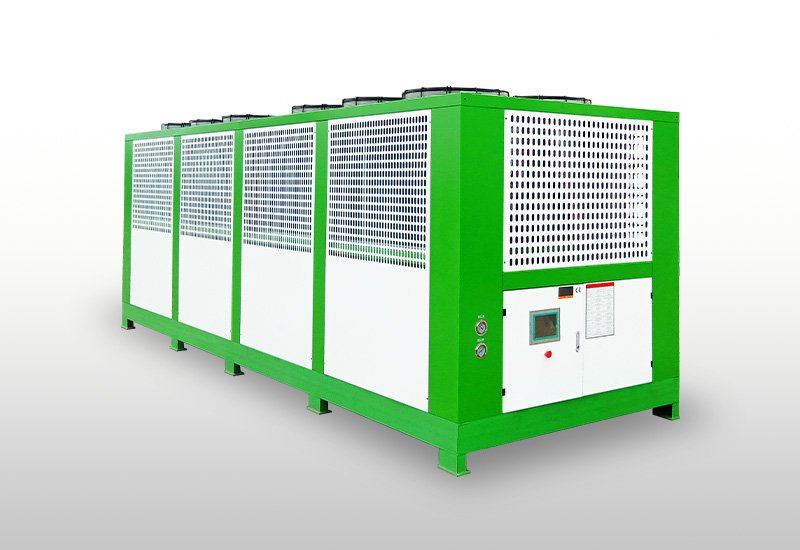
How Air Cooled Industrial Chillers Differ from Other Types
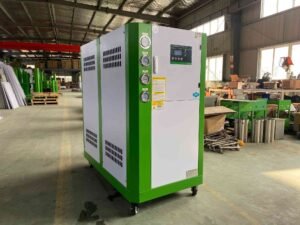
Before diving into selection, it helps to understand where these fit in the chiller world. An air cooled industrial chiller rejects heat to the ambient air using fans and a finned coil. That’s it. No water loop, no tower, no condenser water treatment.
Comparison with Water-Cooled Systems
A refroidisseur à eau, by contrast, rejects heat to water that circulates to a cooling tower or fluid cooler. That setup is more efficient in hot climates and quieter in operation. But it’s also more complex—more pumps, more piping, more maintenance.
Here’s a quick comparison:
| Feature | Air Cooled Chiller | Water-Cooled Chiller |
|---|---|---|
| Installation complexity | Lower (no tower, no condenser water pump) | Higher (tower, pump, water treatment) |
| Maintenance | Clean coils, check fans | Tower cleaning, water treatment, pump seals |
| Efficiency in hot weather | Drops as ambient temperature rises | More stable (wet bulb dependent) |
| Noise level | Louder (fans and compressors) | Quieter (tower can be remote) |
| Water usage | None | Significant (evaporation, blowdown) |
| Space required | Outdoor pad or roof | Chiller indoors + tower outdoors |
For facilities in dry climates with moderate summer temperatures, air cooled industrial chillers are often the right call. For hot, humid environments or noise-sensitive locations, water-cooled starts looking better.Choosing between air cooled and water cooled is just one part of designing a complete industrial chiller system; the piping, pumps, and controls matter just as much.
Sizing an Air Cooled Industrial Chiller Correctly
Size matters. Too small, and the chiller runs continuously, wears out faster, and may not keep up on hot days. Too large, and it short-cycles, which kills efficiency and compressor life.
Calculating the Load
The starting point is the actual cooling load. Not the nameplate ratings of the equipment being cooled, but the real heat load measured or calculated. A few ways to get there:
• Measure flow rate and temperature drop across the process equipment
• Calculate based on equipment specifications and duty cycles
• Look at existing chiller runtime if replacing an older unit
One mistake seen repeatedly: sizing for peak load plus a giant safety factor. A 30% safety factor on top of a load that was already estimated high leads to a chiller that’s 50% oversized. It runs for five minutes, shuts off, repeats. Not efficient.
Ambient Temperature Correction
This is critical for air cooled units. A chiller rated for 100 tons at 95°F ambient will produce less at 105°F—sometimes 15–20% less. The selection needs to account for the highest ambient temperature the unit will see, not the average. A chiller that works fine in spring but trips on high pressure in August is a chiller that was undersized for the actual conditions.
Altitude Derating
At higher altitudes, air is thinner. Less cooling across the condenser coils. The standard rule: derate by about 1.5–2% per 1,000 feet above sea level. A chiller at 5,000 feet might need to be 8–10% larger than a sea-level selection for the same load.
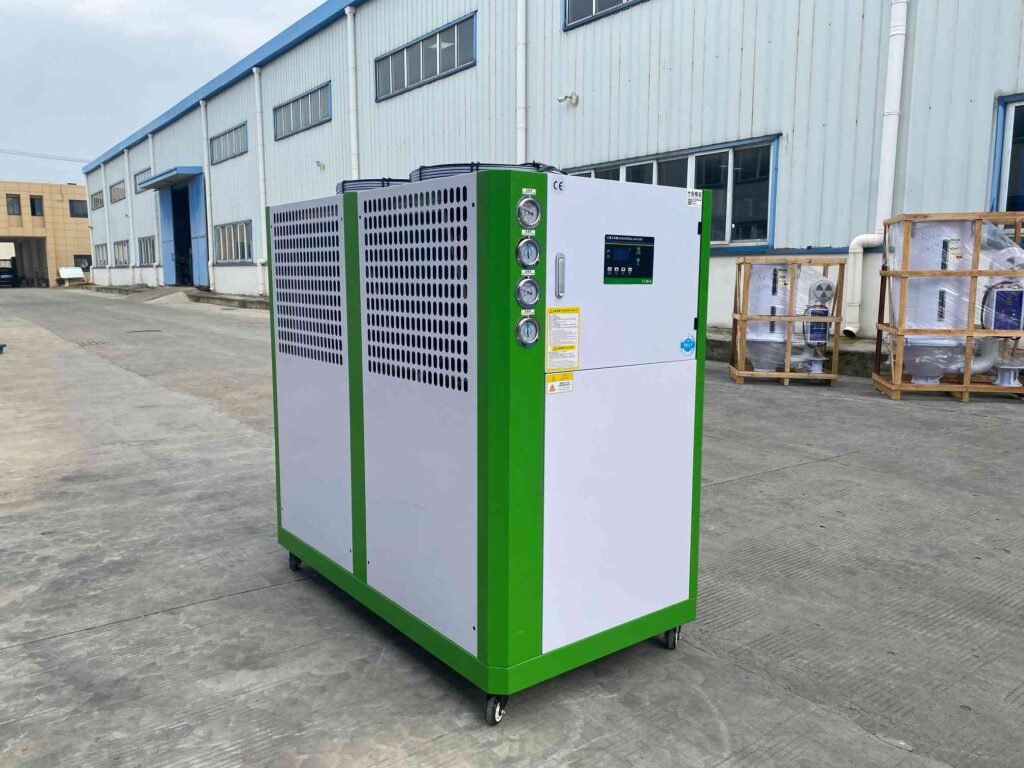
Location and Installation Considerations
Where the chiller sits affects everything from performance to lifespan.
Airflow Clearance
Air cooled industrial chillers need room to breathe. The manufacturer’s installation manual specifies minimum clearances—typically 4–6 feet on the coil sides, 6–8 feet for the fan discharge. Ignoring these leads to recirculation (hot air from the discharge getting sucked back into the coil intake), which raises condensing pressure and kills efficiency.
What’s been observed: a chiller squeezed into a corner with two feet of clearance on three sides runs hotter, uses more energy, and fails sooner. A chiller in an open area with good airflow runs as designed.
Noise Concerns
These units are not quiet. A large air cooled chiller can produce 85–95 dBA at full load. That’s loud. If the chiller sits near an office window, a property line, or a residential area, noise complaints are almost guaranteed.
Options for noise-sensitive sites:
• Low-speed fan options (reduces airflow but also noise)
• Compressor sound blankets
• Acoustic barriers or enclosures
• Locating the chiller behind a wall or on the far side of the building
Sun Exposure and Shade
Direct sun on the condenser coils raises the effective ambient temperature. A chiller in full sun on a 95°F day might see coil temperatures 5–10°F higher than a shaded unit. Shade helps. If natural shade isn’t available, a simple roof or awning over the chiller (without restricting airflow) can improve performance.
Efficiency and Operating Costs
The purchase price is only part of the story. An inefficient chiller costs more every hour it runs.
EER and IPLV Ratings
Look at both full-load efficiency (EER) and part-load efficiency (IPLV). Most chillers run at partial load most of the time. A unit with a good IPLV will save significantly on energy bills.
Current industry benchmarks for air cooled industrial chillers:
| Chiller Size | Minimum Full-Load EER | Good Part-Load IPLV |
|---|---|---|
| < 150 tons | 9.0–10.0 | 13.0–15.0 |
| 150–300 tons | 9.5–10.5 | 14.0–16.0 |
| > 300 tons | 10.0–11.0 | 15.0–17.0 |
Higher efficiency usually costs more upfront. The payback depends on runtime and electricity rates. A chiller running 4,000 hours per year at $0.12/kWh can justify a higher-efficiency upgrade much faster than one running 1,500 hours.
VFDs on Fans
Variable frequency drives on condenser fans allow the chiller to run the fans only as fast as needed. That saves energy, reduces noise, and improves low-ambient operation. Worth the added cost in almost every case.
Maintenance Access and Serviceability
This is one of those things nobody thinks about until the first time a technician shows up.
Coil Cleaning Access
Air cooled chiller coils get dirty. They need to be cleaned—sometimes multiple times per year if the location is dusty. If the chiller is crammed against a wall or under a low roof, cleaning becomes difficult or impossible.
The best setups have clear access to both sides of each coil bank. Enough room for a pressure washer wand and a technician to move around.
Compressor and Electrical Access
Compressors fail. Controls get replaced. When that day comes, can a technician reach the components? Units with service doors that open fully, removable panels, and clear labeling are easier and cheaper to maintain.
Spare Parts Availability
Before buying, ask about common spare parts. Are fans, fan motors, and pressure controls standard items or proprietary? A chiller that uses off-the-shelf components is easier to keep running than one that requires factory-only parts with six-week lead times.
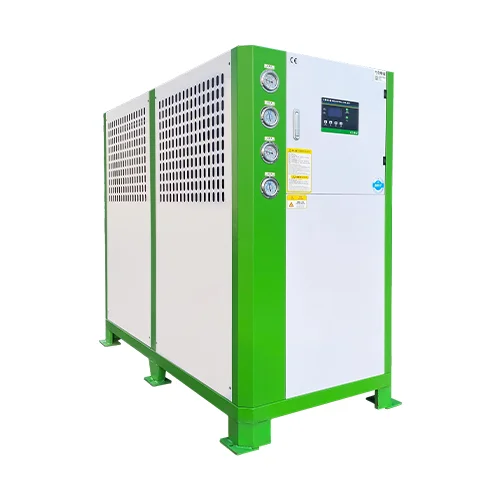
Special Features Worth Considering
Not every chiller needs every feature, but some are genuinely useful.
Low-Ambient Operation
For facilities in cold climates, the chiller needs to run—or at least survive—in freezing weather. Low-ambient kits include fan cycling controls, crankcase heaters, and sometimes head pressure controls. Without these, a chiller can fail to start on a cold morning.
Remote Monitoring
Modern chillers can report operating data, alarms, and runtime remotely. For facilities without 24/7 engineering staff, this is valuable. An alert that the chiller is running at high discharge pressure means someone can check coil cleanliness before the unit trips off.
Sound Reduction
As mentioned earlier, noise matters. Factory-installed sound reduction (low-speed fans, compressor blankets, discharge attenuators) is almost always cheaper than field retrofits.
Common Mistakes in Selection
A few errors that show up repeatedly:
• Sizing for peak load without considering ambient temperature derating. The chiller works fine in spring but fails on the first 100°F day.
• Ignoring clearance requirements. The chiller fits, but nobody can clean the coils.
• Buying on first cost alone. The cheap chiller uses 30% more energy and fails five years sooner.
• Forgetting about winter operation. The chiller starts once, runs fine, then won’t restart the next morning because oil is cold and thick.
FAQ
How long do air cooled industrial chillers typically last?
With proper maintenance—coil cleaning, electrical checks, compressor care—15 to 20 years is reasonable. Poor maintenance cuts that to 10–12 years.
Can an air cooled chiller be installed indoors?
Yes, but it requires ductwork to bring in outside air and exhaust hot discharge air. Indoor installation is less efficient and more expensive than outdoor placement.
How do I know if I need an air cooled or water-cooled chiller?
Air cooled is simpler and better for dry, moderate climates. Water-cooled is more efficient in hot, humid conditions and quieter overall. If water is scarce or expensive, air cooled is the better choice. For large systems (500+ tons) or year-round hot climates, water-cooled usually wins.


 French
  English
  Spanish
  Russian
  Portuguese
  Arabic
  Japanese
  German