
Finding the right balance in cooling capacity is a bit like walking a tightrope. Buy too much, and you’re staring at a massive utility bill for capacity you don’t even use. Buy too little, and your production line—or your server room—starts sweating under the heat of an inadequate industrial chiller. When shifting to a modular air cooled chiller setup, the question isn’t just about total tonnage; it’s about how you slice that total load into individual units.
It’s easy to get lost in the technical manuals, but determining the module count is often as much about operational philosophy as it is about pure thermodynamics.
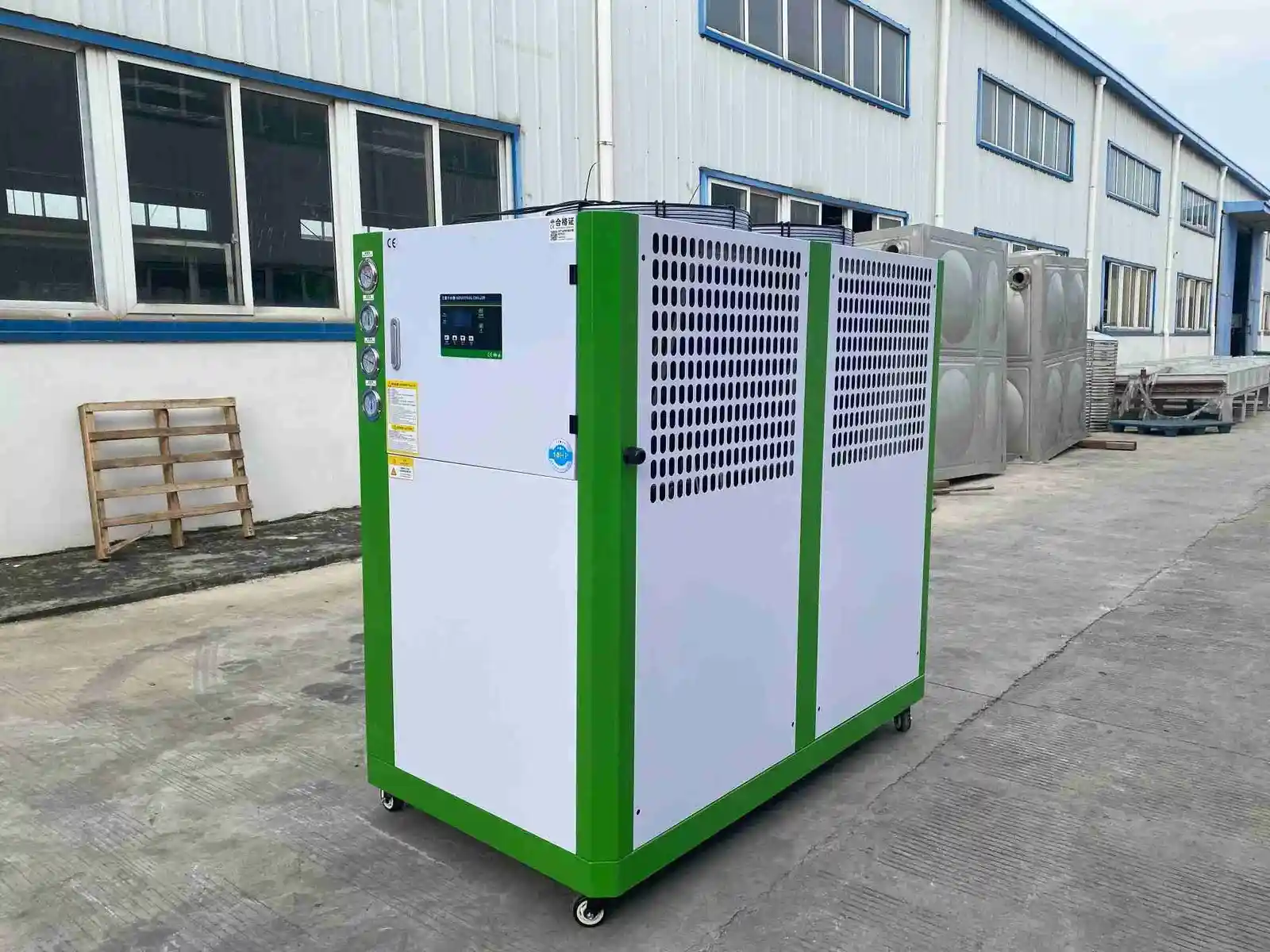
Understanding Base Load vs. Peak Load for Modular Air Cooled Chiller Sizing
Before counting boxes, there has to be a clear picture of the heat load. Most facilities have a “base load” (what runs 24/7) and a “peak load” (the maximum heat generated during mid-summer or full-throttle production).
The beauty of a modular air cooled chiller is that you don’t have to size the entire system for that 1% of the year when it’s 100 degrees outside and every machine is running. Instead, the strategy often involves selecting a module size that handles a clean fraction of the base load. If the base load is 150 tons, three 50-ton modules make a lot more sense than two 80-ton units. It’s about creating a “staircase” of cooling that matches the reality of the day-to-day grind.
Why Small Increments Matter
Part-Load Efficiency: Most industrial water chiller units are most efficient when running near full capacity. Using five small modules allows four to run at 100% while one cycles, rather than one giant unit struggling at 20%.
Electrical Infrastructure: Smaller modules have lower starting currents. This can sometimes save a facility from needing a massive electrical service upgrade.
Maintenance Window: If you have six modules, losing one for a day is a 16% loss. If you have two, it’s a 50% catastrophe.
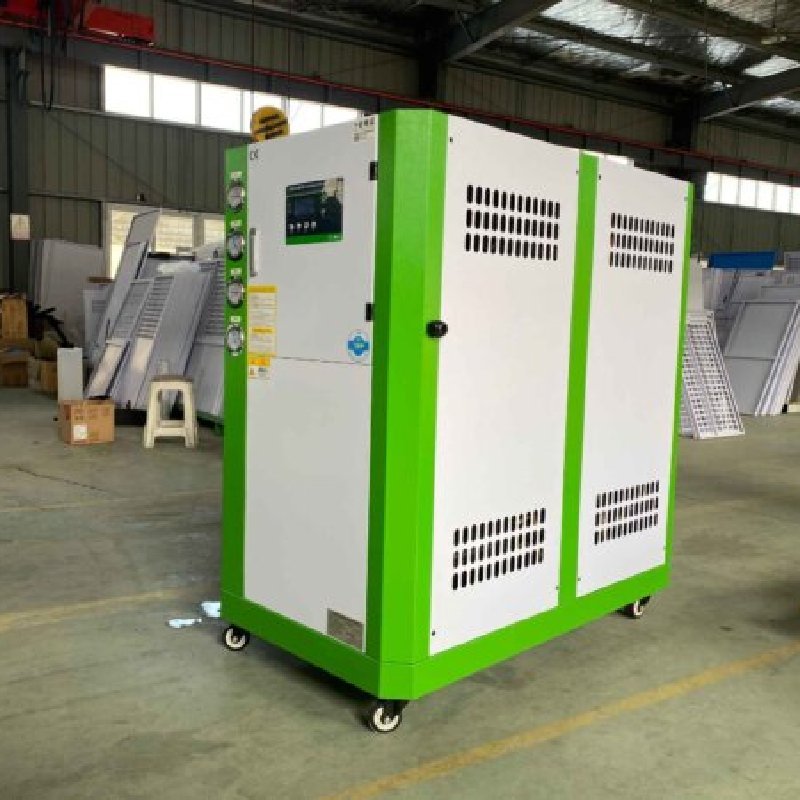
The Math of Redundancy: The N+1 Rule
In the world of professional cooling, “redundancy” is the word that keeps managers sleeping at night. When calculating how many modules are needed, the “N” represents the number of units required to meet the peak load. The “+1” is the insurance policy.
For an air cooled chiller system, adding that extra module is usually more cost-effective than buying a complete backup for a massive standalone unit. It’s an incremental cost for total peace of mind.
| Total Load Requirement | Module Size | Number of Units (N) | Total with Redundancy (N+1) |
|---|---|---|---|
| 100 Tons | 25 Tons | 4 | 5 |
| 100 Tons | 50 Tons | 2 | 3 |
| 200 Tons | 40 Tons | 5 | 6 |
| 300 Tons | 60 Tons | 5 | 6 |
As seen in the table, choosing a smaller module size (like the 25-ton option) gives more “steps” in capacity but increases the complexity of the piping. It’s a trade-off. Generally, aiming for 4 to 8 modules per system is the “sweet spot” for most industrial air chiller applications.
Factoring in Environmental Constraints
It’s not just about the numbers on the spec sheet. The physical reality of the installation site often dictates how many modules can actually fit. If the roof space is long and narrow, ten slim modular air cooled chiller units might be the only way to go.
Airflow is the lifeblood of any industrial air chiller. If modules are packed too tightly to meet a specific tonnage requirement, they will begin to “short-circuit” the air, pulling in the hot exhaust from the unit next door. This effectively lowers the capacity of each module, meaning you might end up needing more units just to compensate for the poor placement. It’s a bit of a circular problem that requires a careful eye during the design phase.
The Impact of Ambient Temperature
If the facility is located in an area with extreme heat, the “derating” factor comes into play. A module rated for 50 tons at 95°F might only give you 42 tons at 110°F. When this happens, the “how many” question gets answered by the weather. You might find that you need an extra module simply to bridge the gap during those brutal August afternoons.
Growth Projections and Future-Proofing
One of the biggest mistakes people make with industrial water coolers is thinking only about today. If the business plan involves adding a new production wing in three years, the header pipes and electrical sub-panels should be sized for that future module count now.
A modular air cooled chiller system is inherently scalable, but only if the “skeleton” is there to support it. It’s often wise to install the master controller and the main piping for six modules, even if you only buy four to start with. This “pay-as-you-grow” model keeps the accountants happy while ensuring the engineers aren’t pulling their hair out later.
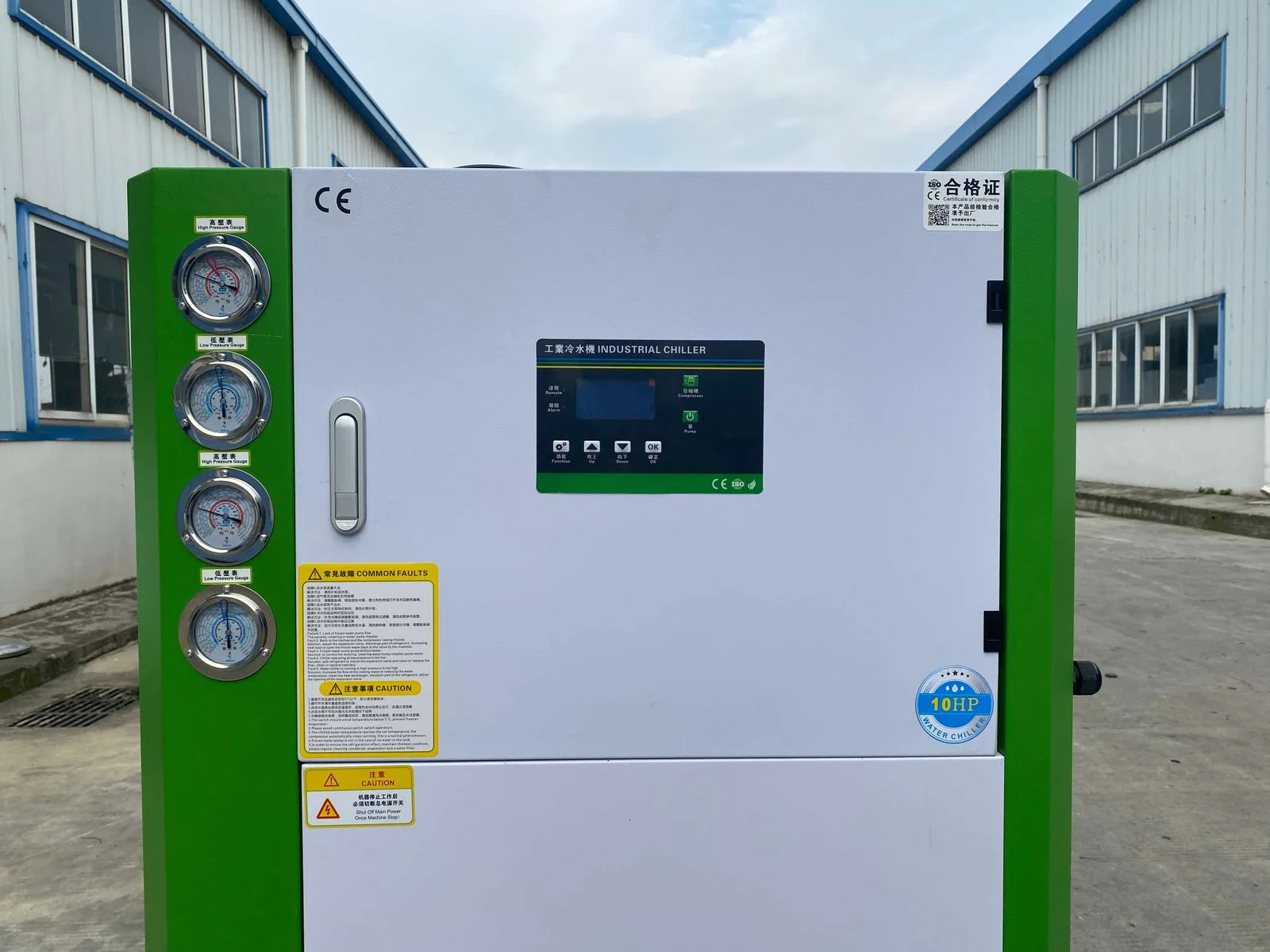
Complexity vs. Reliability in Modular Air Cooled Chiller Systems
There is a school of thought that says “more parts mean more things can break.” While technically true—six fans are more likely to have a failure than one giant fan—the reality of a modular air cooled chiller is that these failures are rarely system-critical.
If a pump on a massive, single-circuit industrial water chiller fails, the whole plant stops. If a fan motor on module number four of a six-module bank dies, the system barely flinches. The controller just ramps up the other units. This shift from “preventing failure” to “managing failure” is why many are moving away from traditional large-scale industrial water coolers.
If you want to know more about Modular Air Cooled Chiller, please read What Is a Modular Air Cooled Chiller?
FAQ
Does increasing the number of modules make the control logic too complicated for my staff?
Actually, it’s usually the opposite. Most modern modular air cooled chiller systems feature a centralized touchscreen that treats the entire bank as a single machine. From a user perspective, you aren’t managing six chillers; you’re managing one cooling system that just happens to have twelve compressors. The software handles the heavy lifting of staging and rotation automatically.
Is there a maximum number of modules I can link together?
Most manufacturers have a limit, typically around 8 to 16 modules per “bank” or controller. However, you can always start a second bank. The limit is rarely about the cooling itself and more about the communication speed of the data bus or the physical limits of the water manifold.
How does the module count affect the total refrigerant charge of my facility?
This is a great point that often gets overlooked. By using multiple smaller industrial air chiller modules, the refrigerant is contained in several independent circuits. This often means that even if a leak occurs, you only lose a small fraction of the total gas, and it may keep the system under certain regulatory thresholds (like EPA or local safety codes) that would trigger much stricter inspections for a single large-charge unit.

 English
  Spanish
  Russian
  Portuguese
  French
  Arabic
  Japanese
  German