
Scale. It’s one of those things that builds up slowly, quietly, and by the time anyone notices, the chiller is running longer, consuming more power, and struggling to hit setpoint. Seen it happen more times than one would expect—often in facilities where water treatment was considered optional or where maintenance budgets got trimmed. The frustrating part is that scale is largely preventable. It doesn’t come out of nowhere.
The question is how to stop it from forming in the first place. Because once it’s there, cleaning it out is labor-intensive, messy, and sometimes requires shutting down production.
This is a look at practical ways to keep industrial chiller units free from scale, based on what’s worked in real facilities.
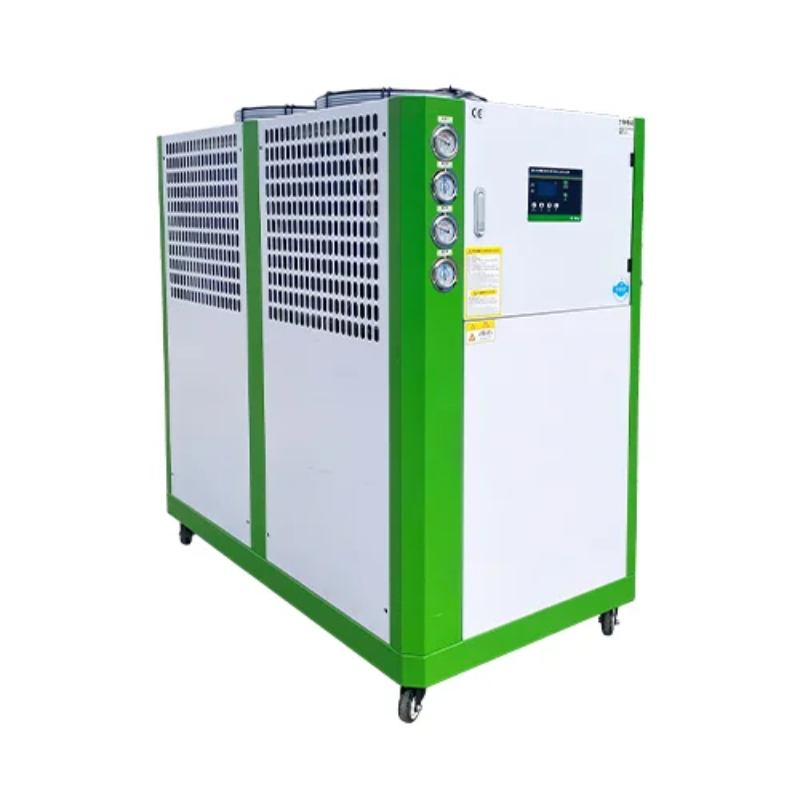
Understanding Why Scale Forms in Industrial Chiller Units
Scale happens when dissolved minerals in water come out of solution and stick to surfaces. The most common culprit is calcium carbonate. Hard water has it. As water temperature rises—or as water evaporates in cooling towers—the concentration of minerals increases. Eventually, they precipitate onto condenser tubes, evaporator surfaces, and anywhere else water flows.
The Difference Between Open and Closed Loops
A closed-loop system (like a chilled water loop) has the same water circulating continuously. Scale formation here is usually slower, but once it starts, it’s often due to makeup water introducing fresh minerals over time or corrosion products settling out.
An open-loop system—think of a water-cooled chiller connected to a cooling tower—is far more prone to scaling. The tower constantly evaporates water, leaving minerals behind. Without proper blowdown and chemical treatment, scaling accelerates quickly.
An air-cooled chiller avoids this entire category of problems because there’s no water side to scale. But that’s a different trade-off; air-cooled units have their own maintenance needs.
Water Treatment Programs for Industrial Chiller Units
This is the foundation. Without a consistent water treatment program, scale is inevitable. It’s not a matter of if, but when.
Chemical Treatment
A properly designed chemical program does a few things:
• Prevents scale by keeping minerals in suspension
• Controls pH to minimize corrosion
• Uses biocides to prevent biological growth that can trap debris
The key is consistency. From watching facilities that do this well, they don’t just add chemicals once a month and call it done. They test regularly—weekly at minimum—and adjust dosing based on actual water chemistry. Facilities that rely on a “set it and forget it” approach tend to find scale anyway.
Side-Stream Filtration
Chemical treatment alone doesn’t remove particles. Sand, dirt, and biological matter enter cooling towers from the air. These particles act as nucleation sites for scale formation. A side-stream filter that continuously pulls a portion of the water, filters it, and returns it clean makes a noticeable difference. It’s an added cost upfront, but it extends the intervals between mechanical cleaning.
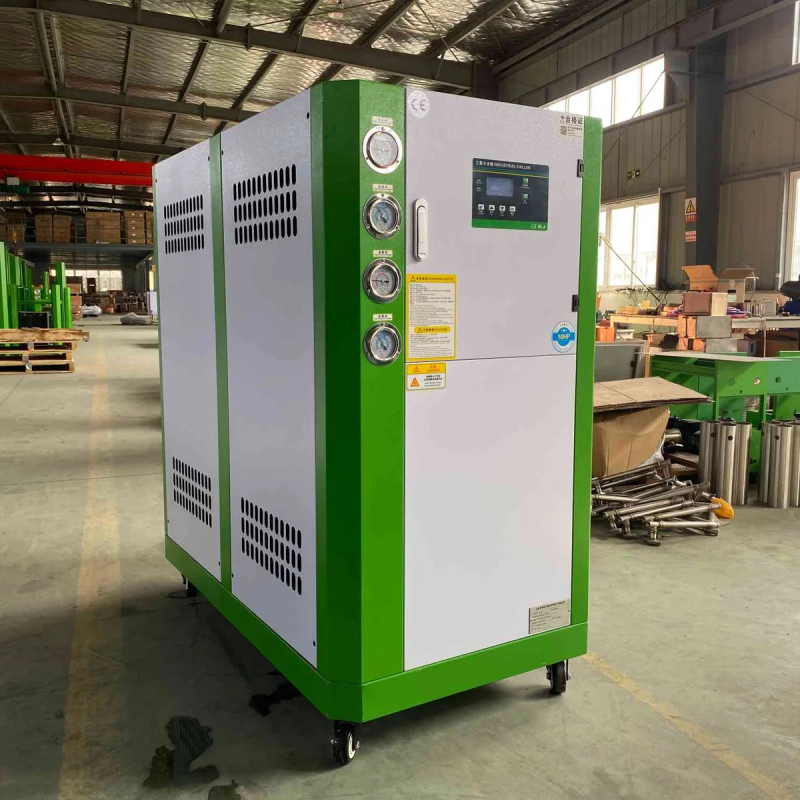
Mechanical Cleaning Methods That Work
Even with good water treatment, some scale eventually forms. The question is whether it’s a thin layer that’s easily managed or a thick deposit that requires taking tubes offline.
| Method | What It Is | Best For |
|---|---|---|
| Brush cleaning | Physical brushing of tube interiors with nylon or wire brushes | Light to moderate scale, routine maintenance |
| Chemical descaling | Circulating acids or scale-removing chemicals through the system | Heavy scale, hard-to-reach areas, but requires careful neutralization |
| Hydro-lancing | High-pressure water jetting to blast scale out of tubes | Thick, stubborn scale; often used during major overhauls |
| Sponge ball system | Rubber balls circulated through condenser tubes to continuously scrub surfaces | Automated, ongoing scale prevention on large water-cooled systems |
When to Clean
There’s a tendency to wait until performance drops noticeably—higher head pressure, longer run times, alarms. But at that point, efficiency has already been suffering for weeks or months. A better approach is to monitor approach temperature. In a clean system, the difference between refrigerant condensing temperature and leaving water temperature is small. When that delta starts creeping up, it’s time to clean, not when the chiller trips off.
Operational Practices That Reduce Scale Formation
Sometimes the best prevention is how the system is run day to day. A few operational habits make a real difference.
1. Maintain proper blowdown rates: In cooling towers, blowdown removes concentrated water and replaces it with fresh makeup water. Too little blowdown means mineral concentration rises. Too much wastes water. Finding the right balance based on water chemistry is key.
2. Monitor cycles of concentration: This is a measure of how much minerals have concentrated relative to makeup water. Keeping it within recommended limits (typically 3 to 6 cycles for most systems) prevents scale.
3. Avoid letting systems sit idle: Stagnant water encourages scale deposition and biological growth. If a chiller is offline for an extended period, either keep water circulating or drain and dry components.
4. Inspect strainers regularly: Debris that gets past strainers can settle in tubes and become a foundation for scale. Cleaning strainers monthly catches this early.
The Cost of Neglect
It’s worth stating what happens when scale prevention is ignored. Not to be dramatic, but the outcomes are predictable.
• Higher energy use: A thin layer of scale—even 1/16 of an inch—can increase energy consumption by 10–15%. The compressor works harder to overcome the insulating effect.
• Reduced cooling capacity: The chiller can’t reject heat effectively. Process temperatures drift, and production slows.
• Shortened equipment life: Compressors running at higher discharge pressures wear out faster. Tubes that scale badly eventually need replacement.
• Emergency downtime: Facilities that skip routine cleaning often face unscheduled shutdowns during peak cooling season, when repair labor is hardest to find.
A Note on System Type
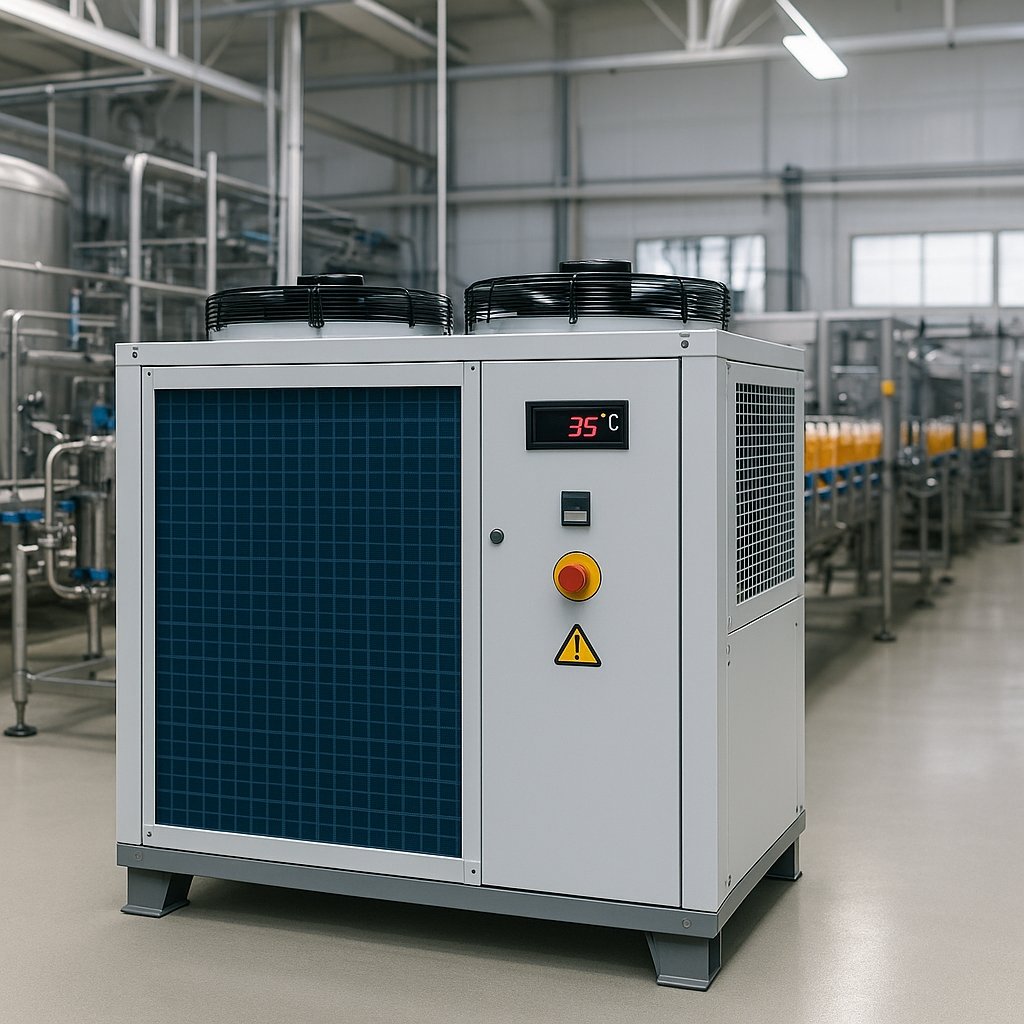
For facilities running a water-cooled chiller, scale prevention is non-negotiable. The water side is constantly exposed to fresh minerals. For an air-cooled chiller, scaling isn’t a water-side issue, but condenser coil fouling from dirt and debris is its own version of the same problem—reduced heat transfer, higher pressures, and energy waste.
Building a Scale Prevention Program That Lasts
From watching facilities that manage this well, the ones with fewer scale problems don’t rely on any single solution. They combine:
• Regular water testing (logged and trended)
• Consistent chemical treatment with automatic dosing where possible
• Mechanical cleaning on a schedule, not just when problems appear
• Operator training so someone actually knows what the gauges mean
There’s also something to be said for keeping good records. A logbook that shows approach temperatures, cycles of concentration, and cleaning dates creates a story. When something changes, it’s obvious.
If you want to know more about industrial chiller units, please read How Do Industrial Chiller Units Work?
FAQ
How often should industrial chiller units be descaled?
It depends on water quality and run hours. In facilities with good water treatment, annual descaling may be sufficient. In areas with very hard water, it might be needed every six months. Monitoring approach temperature is the best guide.
Can I use vinegar or mild acids to descale a chiller?
For small systems, mild descaling agents are sometimes used. For large industrial chillers, improper chemical cleaning can damage tubes and seals. It’s best handled by experienced technicians who can neutralize and flush properly afterward.
Does a water softener prevent chiller scaling?
A water softener removes calcium and magnesium, which are the main scale-forming minerals. It helps, but it doesn’t eliminate the need for other treatment. Softened water can still cause corrosion if pH isn’t managed, and it doesn’t address biological growth or suspended solids.

 English
  Spanish
  Russian
  Portuguese
  French
  Arabic
  Japanese
  German