
In the high-stakes world of plastic injection molding, heat is both your best friend and your most persistent enemy. You need it to melt the resin, obviously, but the moment that plastic hits the mold, the race against the clock begins. The faster you can strip that heat away, the faster you get your part out and start the next cycle. This is why industrial water chiller machines aren’t just “add-on” equipment; they are effectively the heartbeat of the entire production floor.
If the cooling is inconsistent, the parts warp. If the cooling is too slow, your profit margins evaporate into the long cycle times. It’s a delicate balance that requires a deep understanding of how an industrial water chiller interacts with the specific needs of a molding press.
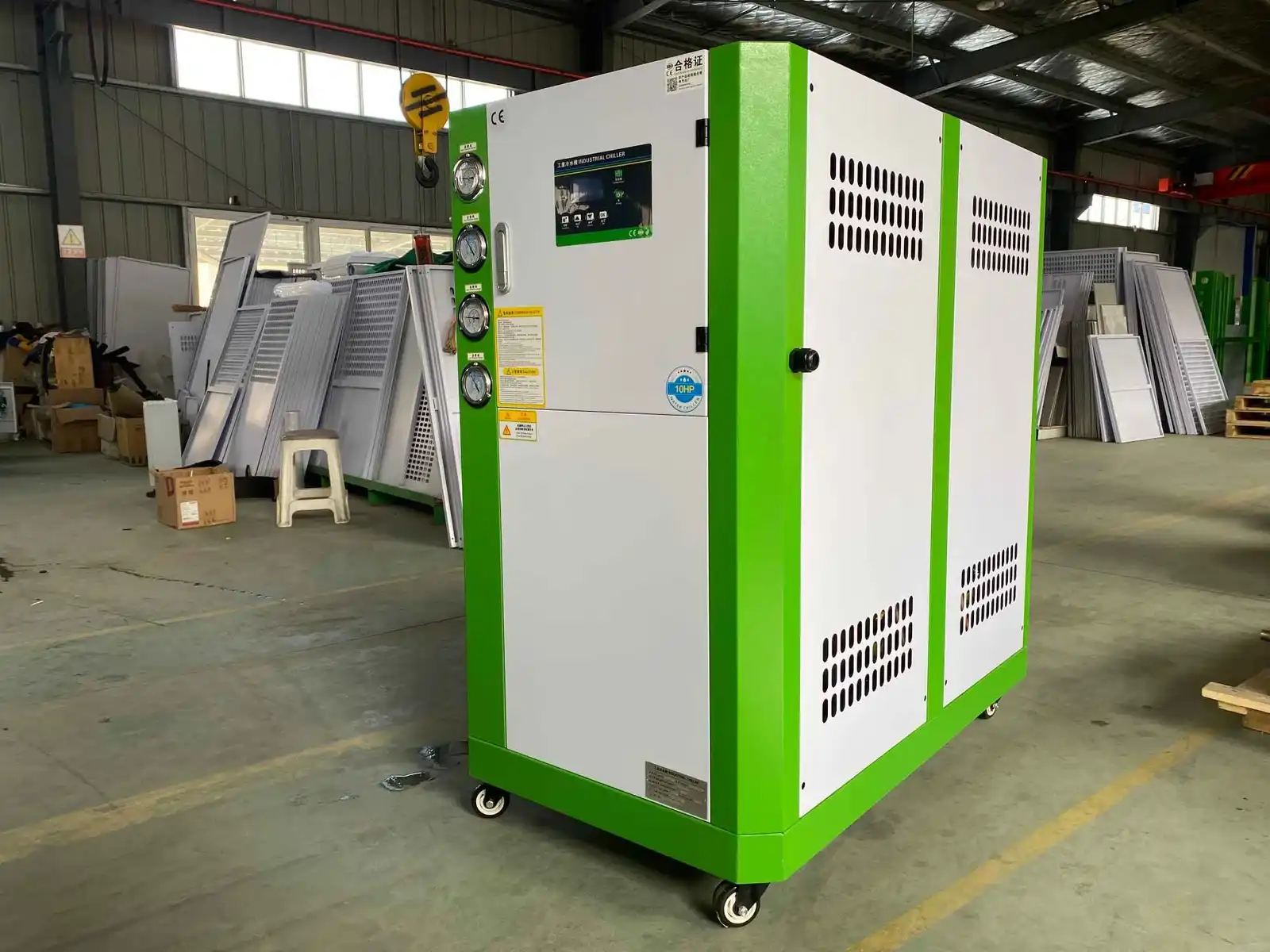
Why Precision Cooling of Industrial Water Chiller Machines is Non-Negotiable
When you look at a plastic part—maybe a car dashboard component or a simple medical vial—what you’re really looking at is a frozen moment of thermal management. If the temperature of the mold fluctuates by even a few degrees, the plastic shrinks at different rates. This leads to internal stresses, “sink marks,” or worse, parts that simply don’t fit where they should.
Using high-quality industrial water chiller machines allows a facility to maintain a constant, predictable temperature. It’s about more than just “cold water”; it’s about thermal stability. In many shops, you’ll see an industrial chiller dedicated to a single large press, while others might use a centralized system. Both approaches have their merits, but the goal is the same: repeatable results.
The Impact on Cycle Time
In the molding business, time is literally money. A cycle that takes 30 seconds instead of 25 might not seem like a disaster, but over a week of 24/7 production, that’s thousands of lost parts.
- Rapid Heat Removal: Efficient industrial water coolers pull heat from the mold cavity almost instantly.
- Consistent Throughput: When the cooling stays steady, the machine operator doesn’t have to keep tweaking settings.
- Reduced Scrap Rates: Stable cooling means the first part of the day looks exactly like the last part of the day.
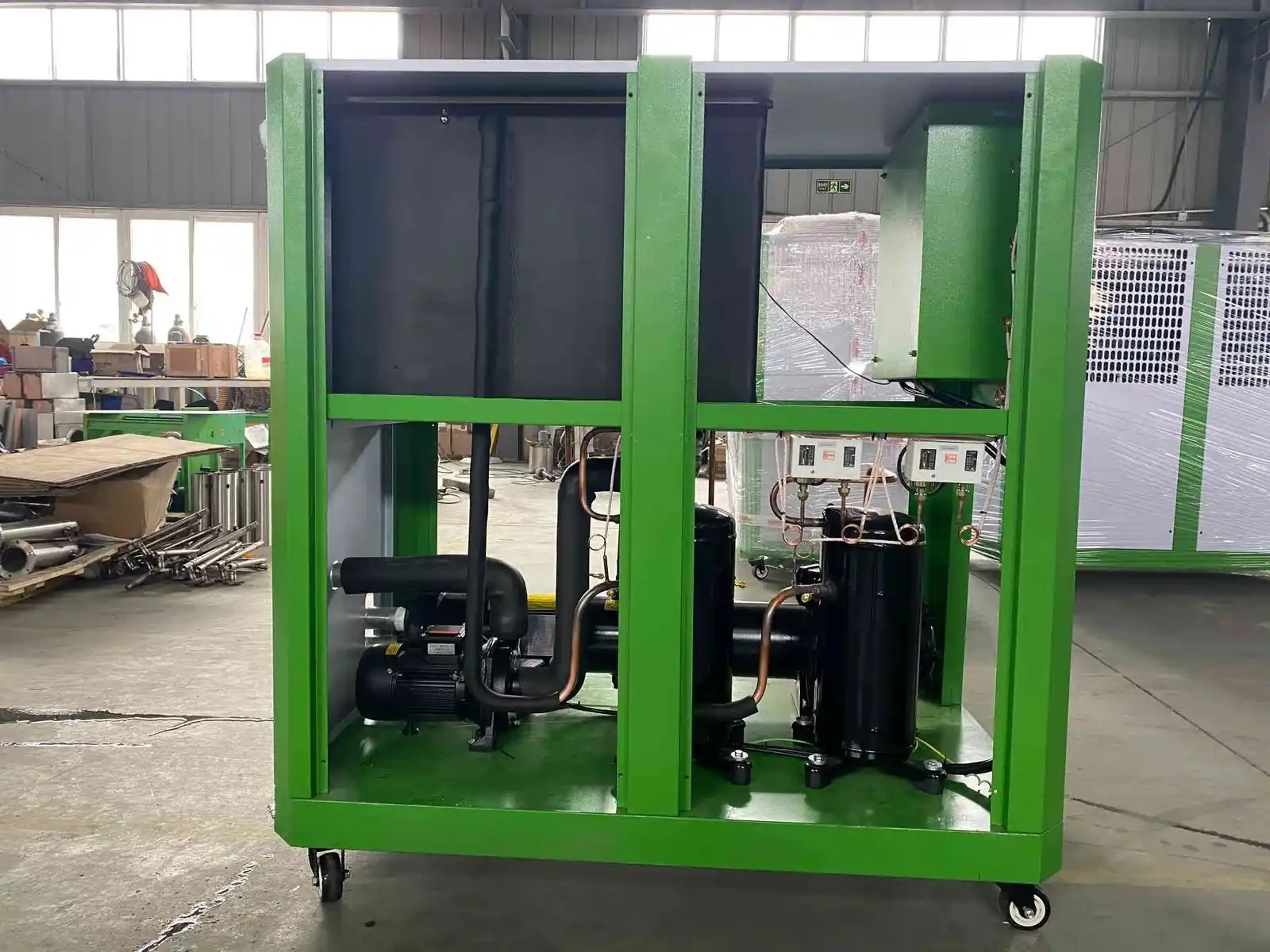
Choosing Your Weapon: industrial water chiller machines vs. industrial air chiller machines
There is always a bit of a debate on the factory floor about which type of system is better. It often comes down to the environment of the plant itself. Sometimes, an industrial air chiller is the smarter play because it’s easier to install and doesn’t require a cooling tower. However, in a hot molding shop, adding more heat to the air isn’t always the best move.
| Feature | Water-Cooled System | Air-Cooled System |
|---|---|---|
| Heat Rejection | Via water (cooling tower) | Via ambient air (fans) |
| Placement | Indoor (compact) | Often outdoor or well-ventilated indoor |
| Efficiency | Generally higher in hot climates | Depends heavily on ambient air temp |
| Maintenance | Requires water treatment | Requires coil cleaning |
| Installation | Complex (piping + tower) | Simpler (stand-alone) |
For many, the air cooled chiller is the go-to for smaller, localized operations where flexibility is king. But for massive, multi-press setups, an industrial water chiller tied to a cooling tower often provides the raw “umph” needed to handle the massive BTU loads generated by 500-ton presses.
The Hidden Complexity of the Cooling Loop
It’s easy to think of industrial water chiller machines as just big refrigerators, but the plumbing matters just as much as the compressor. The diameter of the hoses, the scale buildup inside the mold’s cooling channels, and even the type of glycol used can change the efficiency of the heat transfer.
One thing that often gets overlooked is the “Delta T”—the temperature difference between the water going into the mold and the water coming out. If the water comes out almost as cold as it went in, it’s not picking up enough heat. This usually means the flow rate is too low or the mold design is inefficient. A well-sized industrial chiller can only do so much if the plumbing is a bottleneck.
Maintenance Reality Check for Industrial Water Chiller Machines
- Let’s be honest: maintenance is the first thing to slide when production gets busy. But with industrial water coolers, neglect leads to a slow death by inefficiency.
- Filter Checks: Plastic dust and shop grime love to clog up condensers.
- Water Chemistry: If you aren’t testing your water, minerals are likely plating out inside your expensive mold.
- Pump Seals: High-pressure cycles can wear down seals, leading to leaks that turn a clean shop into a slip-and-slide.
Scaling with Modular Solutions
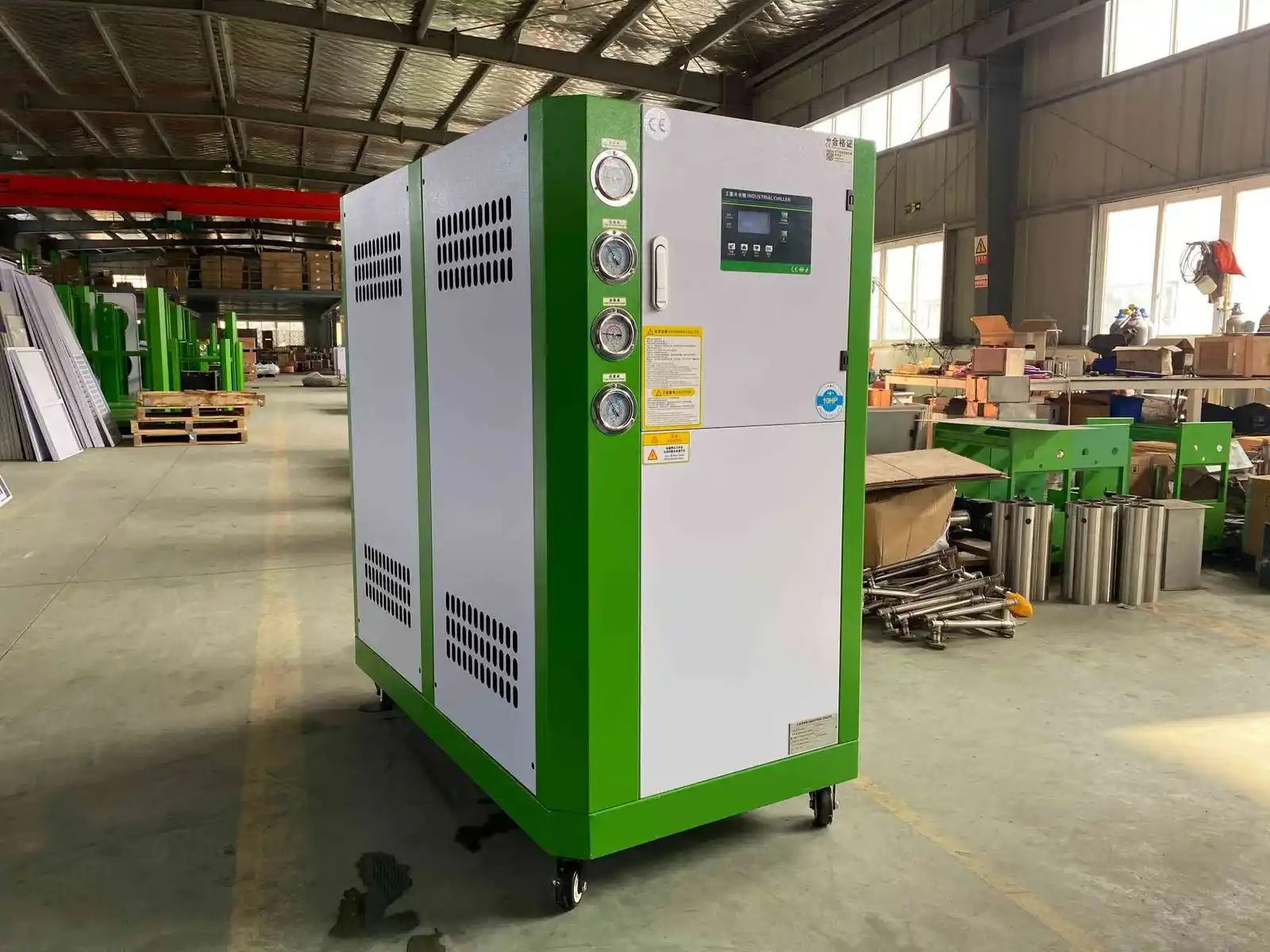
As a shop grows from two presses to ten, the cooling demand doesn’t just grow—it evolves. This is where the concept of modularity (similar to what we see in a modular air cooled chiller) becomes incredibly attractive. Instead of buying one massive, terrifyingly expensive industrial water chiller that might be too big for today but too small for tomorrow, many managers are opting for banked units.
This setup allows you to take one unit offline for a descaling or a repair without shutting down the entire molding line. In a world where “just-in-time” delivery is the norm, that kind of uptime is worth its weight in gold.
Environmental and Economic Considerations for Industrial Water Chiller Machines
We are seeing a much stronger push toward energy efficiency in 2026. Older industrial water chiller models are essentially “on/off” machines, which is a terrible way to manage energy. Newer industrial water chiller machines utilize variable frequency drives (VFDs) and electronic expansion valves to match the cooling output precisely to the load.
It might cost more upfront, but when the electricity bill arrives at a facility running twenty presses, the savings are undeniable. It’s not just about being “green”; it’s about being profitable. A machine that draws 20% less power while delivering the same cooling capacity is a competitive advantage.
FAQ
How does the specific type of plastic resin affect the requirements for an industrial water chiller machines?
Different resins have different “specific heat” capacities. For instance, a crystalline plastic like Polypropylene (PP) releases a different amount of heat during solidification compared to an amorphous plastic like Polystyrene (PS). If you’re switching your production line from a standard plastic to a high-performance engineering grade, you might find that your current industrial water chiller machines are suddenly struggling to keep up with the increased thermal load, even if the part size remains the same.
Can I use the same chiller for both the mold cooling and the hydraulic oil cooling on the press?
While it is physically possible, it’s often not the best practice. The hydraulic oil usually needs to be kept around 110°F to 120°F, whereas the mold might need water at 50°F. If you use a single industrial water chiller machines for both, you’re often over-cooling the oil (wasting energy) or under-cooling the mold. Many high-efficiency shops use a two-circuit system or a separate industrial water chiller machines setup for the hydraulics to ensure both systems operate at their peak.
What happens to the industrial water chiller machines performance if my factory floor hits 100 degrees in the summer?
If you are using an air cooled chiller, its capacity will drop as the ambient temperature rises. The compressor has to work much harder to “push” the heat into the already-hot air. This is why it’s critical to size your industrial air chiller based on your worst-case summer temperatures, not your average spring temperatures. If you don’t, you’ll find your cycle times creeping up exactly when your customers are most demanding.

 English
  Spanish
  Russian
  Portuguese
  French
  Arabic
  Japanese
  German