
Walk into any large factory or commercial building with a central cooling plant, and chances are there’s a water cooled chiller somewhere in the mechanical room. They’re big, they’re heavy, and they hum along for decades with proper care. But how exactly do they work? And why choose water cooling over air cooling?
Having spent time around these machines—from small 50-ton units to massive 2,000-ton installations—the basic principle is simple. The execution is where it gets interesting. This is a look at what a water cooled industrial chiller actually is and how the whole thing operates.
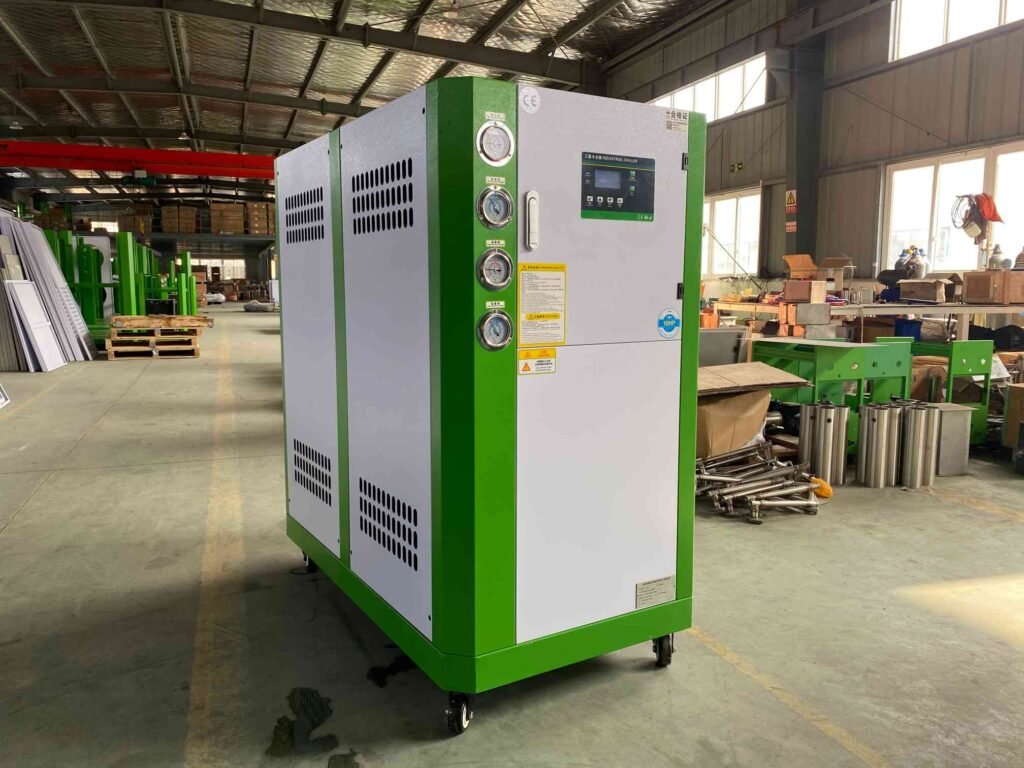
What Is a Water Cooled Industrial Chiller?
A water cooled industrial chiller is a refrigeration machine that removes heat from a process or space and transfers that heat to water. The heated water then travels to a cooling tower or fluid cooler, where the heat is released to the outside air. The cooled water returns to the chiller to pick up more heat, and the cycle repeats.
The key difference between this and an air cooled chiller is the heat rejection medium. Air cooled uses fans and outdoor air. Water cooled uses water and a cooling tower. Each has its place.
Where You'll Find Them
These chillers are common in:
• Large manufacturing facilities (plastics, chemicals, food processing)
• Hospitals and data centers (year-round cooling needs)
• Office towers and hotels (central HVAC plants)
• District cooling systems (one chiller plant serving multiple buildings)
What’s been observed: when a facility needs more than about 200 tons of cooling, or when it operates in a hot, humid climate, water cooled starts looking like the better answer.
How a Water Cooled Industrial Chiller Works
The refrigeration cycle inside a water cooled industrial chiller is the same as in an air cooled unit or even a household refrigerator. The difference is in how the heat gets rejected.
The Basic Cycle
Here’s what happens step by step:
1. Evaporation: Liquid refrigerant absorbs heat from the process water in the evaporator. The refrigerant boils into a low-pressure gas.
2. Compression: The compressor raises the refrigerant pressure and temperature.
3. Condensation: Hot, high-pressure refrigerant flows to the condenser. Cool water from the cooling tower passes through the condenser, absorbing heat from the refrigerant. The refrigerant condenses back into a liquid.
4. Expansion: The liquid refrigerant passes through an expansion valve, dropping in pressure and temperature, and returns to the evaporator to start over.
Meanwhile, the cooling tower water that picked up heat from the condenser gets sprayed over tower fill while fans blow air across it. Some of the water evaporates, carrying heat away. The cooled water returns to the chiller’s condenser.
The Two Water Loops
A water cooled industrial chiller actually manages two separate water loops:
| Loop | Water Type | What It Does |
|---|---|---|
| Chilled water loop | Closed loop, treated water | Circulates between chiller evaporator and process equipment; picks up heat from the process |
| Condenser water loop | Open or closed, often with tower | Circulates between chiller condenser and cooling tower; rejects heat to the atmosphere |
The two loops never mix. They just exchange heat through the chiller’s evaporator and condenser.
Key Components of a Water Cooled Industrial Chiller
Understanding the parts helps with troubleshooting and maintenance. A water cooled industrial chiller has most of the same components as any chiller, plus a few extras related to the water side.
Major Components
• Evaporator: A heat exchanger where refrigerant absorbs heat from the chilled water. Typically a shell-and-tube design with water inside the tubes and refrigerant around them.
• Compressor: The heart of the system. Common types include screw, scroll, and centrifugal. Compressor choice depends on size and efficiency needs.
• Condenser: Another heat exchanger, but here refrigerant gives up heat to the condenser water. Also usually shell-and-tube.
• Expansion valve: Controls refrigerant flow into the evaporator. Can be thermal expansion valve (TXV) or electronic expansion valve (EEV).
• Control panel: Monitors pressures, temperatures, and safeties. Modern units have sophisticated controls with remote monitoring.
Cooling Tower and Pumps
The chiller itself is only part of the industrial chiller system. A complete system also includes:
• A cooling tower (or fluid cooler) to reject heat outdoors
• Condenser water pumps to circulate water between chiller and tower
• Chilled water pumps to circulate water to process equipment
• Piping, valves, and expansion tanks

Water Cooled vs. Air Cooled: Which Is Better?
This is the question that comes up in almost every chiller discussion. There’s no universal answer, but there are clear trade-offs.
| Factor | Water Cooled | Air Cooled |
|---|---|---|
| Efficiency | Higher, especially in hot weather | Lower, drops as ambient temperature rises |
| Installation cost | Higher (tower, pumps, piping) | Lower (just the chiller and pad) |
| メンテナンス | More complex (tower cleaning, water treatment) | Simpler (coil cleaning, fan checks) |
| 水使用量 | 重要(蒸発、ブローダウン) | なし |
| Noise | より静かに(タワーは遠隔操作可能) | Louder (fans at chiller location) |
| 必要スペース | More (chiller indoors + tower outdoors) | Less (just the chiller outdoors) |
| Lifespan | 20–30 years with good maintenance | 15–20 years |
From what’s been seen in the field, water cooled makes sense when efficiency is a priority, when the facility runs year-round in a hot climate, or when the chiller is large (over 200–300 tons). Air cooled makes sense when water is scarce, when first cost is the main driver, or when the chiller is small.
効率と営業コスト
This is where water cooled chillers shine. They simply use less electricity to remove the same amount of heat, especially on hot days.
Understanding Efficiency Metrics
Chiller efficiency is measured in kW per ton (kilowatts of electricity input per ton of cooling output). A good water cooled industrial chiller might achieve 0.50–0.60 kW/ton at full load. An air cooled chiller of the same size might be 0.80–1.00 kW/ton.
That difference adds up. A 500-ton chiller running 4,000 hours per year:
• Water cooled at 0.55 kW/ton: 1,100,000 kWh
• Air cooled at 0.85 kW/ton: 1,700,000 kWh
At $0.10 per kWh, that’s $110,000 vs. $170,000 per year. The water cooled saves $60,000 annually in electricity. That pays for a lot of cooling tower maintenance.
Part-Load Efficiency
Chillers rarely run at full load. Most of the time, they’re at 40–70% of capacity. Good water cooled chillers maintain high efficiency at part load, especially with variable speed drives on compressors and tower fans.
Maintenance Requirements
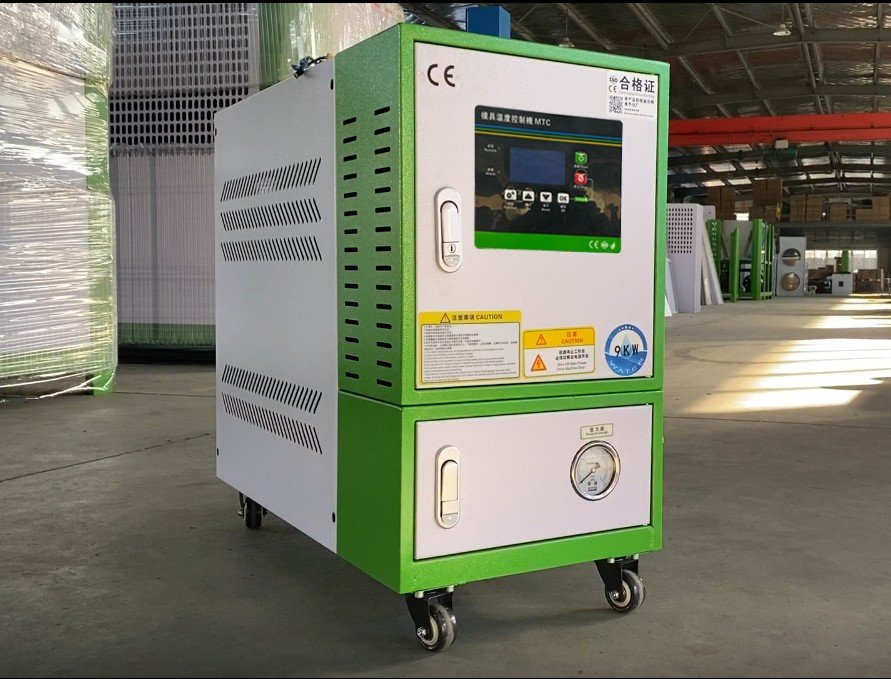
A water cooled industrial chiller is one component of a larger 工業用チラーシステム that includes pumps, piping, a cooling tower, and controls. A water cooled industrial chiller needs more maintenance than an air cooled industrial chiller. That’s the trade-off for higher efficiency.
Chiller-Specific Maintenance
• Evaporator and condenser tube cleaning: Scale and fouling reduce heat transfer. Tubes need cleaning periodically—sometimes chemically, sometimes mechanically with brushes.
• Compressor oil analysis: Regular oil samples detect wear and contamination before failure.
• Refrigerant leak checks: Even small leaks reduce efficiency and harm the environment.
• Control calibration: Sensors drift over time and need checking.
Cooling Tower Maintenance
The tower adds its own maintenance tasks:
• Cleaning basin and fill to prevent biological growth
• Checking and adjusting chemical treatment (scale, corrosion, algae control)
• Inspecting fans, motors, and drives
• Maintaining make-up water and blowdown systems
Facilities that skip tower maintenance often see chiller performance decline. A fouled condenser from poor tower water quality loses efficiency just as surely as a dirty air cooled coil.
Common Applications
Water cooled chillers are overkill for some applications and essential for others.
Good fits:
• Large manufacturing plants with high, steady cooling loads
• Data centers (year-round cooling, efficiency critical)
• Hospitals (reliability and efficiency both matter)
• Chemical and pharmaceutical processes (precise temperature control)
• District cooling (one central plant serving many buildings)
Poor fits:
• Small workshops or garages (air cooled is simpler and cheaper)
• Facilities in areas with extremely high water costs
• Temporary or portable applications
Lifecycle Considerations
A water cooled industrial chiller is a long-term investment. The upfront cost is higher than air cooled, but the operating cost is lower. The payback period depends on runtime and electricity rates.
A few things worth considering before choosing:
• Expected runtime per year (more runtime favors water cooled)
• Local electricity rates (higher rates favor water cooled)
• Water availability and cost (scarce or expensive water favors air cooled)
• Noise restrictions (quieter operation favors water cooled)
• Available space for a cooling tower
よくあるご質問
How long does a water cooled industrial chiller last?
With proper maintenance—tube cleaning, oil analysis, water treatment—20 to 30 years is typical. Some last 40+ years in light-duty applications.
Does a water cooled chiller use a lot of water?
Yes. Cooling towers consume water through evaporation and blowdown. A 500-ton chiller might use 50–100 gallons per minute of make-up water, depending on conditions.
Can I convert an air cooled chiller to water cooled?
Not practically. The condenser design is completely different. Replacing the entire chiller is the only realistic option.


 Japanese
  English
  Spanish
  Russian
  Portuguese
  French
  Arabic
  German