
Woven polypropylene bags are everywhere — cement bags, fertilizer sacks, rice packaging, sand bags. They’re durable by design, which is exactly what makes them a headache when they reach end of life. The material doesn’t break down, it doesn’t compress well, and tossing it into a general waste stream is a waste of a perfectly recyclable polymer.
A PP granulator takes that waste and turns it back into something usable. The output — uniform polypropylene pellets — can go straight back into manufacturing new bags, strapping, or other PP products. It’s not a complicated concept, but the equipment choices and process details matter more than they might appear at first glance.
Why Woven Bag Waste Needs a PP Granulator
Woven PP bags aren’t just flat film. They’re made from interlocked strips of oriented polypropylene, sometimes laminated with a PE or BOPP layer, and often printed with inks or coatings. That structure makes them tougher to process than simple film or rigid PP parts.
Feeding woven bag waste directly into an extruder without proper size reduction and melting tends to produce inconsistent output — uneven pellet size, trapped air, degraded material. A dedicated PP granulator handles the specific characteristics of woven material: the fibrous texture, the variable thickness, the occasional contamination from labels or adhesives.
How a PP Granulator Processes Woven Bags
Size Reduction First
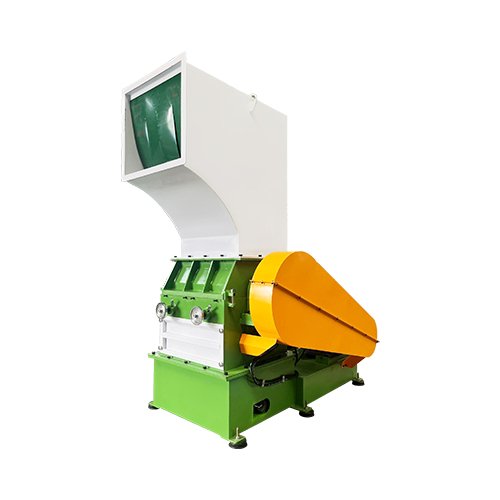
Most woven bag recycling lines start with shredding or crushing before granulation. Whole bags — especially baled ones — don’t feed smoothly into a granulator hopper. A medium-speed side crusher reduces them to strips or flakes, which then feed more consistently into the granulation stage.
Some PP granulators have integrated feeding systems with forced-feed rollers that can handle strips directly, skipping a separate shredder. Whether that’s practical depends on input volume and how the bags arrive.
Melting and Pelletizing
The granulator melts the PP material and forces it through a die to form strands, which are then cut into pellets. Temperature control matters here — polypropylene degrades if overheated, and woven bags with lamination layers add complexity since PE and PP have different melting points.
Water-ring and strand pelletizing are both used for this application. Strand pelletizing gives slightly more uniform output; water-ring systems tend to be simpler to operate continuously.
Here’s a general comparison:
| Pelletizing Method | Output Uniformity | Ease of Operation | Suitable For |
|---|---|---|---|
Strand pelletizing | High | Moderate | Clean, consistent input |
Water-ring pelletizing | Moderate | High | Mixed or variable input |
Underwater pelletizing | Very high | Lower | High-volume, quality-sensitive lines |
What to Consider When Choosing a PP Granulator for Woven Bags
A few things tend to get overlooked until the machine is already running:
Lamination content — bags with heavy PE lamination produce a mixed-polymer melt; know the composition of your input before selecting screw and die specifications.
Contamination level — dirt, moisture, and adhesive residue affect output quality; some lines include washing and drying stages before granulation.
Throughput requirements — matching machine capacity to actual daily input volume avoids both bottlenecks and unnecessary energy consumption.
Degassing — woven material can trap air; granulators with vented barrels handle this better and produce denser, more consistent pellets.
FAQ
Can a PP granulator handle laminated woven bags?
It can, but with some caveats. Bags with thin PE lamination are generally processable, though the output will be a PP/PE blend rather than pure PP. Heavily laminated material may require pre-sorting or blending limits to maintain output quality. Some recyclers process laminated and unlaminated bags separately for this reason.
Does woven bag waste need washing before granulation?
Not always. Industrial bags from clean applications — fresh cement, fertilizer, grain — are often processed without washing. Bags from construction sites or outdoor storage tend to carry more contamination and benefit from a wash line before the PP granulator stage. Moisture after washing needs to be dried out before melting, or it causes bubbling in the pellets.
What’s the typical output quality of recycled PP pellets from woven bags?
It varies with input quality and process control. Well-processed recycled PP from clean woven bags can substitute for virgin material in non-critical applications — lower-grade bags, agricultural film, injection-molded parts with relaxed specs.

 English
  Spanish
  Russian
  Portuguese
  French
  Arabic
  Japanese
  German