
Quando se trata de manutenção anual, pode parecer simples quando está escrito, mas quando começa a funcionar ou a ser fabricado, o mais provável é que se torne mais complexo com base no tipo de equipamento envolvido (por exemplo, aplicações de refrigeração industrial). Um plano anual para um chiller industrial não tem mais a ver com “ficar bem no papel”, mas sim com a prevenção da lenta acumulação de problemas que resultam em sinais típicos de elevado consumo de energia e temperaturas instáveis, ou possivelmente paragens não programadas devido a circunstâncias imprevistas.
Normalmente, um bom programa de manutenção parece aborrecido, mas é bem sucedido. Um plano de manutenção dará aos técnicos tempo para inspecionar, lavar e limpar, testar e, potencialmente, substituir pequenos componentes antes de se tornarem uma disfunção dispendiosa. Em termos práticos, isto resulta normalmente em menos surpresas e num arrefecimento global consistente.
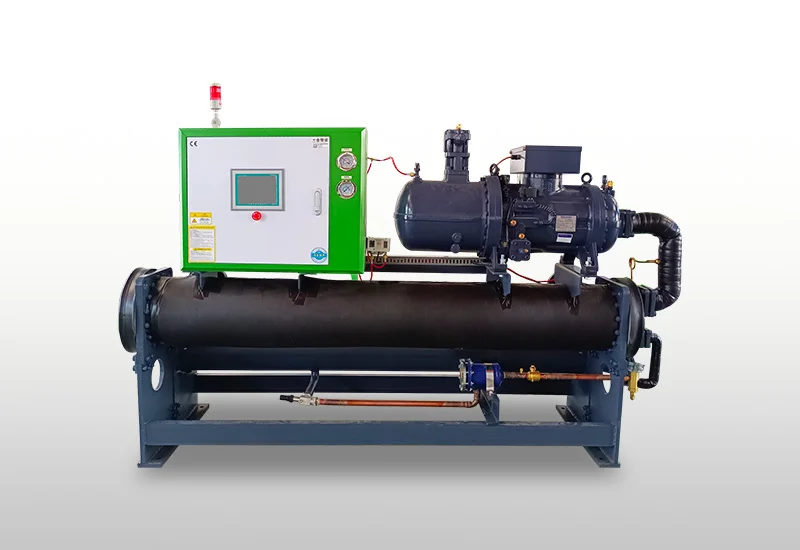
Comece por analisar o estado atual do chiller
Antes de marcar datas num calendário, é útil rever o que a máquina tem estado a fazer recentemente. Os registos de serviço, os registos de alarme e os dados de energia contam muitas vezes uma história mais clara do que uma inspeção visual rápida. Uma unidade que tem estado a funcionar com pequenas falhas repetidas pode precisar de mais do que uma lista de verificação padrão.
Vale a pena prestar atenção a alguns aspectos:
- Alarmes repetidos de alta pressão ou de baixa temperatura
- Recuperação lenta da temperatura sob carga
- Vibração invulgar ou ruído do compressor
- Aumento do consumo de energia sem um aumento correspondente da procura de produção
- Sinais de corrosão, fugas ou incrustações
Se o equipamento for um Refrigerador industrial Ao apoiar uma linha crítica, mesmo as pequenas irregularidades merecem atenção. Muitas vezes, são os padrões “menores” que levam a falhas maiores mais tarde.
Elaborar o calendário em função das condições reais de funcionamento
A melhor janela de manutenção nem sempre é a mais cómoda. É normalmente a que causa menos perturbações. Para muitas fábricas, isso significa programar o serviço anual durante um período de produção mais lento, uma paragem sazonal ou uma mudança planeada.
Este tempo é importante porque a manutenção do chiller envolve frequentemente:
- Paragem temporária do sistema
- Limpeza ou drenagem de partes do circuito
- Isolamento elétrico
- Teste de carga após a remontagem
- Verificação de que tudo está estável antes de retomar o funcionamento pleno
Um plano anual básico pode ser mais ou menos assim:
- Rever os dados de desempenho do ano anterior
- Confirmar a janela de manutenção com as equipas de produção
- Encomendar peças de substituição com antecedência
- Programar tarefas de limpeza, inspeção e teste
- Prever tempo para o controlo pós-manutenção
Parece simples, mas muitas vezes é a falta de disciplina de tempo que torna o trabalho confuso.
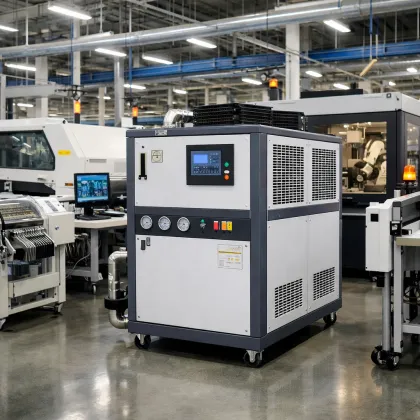
O que a manutenção anual do chiller deve normalmente cobrir
A manutenção anual não deve ser tratada como uma única visita para “verificar tudo”. Uma melhor abordagem é dividi-la em trabalho mecânico, térmico, elétrico e de controlo. Desta forma, nada de importante fica enterrado sob o rótulo geral de manutenção.
Inspeção mecânica
Isto inclui normalmente compressores, rolamentos, vedantes, ligações, pontos de montagem e tubagem de refrigerante. Qualquer folga, resíduo de óleo ou padrão de desgaste deve ser investigado em vez de simplesmente anotado e ignorado.
Limpeza por transferência de calor
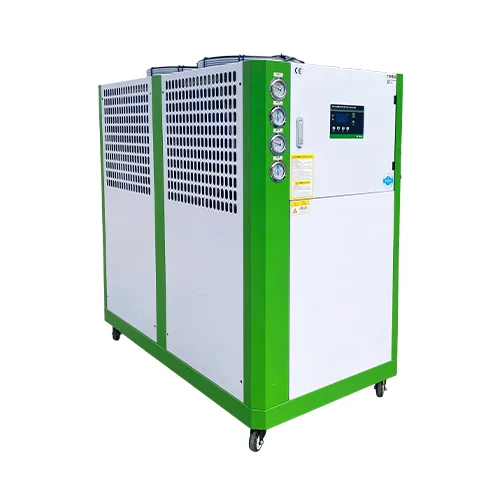
Esta parte depende do tipo de chiller e do ambiente em que funciona. A refrigerador arrefecido a água frequentemente necessita de atenção do lado da água: incrustações, sujidade e má qualidade da água podem reduzir a eficiência da permuta de calor. A refrigerador arrefecido a ar necessita normalmente de uma limpeza da bobina do condensador, de verificações do fluxo de ar e da remoção de poeiras ou detritos que bloqueiam a rejeição do calor.
Inspeção eléctrica e de controlo
A cablagem, os contactores, os sensores, os relés e os dispositivos de segurança devem ser cuidadosamente verificados. Os terminais soltos ou os sensores com desvios nem sempre provocam uma falha imediata, e é exatamente por isso que se tornam perigosos com o tempo.
Teste de desempenho
Após a limpeza e inspeção, o sistema deve ser testado em condições de trabalho. Isto inclui normalmente a verificação do diferencial de temperatura, das pressões de sucção e descarga, da resposta à carga e da estabilidade do controlo. Se o desempenho não estiver onde deveria estar, existe normalmente uma razão, mesmo que não seja óbvia à primeira vista.
Um quadro simples de manutenção anual
Eis uma forma prática de organizar o trabalho sem o tornar demasiado complicado.
| Tarefa | Frequência | Responsável | Porque é que é importante |
|---|---|---|---|
| Inspeção visual | Mensal / antes do serviço anual | Operador interno | Detecta precocemente fugas, danos ou desgaste visível |
| Verificação da qualidade da água ou do estado da bobina | Trimestral | Equipa de manutenção | Ajuda a evitar incrustações, sujidade ou perda de caudal de ar |
| Inspeção das ligações eléctricas | Anualmente | Técnico qualificado | Reduz o risco de falhas, sobreaquecimento ou paragens |
| Limpeza profunda das superfícies de permuta de calor | Anualmente | Equipa de serviço | Restaura a eficiência térmica |
| Teste de desempenho sob carga | Anualmente | Técnico + operador | Confirma que a unidade está pronta para a procura real de produção |
| Revisão da substituição de peças | Anualmente | Diretor de manutenção | Ajuda a evitar falhas repetidas devido a componentes desgastados |
Uma tabela como esta é útil porque transforma o serviço anual num processo gerido em vez de uma vaga tarefa “algures neste trimestre”.
Orçamentar sem adivinhações
A manutenção anual é mais fácil de aprovar quando o custo é planeado com antecedência. O orçamento inclui normalmente mão de obra, materiais de limpeza, juntas, sensores, lubrificantes e quaisquer peças de substituição prováveis. Os sistemas mais antigos necessitam frequentemente de uma reserva ligeiramente maior, uma vez que as substituições de pequenos componentes se tornam mais prováveis à medida que a máquina envelhece.
Há também uma razão prática para orçamentar os itens de contingência. Um sistema que parece estar bem no início do serviço pode revelar um desgaste oculto quando é aberto. Isso não é invulgar. De facto, é uma das principais razões pelas quais a manutenção anual é valiosa em primeiro lugar.
Para as empresas que tentam equilibrar o tempo de atividade e os custos, planear com antecedência parece quase sempre menos dispendioso do que uma reparação de emergência.
Equipa interna ou parceiro de serviços?
Essa decisão depende da complexidade, da idade do equipamento e do grau de criticidade da carga de arrefecimento. Uma equipa interna experiente pode muitas vezes tratar das verificações de rotina, da limpeza e da documentação. Mas o apoio especializado faz mais sentido quando:
- O chiller é grande ou altamente integrado
- O sistema utiliza controlos avançados
- Uma paragem da produção seria dispendiosa
- A unidade tem falhas repetidas que são difíceis de diagnosticar
- Aplicam-se requisitos de garantia ou OEM
Em alguns casos, a melhor abordagem é uma abordagem híbrida: o pessoal interno trata da monitorização regular, enquanto um especialista efectua o serviço anual aprofundado. Esta abordagem tende a funcionar bem para sistemas industriais que necessitam tanto de familiaridade como de profundidade técnica.
Para referência sobre conceitos mais amplos de refrigeração e eficiência, o Departamento de Energia dos EUA tem material útil sobre sistemas de refrigeração industrial e considerações de eficiência.
Erros comuns que causam problemas mais tarde
Mesmo um programa de manutenção bem intencionado pode falhar o objetivo se alguns erros comuns continuarem a acontecer:
- Esperar que os alarmes se tornem frequentes
- Saltar os controlos da serpentina ou do tratamento da água
- Substituição de uma peça desgastada sem verificar os componentes relacionados
- Não registar leituras de pressão, temperatura ou corrente
- Reiniciar a máquina demasiado depressa após a manutenção
- Partindo do princípio de que “ainda funciona” significa que está a funcionar eficientemente
Este último é especialmente comum. Um chiller pode continuar a funcionar enquanto utiliza silenciosamente mais energia do que a necessária, o que torna o problema fácil de ignorar até que o custo de funcionamento se torne impossível de ignorar.
Alguns registos práticos que vale a pena manter
A manutenção do ano seguinte torna-se muito mais fácil quando o ano em curso está corretamente documentado. Os registos úteis incluem:
- Data de serviço e janela de tempo de inatividade
- Peças substituídas
- Valores de desempenho medidos antes e depois do serviço
- Notas sobre desgaste invulgar, vibrações, ruídos ou fugas
- Leituras da qualidade da água ou notas de limpeza das bobinas
- Observações dos técnicos e recomendações de acompanhamento
Este tipo de registo pode não parecer urgente no momento, mas com o tempo torna-se uma das ferramentas mais úteis disponíveis.
FAQ
Com que frequência devem os filtros e os filtros ser verificados entre as revisões anuais?
Isso depende do ambiente de funcionamento, mas muitos sistemas beneficiam de verificações mensais ou trimestrais, especialmente se a qualidade da água ou do ar circundante for inferior à ideal. Na prática, quanto mais sujo for o ambiente, mais curto deve ser o intervalo.
A manutenção é alterada para os chillers utilizados em instalações com pó ou humidade?
Sim, bastante. O pó tende a reduzir o fluxo de ar e a transferência de calor, enquanto a humidade pode contribuir para a corrosão e problemas eléctricos. Estas condições justificam normalmente uma limpeza mais frequente e uma inspeção mais rigorosa dos painéis, bobinas e ligações.
Que informações facilitam o planeamento da manutenção do próximo ano?
As notas sobre o historial de avarias, tendências energéticas, peças de substituição e medições de desempenho pós-serviço são úteis. Mesmo pequenas observações, como “bobina muito limpa” ou “leitura do sensor instável antes da manutenção”, podem poupar tempo mais tarde.

 Portuguese
  English
  Spanish
  Russian
  French
  Arabic
  Japanese
  German