
Im Rampenlicht der modernen Industrie spielen industrielle Kaltwassersätze eine wichtige Rolle als unbesungene Helden, die im Stillen den reibungslosen Ablauf vieler Produktionsprozesse gewährleisten. Sie werden in allen Bereichen eingesetzt, von der Lebensmittelverarbeitung bis zur Kühlung medizinischer Geräte, von der Kunststoffformung bis zu HLK-Systemen in großen Gebäuden. Trotz ihrer wichtigen Rolle wissen die meisten Menschen jedoch nicht genau, welche verschiedenen Typen es gibt. Heute wollen wir den Vorhang über industrielle Kältemaschinen lüften und einen Blick auf die breite Palette von Kältetechnik-Typen werfen.
Ⅰ. Klassifiziert nach Verflüssigertyp
Die Hauptaufgaben einer industriellen Kältemaschine Die Aufgabe der Kältemaschine besteht darin, Prozesswasser oder Kühlmittel mit Hilfe eines Kältesystems zu kühlen, damit der Bedarf der industriellen Produktion gedeckt werden kann. Damit ist er einer der wichtigsten Teile des Systems, wobei sein Typ darüber entscheidet, nach welchem Prinzip der Kühler arbeitet und für welche Anwendungen er eingesetzt werden kann. Gekühlt durch Verflüssiger, funktionell gesehen, fallen die Methoden der Unterteilung meist unter die Kategorien Luft/Wasser.
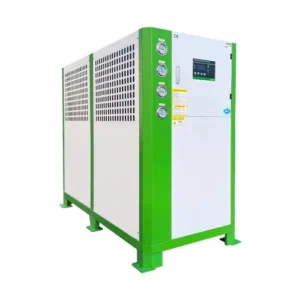
Luftgekühlte Kältemaschinen werden gerne in kleinen und mittleren Betrieben eingesetzt, weil sie einfach und leicht zu installieren sind. Die Ventilatoren saugen die Luft um sie herum an und kühlen damit das Kältemittel ab. Diese Kältemaschinen benötigen kein kompliziertes Wassersystem, was bedeutet, dass sie weniger Kosten für die Einrichtung und Wartung verursachen. Sie können auch etwas zusätzliche Wärme an die Umgebung abgeben. Sie kühlen jedoch nicht so gut wie andere Typen und funktionieren nicht so gut an heißen oder feuchten Orten.
Wassergekühlte Kältemaschinen sind besser als luftgekühlte, weil sie die Wärme sehr gut abführen können. Sie verwenden Kühltürme oder Wassersysteme, um die Wärme vom Kältemittel auf das Wasser zu übertragen, das dann die Wärme nach außen abgibt. Dies ist ideal für große Fabriken, die viel Kühlwasser benötigen. Aber wassergekühlte Kältemaschinen sind teurer in der Einrichtung und im Betrieb. Das Wassersystem muss regelmäßig gereinigt werden, um die Ansammlung von Mineralien und das Wachstum von Keimen zu verhindern.
Ⅱ. Unterschiede nach Verdichtertyp: Hubkolben-, Schrauben- und Zentrifugalkompressor
Neben den Verflüssigertypen hat auch der Verdichter - das Herzstück des Kältesystems - einen großen Einfluss auf die Leistung und die Anwendungsmöglichkeiten von Industriekältemaschinen. Je nach Funktionsprinzip werden Industriekühler in drei Verdichtertypen eingeteilt: Hubkolben-, Schrauben- und Zentrifugalverdichter.
1. Hubkolbenmaschine Industrielle Kältemaschine
Die frühesten Kältesatztypen ähneln in ihrer Funktionsweise der Kolbenbewegung in einem Automotor. Kolbenkühler verdichten das Kältemittel durch die Hin- und Herbewegung des Kolbens im Zylinder, wodurch der Kältekreislauf geschlossen wird. Diese Geräte bieten die Vorteile eines einfachen Aufbaus und geringerer Kosten, wodurch sie sich für kleine industrielle Anwendungen eignen. Kolbenkältemaschinen haben jedoch einen relativ geringen Wirkungsgrad und können bei hoher Belastung Vibrationen und Lärm erzeugen.
2. Industrielle Schraubenkühlmaschinen
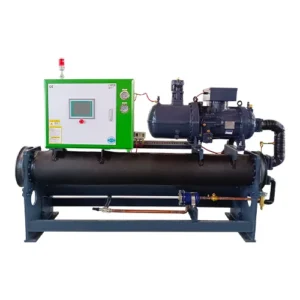
Sie sind wegen ihrer hohen Effizienz und stabilen Leistung weit verbreitet. Schraubenkühlmaschinen verwenden zwei ineinandergreifende Schraubenrotoren, um das Kältemittel zu verdichten und zu fördern. Diese Konstruktion sorgt für hohe Effizienz und Zuverlässigkeit bei mittleren Lasten. Darüber hinaus arbeiten Schraubenkühlmaschinen mit einem niedrigeren Geräuschpegel und relativ geringen Wartungskosten. Daher sind sie die bevorzugte Wahl für viele mittlere bis große Industrieanlagen.
3. Industrielle Zentrifugalkältemaschine
Zentrifugalkühlmaschinen stehen an der Spitze des Marktes für industrielle Kühlmaschinen. Sie sind dafür bekannt, dass sie sehr effizient sind und viel kühlen können. Diese Kältemaschinen verwenden schnell drehende Teile, um das Kältemittel zu beschleunigen und zu pressen, was die Kühlung unterstützt. Sie arbeiten sehr gut, wenn sie viel zu tun haben, und können sehr lange halten. Allerdings sind sie anfangs teurer in der Anschaffung und erfordern eine sorgfältige Installation und Wartung.
Ⅲ. Nach Anwendungsbereich
Die Vielfalt industrieller Kältemaschinen geht über ihre technischen Grundlagen hinaus und umfasst eine breite Palette von Anwendungsbereichen. Verschiedene Industriebereiche stellen unterschiedliche Anforderungen an die Leistung, Präzision und Zuverlässigkeit von Kältemaschinen, was zu speziellen, auf die jeweilige Anwendung zugeschnittenen Konstruktionen und Optimierungen führt.
1. In der Lebensmittel- und Getränkeindustrie
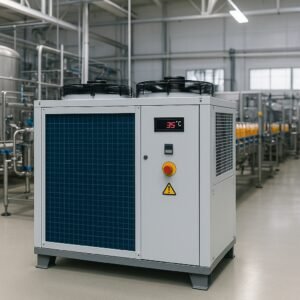
Industrielle Kältemaschinen kühlen und gefrieren in erster Linie Produkte und gewährleisten so Qualität und Sicherheit während der Produktion, der Lagerung und des Transports. Diese Geräte müssen strenge Hygienestandards erfüllen, um Verunreinigungen zu vermeiden. Außerdem müssen sie schnell kühlen und stabil arbeiten, um die hohen Anforderungen der Produktion zu erfüllen.
2. Im medizinischen Bereich
Industrielle Kühlaggregate kühlen verschiedene medizinische Geräte, wie MRT-Maschinen und Lasergeräte. Medizinische Geräte erfordern außergewöhnliche Präzision und Zuverlässigkeit, da jede Temperaturschwankung die Leistung und Diagnosegenauigkeit der Geräte beeinträchtigen kann. Aus diesem Grund sind medizinische Kältemaschinen in der Regel mit fortschrittlichen Temperaturregelungssystemen und hochpräzisen Sensoren ausgestattet, um einen stabilen Betrieb zu gewährleisten.
3. In der HLK-Branche
Industrielle Kühlaggregate sorgen für die Klimatisierung von großen Gebäuden. Sie benötigen eine hohe Kühlleistung, um große Räume zu versorgen. Außerdem müssen diese Kältemaschinen energiesparend und umweltfreundlich sein, um weniger Strom zu verbrauchen und die Umwelt zu schützen.
In der Metall- und Kunststoffverarbeitung kühlen industrielle Kältemaschinen Werkzeugmaschinen und Gussformen. Diese Industriezweige stellen hohe Anforderungen an die Temperaturbeständigkeit und den Hochleistungsbetrieb von Kältemaschinen. Kältemaschinen in diesen Sektoren erfordern in der Regel eine schnelle Kühlung und hochpräzise Temperaturregelung, um eine stabile Verarbeitung und Produktqualität zu gewährleisten.
Ⅳ. Schlussfolgerung
Die Vielfalt der industriellen Kältemaschinen ist ein notwendiges Nebenprodukt der modernen Entwicklung der Industrie. Sie reichen von luftgekühlten bis zu wassergekühlten, kolben-, schrauben- und zentrifugalbetriebenen Aggregaten, ganz zu schweigen von Sonderausführungen für verschiedene Industriezweige, und bieten somit präzise Lösungen für bestimmte industrielle Anforderungen. Mit der ständigen Weiterentwicklung der industriellen Technologie werden auch die industriellen Kältemaschinen immer wieder neu erfunden und verbessert, um den ständig wachsenden Anforderungen der industriellen Produktion gerecht zu werden. In der Zukunft werden industrielle Kältemaschinen eine zentralere Rolle in breiteren Anwendungen spielen und eine gleichmäßige und optimale Leistung der industriellen Produktion gewährleisten.

 German
  English
  Spanish
  Russian
  Portuguese
  French
  Arabic
  Japanese