
Die Auswahl der richtigen Kühlgeräte gehört zu den Entscheidungen, die auf dem Papier einfach erscheinen, sich aber schnell als komplexes Puzzle erweisen, sobald Sie die Fabrikhalle betreten. Es geht nicht nur darum, “einen Kühlschrank” für Ihre Produktionslinie zu kaufen. Eine Industrielle Kältemaschine ist im Grunde das Lebenselixier des Wärmemanagements in einer Fertigungsumgebung. Wenn die Temperatur auch nur um ein paar Grad schwankt, kann es passieren, dass Sie auf einen Behälter voller verzogener Kunststoffteile oder einen empfindlichen Laserschneider blicken, der in den Notabschaltmodus wechselt. Es ist eine Entscheidung, bei der viel auf dem Spiel steht und bei der “gut genug” normalerweise nicht ausreicht.
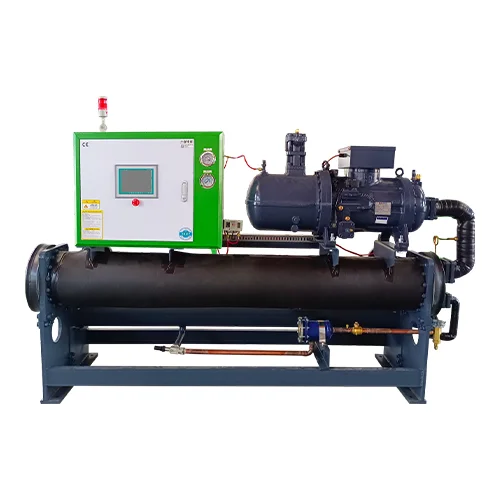
Die Kernlogik bei der Auswahl einer industriellen Kältemaschine
Bevor man sich mit Katalogen beschäftigt, muss man wissen, dass jede Fabrik ihre eigene thermische “Persönlichkeit” hat. Manche Betriebe sind feucht, manche staubig und manche haben nur eine begrenzte Grundfläche. Wenn Sie mit der Bewertung einer industriellen Kältemaschine beginnen, sollten Sie als allererstes die Gesamtwärmebelastung ermitteln. (Und ehrlich gesagt ist es besser, hier etwas zu viel zu veranschlagen; es gibt nichts Frustrierenderes als eine Kältemaschine, die den ganzen Tag mit einer Leistung von 100% läuft und dabei kaum mithalten kann).
Berechnung der Kühlleistung
Sie müssen die von den Maschinen erzeugte Wärme, die Umgebungstemperatur des Raumes und sogar die Wärme, die durch die chemischen Prozesse selbst entsteht, mit einbeziehen.
- BTU/hr oder Tonnen: Die meisten Hersteller sprechen in diesen Einheiten.
- Sicherheitspuffer: Die Hinzufügung eines Puffers von 10-20% zu Ihrer berechneten Heizlast ist eine gängige Praxis in der Industrie, um ungewöhnlich heiße Sommernachmittage zu bewältigen.
- Flüssigkeitsbedarf: Kühlen Sie reines Wasser, oder benötigen Sie eine Glykolmischung, um ein Gefrieren zu verhindern?
Navigation durch die verschiedenen Arten von Kühlern
In der Welt der industriellen Kühlung gibt es die ewige Debatte “Luft oder Wasser”. Beide haben ihre Berechtigung, und oft ist es die Architektur des Gebäudes, die die Entscheidung für Sie trifft.
Luftgekühlte Kältemaschine vs. wassergekühlte Kältemaschine
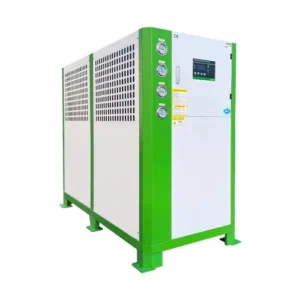
Die Luftgekühlte Kältemaschine ist die beliebteste Wahl für kleinere bis mittelgroße Anlagen. Er funktioniert ähnlich wie ein Autokühler und verwendet Ventilatoren, um Luft über die Kondensatorspulen zu blasen. Es ist einfach, in sich geschlossen und man braucht keinen Kühlturm. Allerdings wird die gesamte Wärme direkt in die Fabrik zurückgeführt, was im Winter vielleicht gut ist, im Juli aber ein Alptraum.
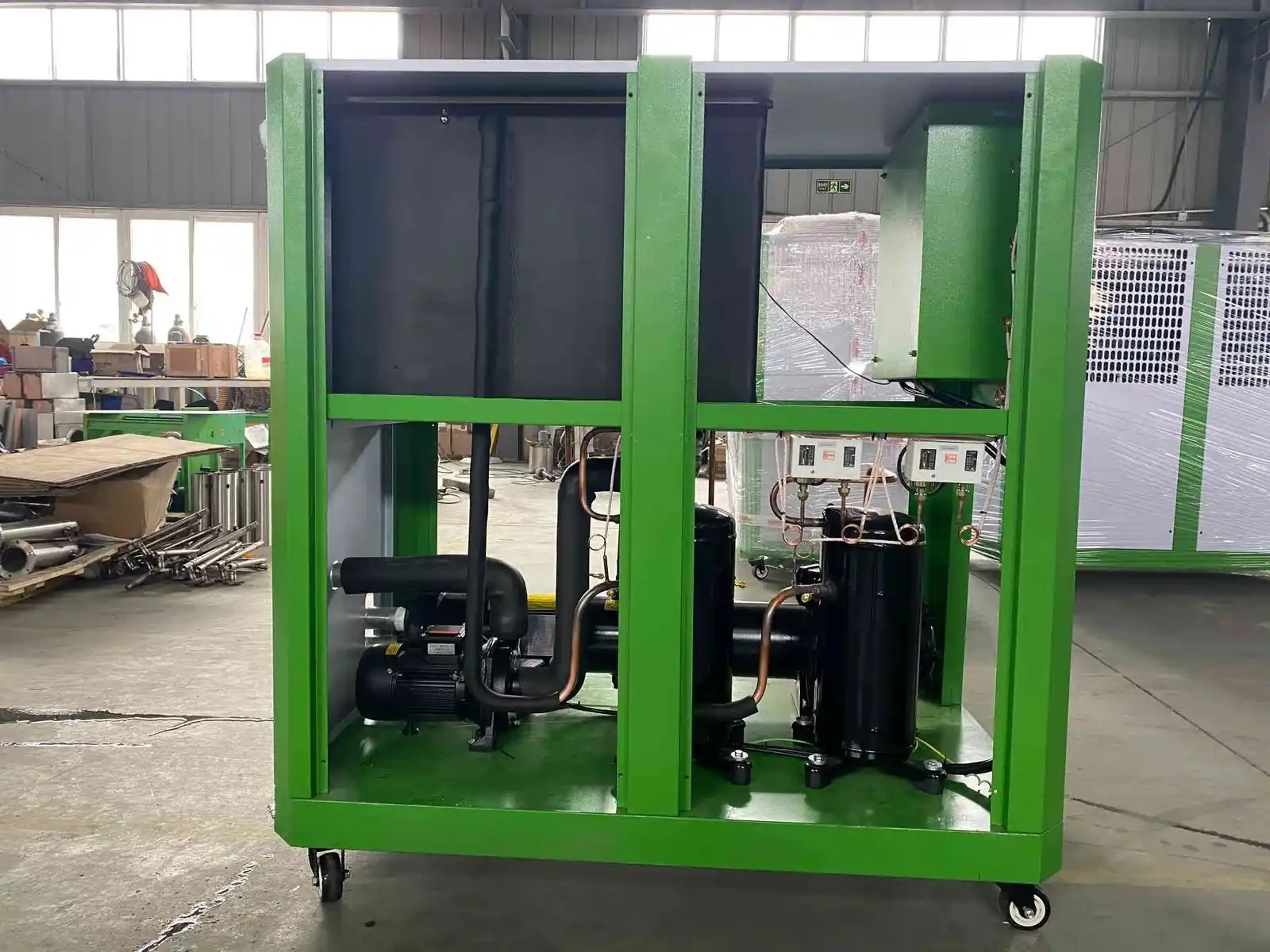
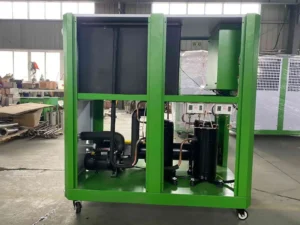
Auf der anderen Seite kann ein Wassergekühlte Kältemaschine ist im Allgemeinen effizienter für große Anlagen. Sie verwenden einen separaten Kühlturm zur Wärmeableitung, was bedeutet, dass die Kältemaschine selbst leiser ist und in einem kleinen Maschinenraum untergebracht werden kann. Allerdings müssen Sie sich um die Wasseraufbereitung und die zusätzlichen Kosten für die Rohrleitungen kümmern. Es ist ein Kompromiss zwischen anfänglicher Einfachheit und langfristigen Betriebskosten.
Spezialisierte Einheiten für schweres Heben
Bei wirklich großem Kühlbedarf - man denke an große Lebensmittelverarbeitungs- oder Chemieanlagen - verlagert sich der Markt für industrielle Kühlmaschinen auf Schraubenverdichter.
- Wassergekühlte Schraubenkühlmaschine: Das sind die Kraftpakete. Sie verwenden einen schraubenförmigen Rotor zur Verdichtung des Kältemittels und bieten eine unglaubliche Stabilität für hohe Tonnageanforderungen.
- Luftgekühlte Schraubenkühlmaschine: Ideal, wenn Sie eine hohe Kühlleistung benötigen, aber keinen Zugang zu einer konstanten, hochvolumigen Wasserquelle oder einer Kühlturmanlage haben.
Vergleich von Kühlertypen und Anwendungen
| Kühler Typ | Am besten für | Profis | Nachteile |
|---|---|---|---|
| Luftgekühlte Kältemaschine | Kleine/mittlere Fabriken | Einfache Installation, kein Wasserturm | Wärmeabgabe in Innenräumen, lärmend |
| Wassergekühlte Kältemaschine | Großflächig/kontinuierlich | Hohe Effizienz, leise | Benötigt Kühlturm und Chemikalien |
| Wassergekühlte Schraubenkühlmaschine | Schwerindustrie | Extrem langlebig, stabil | Hohe Anfangsinvestition |
| Luftgekühlte Schraubenkühlmaschine | Hohe Belastung, Wasserknappheit | Zuverlässig, modular | Hoher Stromverbrauch |
Warum Temperaturpräzision wichtig ist
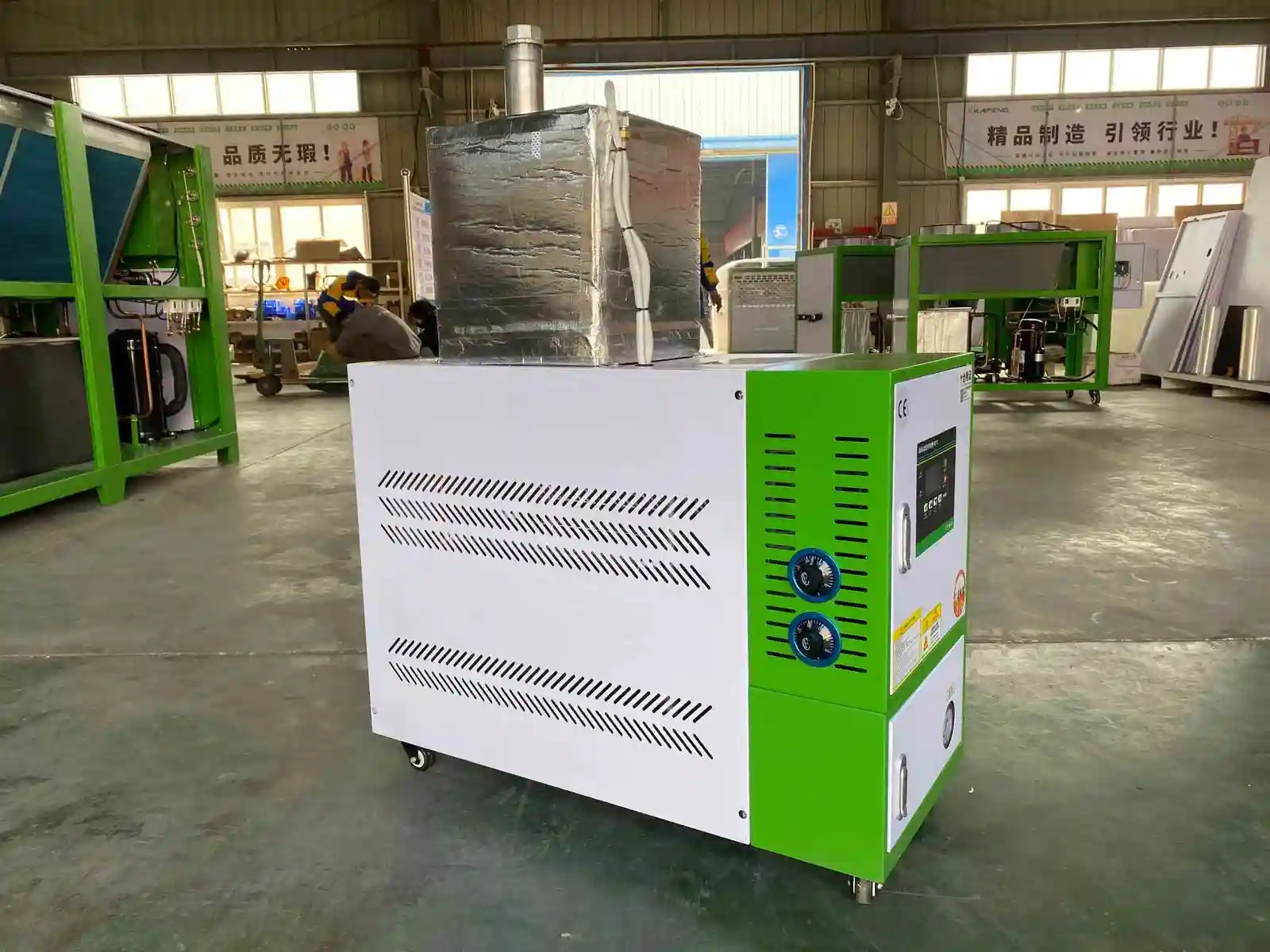
Manchmal geht es bei der Kühlung des “Prozesses” nicht nur um die Abfuhr von Wärme, sondern um die Aufrechterhaltung einer ganz bestimmten, stabilen Temperatur. An dieser Stelle kommt eine Werkzeugtemperiermaschine ins Spiel, die oft mit einer Kühlmaschine zusammenarbeitet. Beim Spritzgießen beispielsweise kühlt die Kältemaschine die Form, um den Kunststoff zu verfestigen, während die Werkzeugtemperiermaschine dafür sorgt, dass die Form die perfekte Temperatur hat, bevor der Schuss abgefeuert wird. Es ist ein heikler Tanz der thermischen Kontrolle.
Die Rolle von Kontrollen und Konnektivität
Im Jahr 2026 ist eine “dumme” Kältemaschine eine Belastung. Sie wollen eine industrielle Kältemaschine mit einer intelligenten SPS (Speicherprogrammierbare Steuerung). Die Möglichkeit, die Wassereinlasstemperatur oder den Druck von einem Smartphone aus zu überprüfen oder eine SMS-Benachrichtigung zu erhalten, wenn der Kompressor ausfällt, ist kein Luxus mehr, sondern eine Möglichkeit, Tausende von Dollar an Ausfallzeiten zu vermeiden.
Strategische Platzierung und Wartung
Der Standort des Geräts ist fast genauso wichtig wie das Gerät, das Sie kaufen. Ein luftgekühlter Kühler, der in eine enge Ecke ohne Belüftung gequetscht wird, wird ersticken und schließlich versagen. Sie muss atmen können. Ähnlich verhält es sich, wenn Ihr Fabrikboden ölig oder staubig ist: Die Kondensatorspulen müssen häufig gereinigt werden.
- Freigabe: Lassen Sie mindestens 3 bis 5 Fuß um luftgekühlte Geräte herum.
- Filtrierung: Verwenden Sie Wasserfilter, um Ablagerungen im Wärmetauscher zu vermeiden.
- Regelmäßige Überprüfungen: Überprüfen Sie vierteljährlich den Kältemittelstand und die elektrischen Anschlüsse.
Schlussfolgerung: Investitionen in die Verlässlichkeit
Letztlich geht es bei der Wahl einer industriellen Kältemaschine darum, Ihr aktuelles Budget mit Ihren zukünftigen Produktionszielen in Einklang zu bringen. Ganz gleich, ob Sie sich für eine kompakte luftgekühlte Kältemaschine für ein neues Unternehmen oder eine massive wassergekühlte Schraubenkältemaschine für eine etablierte Anlage entscheiden, das Ziel bleibt dasselbe: eine konstante, zuverlässige Leistung. Scheuen Sie sich nicht, potenzielle Lieferanten nach Referenzen in Ihrer Branche zu fragen - nichts beweist den Wert einer Maschine so sehr wie eine erfolgreiche Erfolgsbilanz in einer realen Fabrikhalle.
FAQ
Wie kann ein spezialisierter Hersteller von luftgekühlten Wasserkühlmaschinen bei kundenspezifischen Fabriklayouts helfen?
Ein professioneller Hersteller von luftgekühlten Kältemaschinen verkauft nicht nur Standardgeräte, sondern bietet oft auch “Split-Systeme” an, bei denen der Verflüssiger auf dem Dach und der Verdampfer in der Nähe der Maschine untergebracht ist. Auf diese Weise bleiben Lärm und Wärme draußen, ohne dass eine vollständige Wasserturm-Infrastruktur erforderlich ist.
Was ist der Hauptunterschied zwischen einem Standardkühler und einer Mold-Temperaturmaschine?
Obwohl beide mit Wärme umgehen, sind ihre Ziele entgegengesetzt. Eine Kältemaschine ist darauf ausgelegt, Wärme so schnell wie möglich abzuführen, um einen Prozess zu kühlen. Eine Schimmelpilz-Temperaturmaschine hingegen wird oft verwendet, um Wärme die Form auf einen bestimmten Sollwert zu bringen oder eine sehr präzise, warme Temperatur aufrechtzuerhalten, um sicherzustellen, dass das Material korrekt in jede Ecke der Form fließt.
Nach welchen Umweltvorschriften sollte ich einen Hersteller von luftgekühlten Wasserkühlmaschinen fragen?
Die Gesetze für Kältemittel ändern sich ständig. Sie sollten sich über den Übergang zu Kältemitteln mit niedrigem GWP (Global Warming Potential) informieren. Ein vorausschauender Hersteller von luftgekühlten Kältemaschinen bietet bereits Geräte an, die mit den neuesten umweltfreundlichen Gasen kompatibel sind, so dass Ihre Geräte in einigen Jahren nicht mit teuren “Auslaufsteuern” oder Wartungsproblemen konfrontiert werden.

 German
  English
  Spanish
  Russian
  Portuguese
  French
  Arabic
  Japanese