
Jedes Jahr fallen weltweit über 400 Millionen Tonnen Plastikmüll an. Der Umgang mit diesem Abfall ist für alle ein großes Problem. Kunststoff-Zerkleinerer, die Schlüsselmaschinen im Kunststoffrecyclingprozess sind, werden zu sehr wichtigen Hilfsmitteln bei der Lösung dieses Problems. Diese Maschinen gibt es in verschiedenen Größen und Typen. Einige sind groß und werden in Fabriken eingesetzt, während andere mittelgroß sind und für spezielle Aufgaben verwendet werden. Jeder Shreddertyp trägt auf seine Weise zum Kunststoffrecycling bei.
Ⅰ. Kunststoffzerkleinerer: Kernausrüstung für die Kreislaufwirtschaft
Plastik durchdringt unser Leben, und von alltäglichen Haushaltsgegenständen bis hin zu industriellen Fertigungsmaterialien hat die umfangreiche Verwendung von Plastik zu einer enormen Umweltbelastung geführt. Die Entsorgung von Kunststoffabfällen ist weltweit ein wichtiges Thema. Kunststoffzerkleinerer sind Maschinen, die große Kunststoffteile mechanisch in kleinere Stücke oder Pellets zerkleinern, um so die Voraussetzung für die Wiederaufbereitung zu schaffen. Dadurch wird nicht nur die Menge des Kunststoffabfalls verringert, sondern - was noch wichtiger ist - der Kunststoffabfall durch Wiederverwendung in einen Rohstoff zurückverwandelt, so dass wirklich ein geschlossener Kreislauf für die Nutzung von Kunststoffen entsteht.
Die Nachfrage nach Kunststoffzerkleinerern steigt aufgrund des zunehmenden Umweltbewusstseins und aktualisierter Vorschriften. In den nächsten fünf Jahren wird der Markt für Kunststoffrecycling jährlich um 7,8% zunehmen. Diese Zerkleinerungsmaschinen werden von großen Industriezentren bis hin zu kleinen und mittleren Unternehmen eingesetzt. Sie alle tragen erheblich zur Minimierung der Kunststoffverschmutzung bei.
Ⅱ. Haupttypen und Merkmale von Kunststoffzerkleinerern für den industriellen Einsatz
Industrielle Kunststoffzerkleinerer sind das Herzstück der Recyclingindustrie. Sie sind für einen intensiven, kontinuierlichen Betrieb ausgelegt und verarbeiten verschiedenste Materialien, von Post-Consumer-Kunststoffabfällen bis hin zu industriellen Rückständen. Nachstehend sind die wichtigsten Typen von Industrieshreddern und ihre Merkmale aufgeführt:
1. Einwellenzerkleinerer
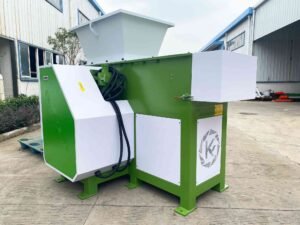 Einwellenzerkleinerer sind für ihren einfachen, aber effizienten Mechanismus bekannt. Die einzelne rotierende Welle mit den daran befestigten Messern schneidet und schert das Material in kleinere Stücke. Einwellenzerkleinerer haben gute Einzugseigenschaften für große Kunststoffabfälle, insbesondere für sperrige und unregelmäßige Gegenstände wie Kunststofffässer, Rohre und große Behälter. Maschinen dieser Klasse sind in der Regel sehr wartungsarm, um einen langfristig stabilen Betrieb zu gewährleisten, da abgedichtete Lagersysteme verwendet werden, die verhindern, dass im Inneren der Maschine ein Verschmutzungsproblem auftritt. Dieser Shreddertyp ist für weiche Kunststofffolien und Verpackungsbeutel geeignet, die vor dem Recycling eine Volumenreduzierung benötigen.
2. Doppelwellen-Scherenhäcksler
 Doppelwellenzerkleinerers verfügen über zwei ineinander greifende Drehwellen mit Schneidscheiben, die den Kunststoff durch eine bestimmte Schnittbewegung in Streifen oder kleine Stücke zerschneiden. Dank dieser Konstruktion kann die Maschine auch härtere und dickere Kunststoffe verarbeiten - starre Fässer und Rohre sowie Bauteile aus technischen Kunststoffen. Die größte Attraktion ist die hohe Schneidleistung, die mit einem sehr guten Drehmoment für größere Kunststoffe mit höherer Dichte bei geringem Energieverbrauch möglich ist. Diese speziellen Maschinen finden sehr allgemeine Anwendung in der industriellen Abfallverarbeitung und im Kunststoffrecycling, da sie eine große Vielfalt von Kunststoffen mit guter Effizienz und Stabilität im Recyclingbetrieb abdecken können.
3. Vierwellenzerkleinerer
Vierwellenzerkleinerer stellen den neuesten Stand der Kunststoffzerkleinerungstechnik dar. Vierwellenzerkleinerer haben vier rotierende Wellen, die zusammenarbeiten. Sie zerkleinern Kunststoff sehr effizient und produzieren feine, gleichmäßige Stücke. Diese Zerkleinerer können viele Arten von Kunststoffen verarbeiten, auch gemischte Abfälle mit unterschiedlichen Härtegraden. Im Vergleich zu Systemen mit einer oder zwei Wellen verarbeiten sie mehr Material und erzeugen feinere Partikel. Dadurch eignen sie sich ideal für Anwendungen, die eine sehr gleichmäßige Ausgangsgröße erfordern.
4. Hammermühle Granulator
Hammermühlen verwenden eine Reihe von schwingenden Hämmern, die auf einer rotierenden Welle montiert sind, um Kunststoffmaterialien zu zerkleinern. Diese Konstruktion eignet sich hervorragend für die Verarbeitung harter Kunststoffe und anderer Materialien, die eine erhebliche Kraft zum Zerkleinern erfordern. Hammermühlen zerkleinern die Materialien in erster Linie durch Schlagkraft und nicht durch Schneiden, was sie für die Behandlung von kontaminierten Kunststoffabfällen mit geringen Metall- oder Erdeinschlüssen geeignet macht. Allerdings führt diese Bauweise in der Regel zu einer breiteren Partikelgrößenverteilung, was bei Anwendungen, die feine, gleichmäßige Partikel erfordern, möglicherweise sekundäre Verarbeitungsschritte erforderlich macht.
Ⅲ. Wichtige Überlegungen für die Auswahl des richtigen Kunststoffzerkleinerers
Bei der Auswahl eines geeigneten Kunststoffzerkleinerers müssen mehrere Faktoren berücksichtigt werden, um sicherzustellen, dass die Anlage den spezifischen Anwendungsanforderungen entspricht und eine optimale Investitionsrentabilität bietet.
1. Analyse der Materialeigenschaften
Die physikalischen und chemischen Eigenschaften des Materials spielen bei der Wahl des Brechertyps eine wichtige Rolle. Verschiedene Kunststoffe weisen unterschiedliche Härte, Zähigkeit und Schmelzpunkte auf, was entsprechende Zerkleinerungstechnologien erforderlich macht. So lassen sich beispielsweise Hartkunststoffplatten wie ABS, PE und PP am besten in speziellen Hartkunststoffmühlen verarbeiten, während weiche Kunststofffolien eher für Einwellenmühlen geeignet sind. Auch die Form und die Abmessungen des Materials haben Einfluss auf die Wahl der Schneidmühle, und mögliche Verunreinigungen im Material müssen berücksichtigt werden, da sich diese Faktoren direkt auf die Messerkonfiguration und die Lebensdauer der Anlage auswirken.
2. Output-Anforderungen und Effizienzbewertung
Die gewünschte Ausgangsgröße ist einer der entscheidenden Faktoren bei der Auswahl einer Schneidmühle. Wenn Sie den geschredderten Kunststoff für die direkte Wiederaufbereitung verwenden wollen, benötigen Sie Geräte wie Granulatoren oder Scherenmühlen, die gleichmäßige, feine Partikel erzeugen. Wenn Sie jedoch nur das Volumen reduzieren oder Energie zurückgewinnen wollen, sind größere Stücke in Ordnung, so dass Zerkleinerungsmaschinen oder Hammermühlen eine billigere Wahl sind. Außerdem sollten Sie eine Maschine wählen, die etwas mehr verarbeiten kann, als Sie jetzt brauchen, damit sie für künftiges Wachstum gerüstet ist.
3. Ökologische und betriebliche Erwägungen
Der Einsatzort hat einen sehr großen Einfluss darauf, wie gut und wie lange ein Kunststoffzerkleinerer hält. Ist das Gerät mit feuchter oder schädlicher Luft konfrontiert? Welche Raumgröße und -form erfordern die Platzverhältnisse? Erfordern hohe Temperaturen spezielle Kühler oder Heizungen? All diese Punkte müssen bei der Auswahl gründlich bedacht werden. Auch der Geräuschpegel, der Stromverbrauch und der Wartungsbedarf spielen eine große Rolle für den richtigen Betrieb der Maschine.
Ⅳ. Schlussfolgerung
Es gibt verschiedene Arten von Kunststoffzerkleinerern mit unterschiedlichen Merkmalen und Einsatzszenarien. Mit einem tiefen Einblick in die verschiedenen Arten von Zerkleinerern und ihre Anwendungen können Sie eine bessere Auswahl an Geräten treffen, die Ihrem Zweck bei der Verarbeitung von Kunststoffabfällen im Hinblick auf eine nachhaltige Ressourcennutzung gut dienen.


 German
  English
  Spanish
  Russian
  Portuguese
  French
  Arabic
  Japanese