
There comes a point with almost every industrial chiller where keeping it running starts to feel like a losing battle. Not a sudden failure necessarily—more like a slow creep. Repairs come more frequently. The electric bill keeps climbing. Parts take longer to arrive. And somewhere in the back of someone’s mind, the question starts forming: is it time to overhaul this thing, or just start over with something new?
Seen this play out both ways. Sometimes a major overhaul buys another decade of reliable service. Other times, pouring money into an old industrial chiller system is just delaying the inevitable. The trick is knowing which situation is which.
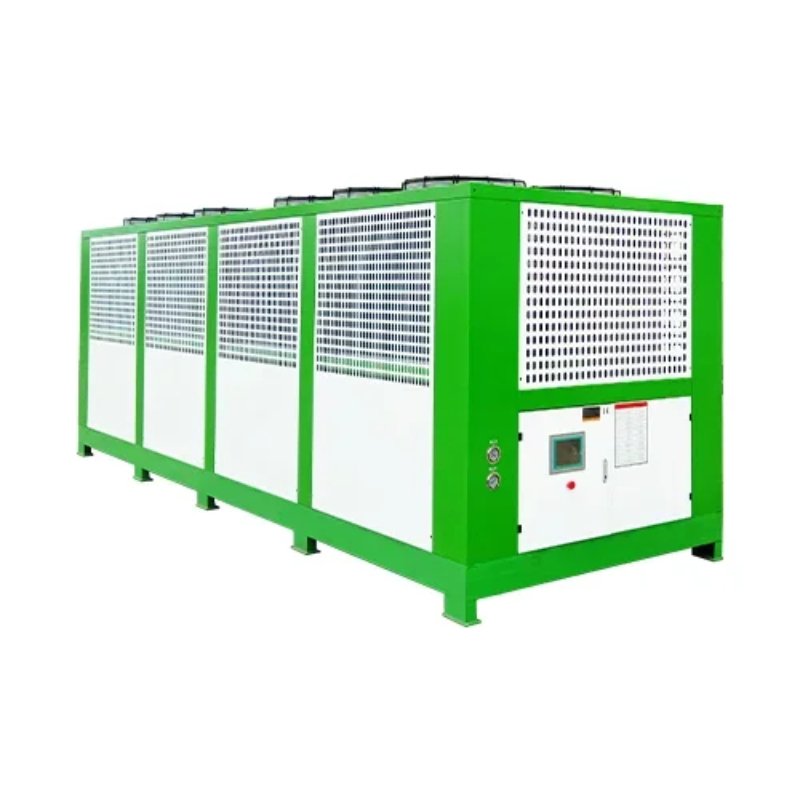
Signs That an Industrial Chiller System Is Nearing the End
Before deciding on overhaul versus replacement, it helps to recognize the warning signs. These don’t all show up at once, but when several appear, it’s worth doing the math.
Age of the System
Chillers don’t have an expiration date stamped on them, but there are general ranges. A well-maintained industrial chiller system might run 20 to 25 years before major problems become routine. After 30 years, even with good care, efficiency has usually declined, and replacement parts are harder to find.
That said, age alone isn’t the deciding factor. Some 30-year-old chillers still run fine because they were oversized to begin with and never worked hard. Others are worn out at 15 years because they’ve been running 24/7 in harsh conditions.
Rising Energy Costs
This one is measurable. Comparing current kW per ton to the chiller’s original performance (or to published baselines for similar equipment) shows whether efficiency has fallen off. A 15–20% increase in energy consumption for the same cooling load is a red flag. At 30% or more, the chiller is essentially wasting money every hour it runs.
Frequent Repairs
A simple rule of thumb: if annual repair costs exceed 20–25% of the cost of a new chiller for two years in a row, replacement starts to make financial sense. But there’s also the non-financial cost—downtime. Every time the chiller goes down, production stops or quality suffers. That has a real cost that doesn’t always show up on the maintenance ledger.
Overhaul vs. Replacement: A Framework
The decision isn’t always obvious. Here’s a quick comparison of what each option typically involves.
| Factor | Overhaul | Full Replacement |
|---|---|---|
| Upfront cost | Lower (typically 40–60% of new equipment) | Higher (100% of new equipment plus installation) |
| Downtime | Days to weeks | Weeks to months |
| Efficiency gain | Modest (returns to near-original performance) | Significant (20–40% improvement with modern equipment) |
| Part availability | Uncertain for older models | New equipment, parts available |
| Refrigerant transition | Same refrigerant (or costly conversion) | Can choose modern, lower-GWP refrigerants |
| Expected remaining life | 5–10 years | 15–20+ years |
When Overhaul Makes Sense
Overhauling is often the right call when:
• The chiller is 10–20 years old and otherwise in good structural shape (no major corrosion or tube failures)
• Repair costs have been low historically, but a specific component (compressor, heat exchanger) has failed
• Production can’t tolerate the extended downtime of a full replacement
• Budget is constrained in the current fiscal year
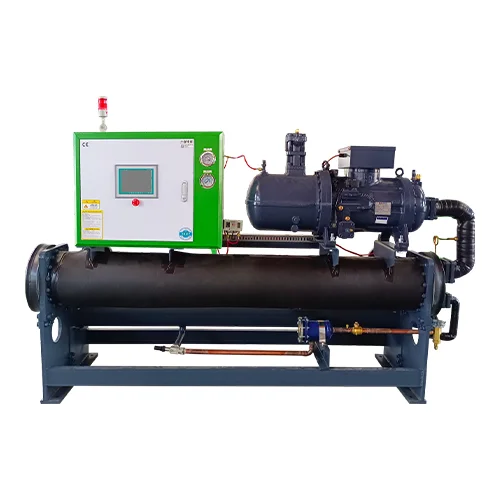
A typical overhaul might include replacing the compressor bearings and seals, cleaning the tubes, replacing gaskets and O-rings, changing oil and filters, and recalibrating controls. For a wassergekühlte Kältemaschine, overhauling the evaporator and condenser barrels is common. For an luftgekühlter Kühler, replacing fans, motors, and cleaning condenser coils thoroughly.
When Replacement Makes More Sense
Replacement tends to be the better path when:
• The chiller is over 25 years old, especially if it uses a soon-to-be-phased-out refrigerant like R-22
• The efficiency has dropped significantly, and energy savings from a new unit pay back the investment in 3–5 years
• Repair history shows a pattern of different components failing (not just one recurring issue)
• Parts are becoming hard to find, leading to extended downtime when something breaks
Modern chillers are dramatically more efficient than units from 20 or 30 years ago. Variable speed drives on compressors and fans, improved heat exchanger designs, and better controls add up to real savings.
The Refrigerant Question
This is a big one that doesn’t get enough attention in the overhaul vs. replace discussion.
R-22 Phase-Down
Many older industrial chiller systems run on R-22 refrigerant. Production of R-22 has been phased down dramatically, and virgin R-22 is expensive when available at all. Reclaimed R-22 exists, but its price continues to rise. A chiller that leaks R-22 becomes increasingly expensive to keep topped off.
Overhauling an R-22 chiller doesn’t solve the refrigerant problem. The unit still runs on a refrigerant that’s being phased out. Converting an R-22 chiller to a modern refrigerant (like R-407C or R-134a) is technically possible but expensive—often close to the cost of a new chiller when all is said and done.
Low-GWP Refrigerants
New chillers use refrigerants designed for the current regulatory environment. R-513A, R-1234ze, and others have much lower global warming potential. For facilities with sustainability goals or facing future refrigerant regulations, replacement offers a cleaner path forward.
Hidden Costs That Tip the Scale
Some costs don’t show up on the initial quote but should factor into the decision.
Downtime Costs
A chiller overhaul might take one to two weeks. A full replacement, including demolition of the old unit, rigging out, rigging in, piping modifications, electrical work, and startup, can take four to twelve weeks. What is the cost of being without cooling for that long? If production stops entirely, the longer timeline of replacement might be unacceptable.
Installation Complexity
Replacing a chiller isn’t just swapping boxes. New units often have different footprints, different piping connections, and different electrical requirements. That means concrete work, pipe re-routing, and electrical panel modifications—all of which add cost and time. Overhauling keeps the existing footprint and connections.
Incentives and Rebates
Many utilities offer rebates for replacing old chillers with high-efficiency models. Some programs cover a significant portion of the cost. Overhauls rarely qualify for incentives. Checking with the local utility before making a decision is worth the phone call.
A Practical Decision-Making Process
From watching facilities navigate this, a straightforward process tends to work well.
1. Gather data: Repair history, energy bills, refrigerant usage, and downtime records for the past three years.
2. Get a professional assessment: A chiller technician who isn’t trying to sell anything can provide an honest evaluation of the unit’s condition.
3. Get quotes: Both for a comprehensive overhaul and for a replacement (including all installation work).
4. Run the numbers: Calculate payback period for replacement based on energy savings and avoided repairs.
5. Factor in intangibles: Production risk, parts availability, refrigerant outlook, and sustainability goals.
There’s no universal rule. Sometimes the best answer is to overhaul and plan for replacement in three to five years. Other times, ripping the bandage off and replacing now is cheaper in the long run.
If you want to know more about industrial chiller system, please read How to Integrate an Industrial Chiller System into Your Factory.
FAQ
How long does an industrial chiller system typically last?
With regular maintenance, 20 to 25 years is typical. Some last 30 years or more in light-duty applications. Heavy-duty, continuous operation often reduces that range to 15 to 20 years.
Is it worth overhauling a chiller that uses R-22 refrigerant?
Generally no, unless the overhaul is very inexpensive and the chiller is expected to run for only a few more years. The rising cost of R-22 and eventual phase-down make replacement increasingly attractive.
Can I replace just the compressor instead of the whole chiller?
Yes, compressor replacement is a common overhaul task. But if other components (condenser, evaporator, controls) are also failing, replacing just the compressor may lead to another failure shortly afterward. A full condition assessment helps decide.

 German
  English
  Spanish
  Russian
  Portuguese
  French
  Arabic
  Japanese