
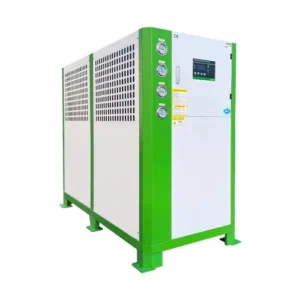
A Water Cooled Chiller is a refrigeration system designed to remove heat from a process or building by transferring that heat into water, then rejecting it through a separate heat-rejection loop. In practice, that usually means a cooling tower or another water-side system helps carry the heat away. The setup may sound straightforward, but it tends to show up in places where stable cooling matters a lot: factories, large commercial buildings, labs, and production lines that can’t afford temperature swings.
Compared with simpler cooling arrangements, water cooled systems often feel more “built for the long haul.” They are not always the easiest to install, and they do ask for more supporting equipment, yet they are frequently chosen because they can deliver strong performance with relatively high efficiency. In many industrial settings, that tradeoff makes sense.
If a facility is looking into an industrial-chiller solution, a water cooled design is often one of the first options considered.
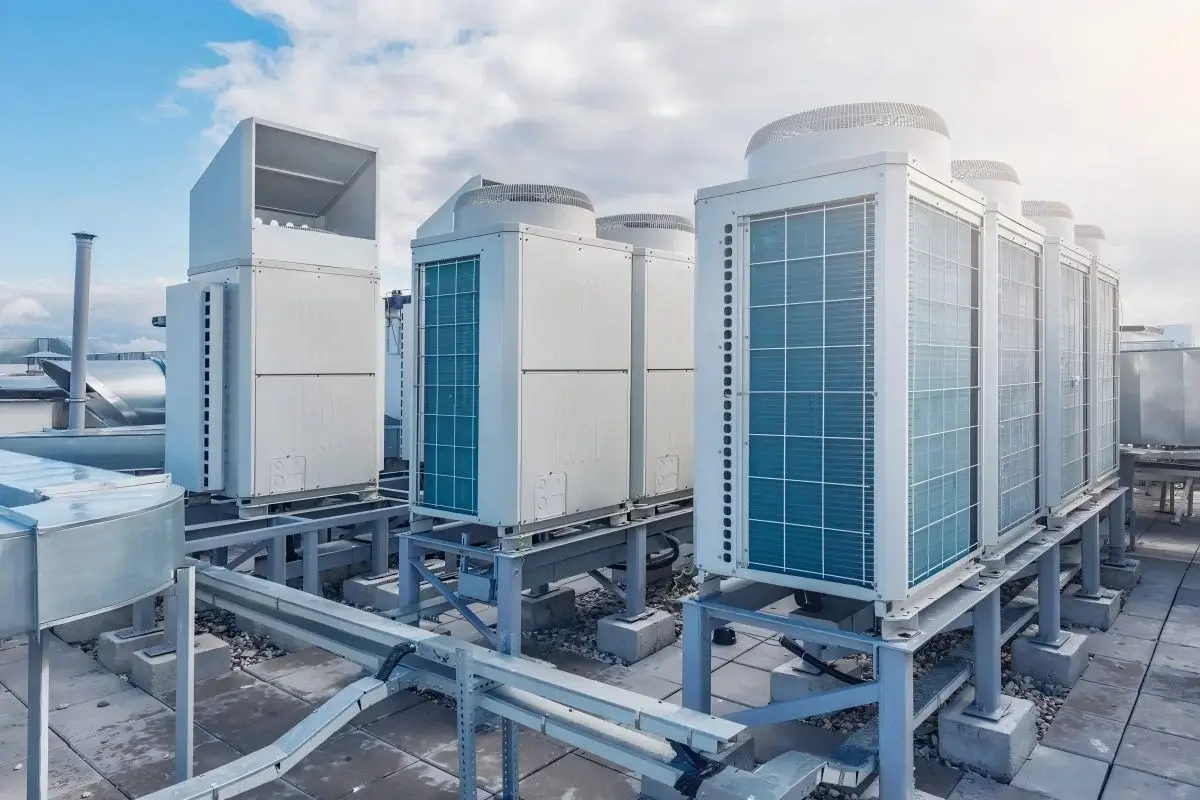
Main Components of a Water Cooled Chillere
A water cooled chiller is not especially mysterious once the major parts are broken down. Each component has a fairly specific role, and when one part is undersized or poorly maintained, the whole system tends to feel it.
| コンポーネント | Main Function | なぜ重要なのか |
|---|---|---|
| コンプレッサー | Raises refrigerant pressure and temperature | Drives the refrigeration cycle |
| 蒸発器 | Absorbs heat from chilled water | Produces the cooling effect |
| Water-cooled condenser | Transfers heat from refrigerant to condenser water | Core of the water-side heat rejection |
| 膨張弁 | Reduces refrigerant pressure | Allows refrigerant to cool and expand |
| Pumps and controls | Move water and regulate operation | Keeps the system stable and efficient |
In real installations, the supporting equipment can be just as important as the chiller itself. Pumps, sensors, valves, and water treatment devices all shape whether the system runs smoothly or becomes a constant maintenance task.
For product-level reference, the water cooled chiller page is a helpful place to review typical configurations and system options.
Why Water Cooled Chillers Are Often Preferred
There is a reason these systems remain common in industrial and large commercial projects. In many cases, they offer a combination of efficiency and operational stability that air-based systems struggle to match under heavy load.
Common advantages include:
- Higher efficiency in many operating conditions
- Better performance for large cooling loads
- Less sensitivity to hot outdoor air
- Lower perceived noise at the chiller unit
- Good fit for continuous or 24/7 production environments
That said, the advantages are not absolute. A site with limited water access, tight mechanical-room space, or a very small cooling demand may find another solution more practical. Still, when the load is steady and the facility is built around long operating hours, water cooled systems often make a strong case for themselves.
A lot of engineering teams notice one subtle point here: when ambient temperature climbs, water cooled chillers usually hold their performance more gracefully than air cooled systems. That can matter a great deal in summer, or in facilities where heat is already part of the process.
Water Cooled Chiller vs Air Cooled Chiller
This comparison comes up constantly, and for good reason. Both systems do the same basic job, but they go about it differently.
アン air-cooled-chiller rejects heat directly into the air using fans and condenser coils. A water cooled chiller uses condenser water and usually a cooling tower to remove heat indirectly.
| ファクター | Water Cooled Chille | 空冷チラー |
|---|---|---|
| Heat rejection | Through condenser water | Directly to air |
| 効率性 | Often higher in large systems | Often simpler, but can be less efficient under heavy load |
| インストール | More complex | Easier to install |
| Space needs | Requires more supporting equipment | More self-contained |
| メンテナンス | Needs water treatment and tower upkeep | Generally less water-system maintenance |
| Best for | Large facilities, continuous loads | Smaller sites, easier deployment |
The choice often comes down to operational priorities. If a facility values simplicity and faster installation, air cooled can be attractive. If it values efficiency and stable long-term performance, water cooled usually moves to the top of the list.
Where Water Cooled Chillers Are Commonly Used
Water cooled systems show up across a surprisingly broad set of applications. The exact use case can vary, but the common thread is usually the same: controlled cooling is essential, and consistency matters.
Typical applications include:
- Plastic injection molding and extrusion
- Food and beverage processing
- Chemical and pharmaceutical production
- Medical imaging and laboratory systems
- Data centers and server rooms
- Large HVAC systems in commercial buildings
In many of these environments, the chiller is not just “support equipment.” It directly influences product quality, process stability, and even energy bills over time. That is especially true in manufacturing, where temperature drift can create waste or reduce output quality. For operations with recurring cooling demand, an industrial-chiller setup often becomes part of the core infrastructure rather than an accessory.
What to Consider Before Choosing One
Selecting the right cooling system is rarely about one feature. It’s usually a blend of operating conditions, facility layout, and long-term cost expectations.
A few practical factors matter a lot:
- Cooling load — How much heat needs to be removed, and how steady is that load?
- Water availability — Is there enough supply for condenser and tower operation?
- Maintenance capacity — Can the site handle water treatment and routine inspection?
- Space constraints — Is there room for a cooling tower and associated piping?
- Energy use — What will the system cost to run over time?
- Noise limits — Is quieter operation important?
- Climate and ambient conditions — How hot does the facility get during peak season?
There is also the less obvious issue of system integration. A chiller rarely works alone. It has to fit with pumps, controls, process requirements, and sometimes existing plant infrastructure. That is where planning tends to matter more than brochure specifications.
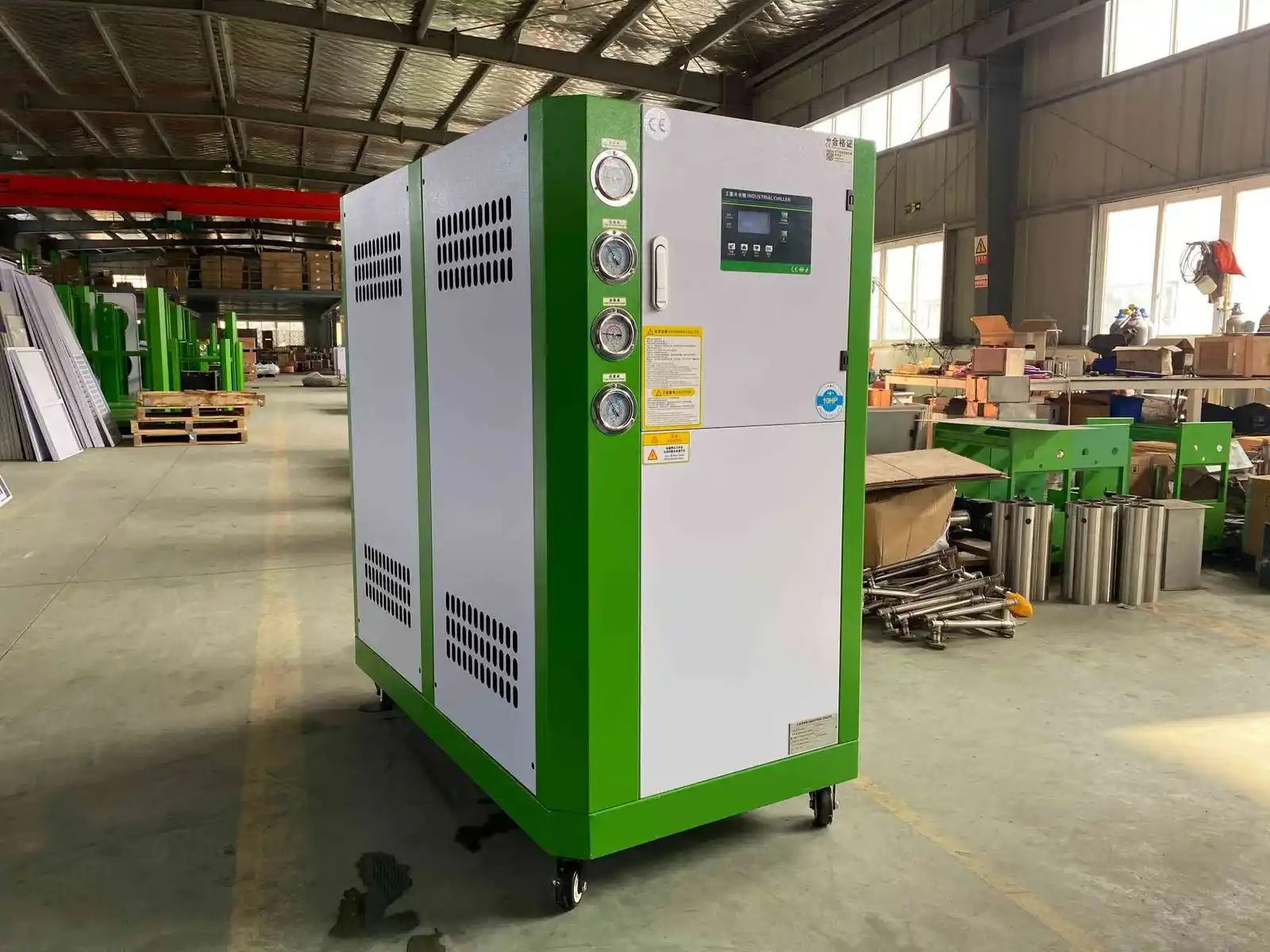
Common Maintenance Needs
A water cooled chiller can be reliable for years, but only if the water side is treated with respect. That part is easy to underestimate.
Routine attention usually includes:
- Checking water quality and treatment levels
- Cleaning condenser tubes
- Inspecting pumps, seals, and strainers
- Monitoring flow, pressure, and temperature
- Looking for scale buildup or corrosion
- Reviewing controls and alarms
Water quality deserves special mention. Poorly treated water can reduce heat transfer efficiency and gradually create problems that are expensive to fix later. In practice, a chiller that is nominally “efficient” on paper may underperform simply because the condenser is fouled.
For facilities evaluating system upgrades or replacement options, it can be useful to compare serviceability as carefully as cooling capacity.
Is a Water Cooled Chiller the Right Choice?
For many industrial and large commercial sites, the answer is yes — or at least, it is one of the strongest options on the table. The system tends to make sense when cooling demand is continuous, efficiency matters, and the facility can support the extra water-side components.
It may be less attractive when:
- the project is small,
- water use must be minimized,
- installation speed is a priority,
- or the mechanical room is already crowded.
So the real question is not simply “What is a Water Cooled Chiller?” but whether its operating model fits the site. In the right setting, it performs like a serious, long-term cooling solution rather than a compromise.
よくあるご質問
Does a water cooled chiller always require a cooling tower?
Not always, but most water cooled systems do need some kind of heat-rejection equipment. A cooling tower is common because it removes heat from the condenser water efficiently, though alternative loops or heat exchangers can be used in specific setups.
What affects the performance of a water cooled system the most?
Water quality, condenser cleanliness, flow rate, and load stability are major factors. Even a well-sized system can lose efficiency if scale builds up or if the water loop is not balanced correctly.
Can a water cooled chiller be a good option for a smaller facility?
Sometimes, yes. If the cooling load is steady and the site already has water infrastructure, it may be worth considering. But for many smaller projects, the added complexity can outweigh the benefits, so a simpler solution may be more practical.

 Japanese
  English
  Spanish
  Russian
  Portuguese
  French
  Arabic
  German