
Industrial chillers are one of those pieces of equipment that tend to run quietly in the background—until they don’t. Suddenly there’s a production line down, or a mold isn’t cooling properly, and everyone starts asking questions. Having spent some time around facilities where these units are running 24/7, the same problems seem to crop up again and again. Not always catastrophic failures, but the kind of gradual decline that shows up as higher energy bills or inconsistent temperatures before anyone notices.
This is a look at the more common issues seen with industrial chiller units, what usually causes them, and where it makes sense to start looking.
When Industrial Chiller Units Just Won’t Cool Enough
This is probably the most frequent complaint. The chiller is running, the pumps are moving, but the process fluid isn’t getting down to setpoint. Sometimes it’s a slow drift over weeks; other times it happens overnight.
Dirty Condenser Coils
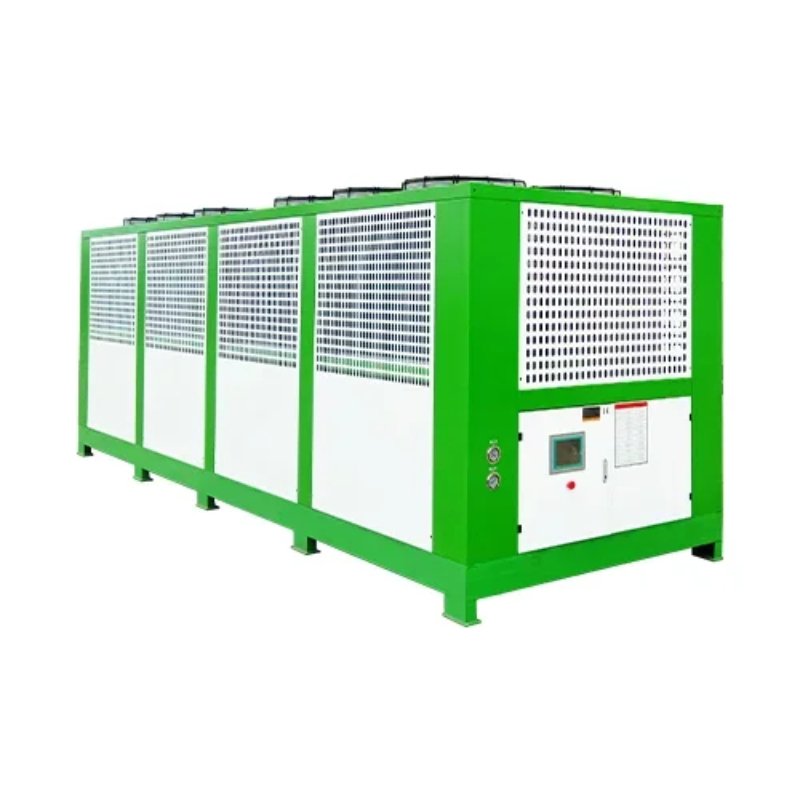
On air-cooled units, this is almost always the first suspect. The condenser coils sit outside (or on a roof) collecting dust, pollen, and whatever else floats by. When they get clogged, heat can’t reject properly. The refrigerant stays too hot, and cooling capacity drops.
What’s been observed is that even a thin layer of dirt on coils can reduce efficiency by 15–20%. The fix is straightforward—clean the coils—but it’s often deferred because it requires shutting the unit down and getting someone up on the roof with a pressure washer.
Fouled Heat Exchangers
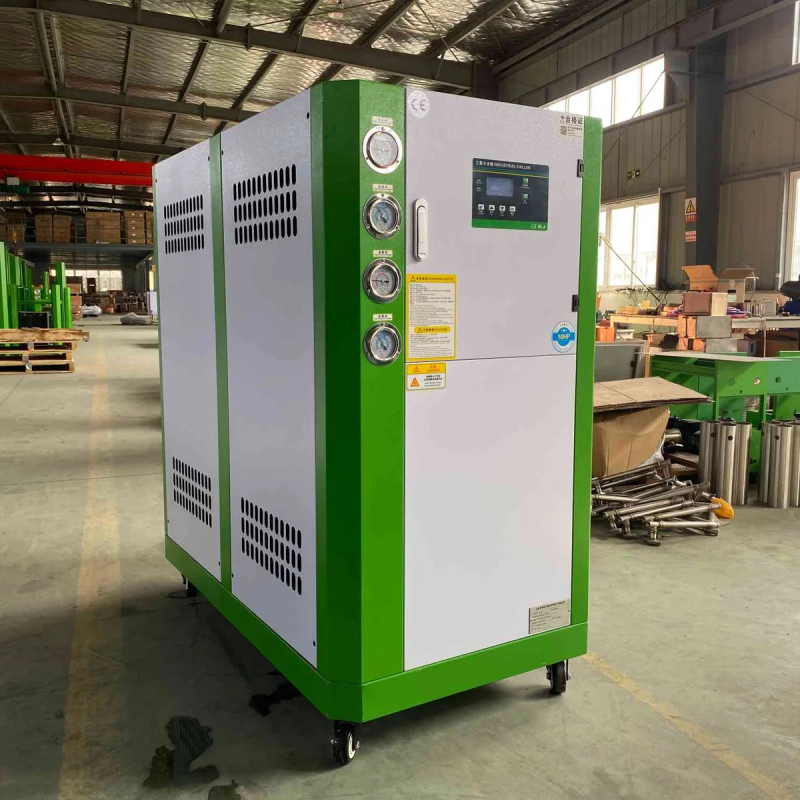
For water-cooled systems, the issue often lives in the evaporator or condenser barrels. Scale buildup from hard water, or biological growth in open-loop systems, acts as an insulator. The heat transfer slows down. The chiller works harder, runs longer, and still can’t keep up.
A water-cooled chiller with fouled tubes will show a telltale symptom: the approach temperature (the difference between refrigerant temperature and leaving water temperature) starts creeping up. Anything over 2–4°F on a clean system turning into 8–10°F means it’s time to pull the heads and clean the tubes.
Pressure Alarms on Industrial Chiller Units
Alarms are annoying, but they’re also useful. High-pressure and low-pressure alarms point to specific parts of the system.
| Alarm Type | Likely Cause | What to Check First |
|---|---|---|
| High-Pressure | Condenser issues, refrigerant overcharge, non-condensables | Condenser fan operation, coil cleanliness, discharge pressure readings |
| Low-Pressure | Low refrigerant charge, restricted filter-drier, evaporator freeze-up | Sight glass for bubbles, suction pressure, evaporator flow rate |
| High Discharge Temp | High compression ratio, oil issues, insufficient cooling | Return gas temperature, oil level, compressor insulation resistance |
Low Refrigerant Charge
Slow leaks are surprisingly common. A system might run for months on a partial charge, with performance gradually declining. The low-pressure alarm trips only when ambient conditions change or load increases. Finding the leak is the hard part—electronic leak detectors or UV dye, depending on the system. But ignoring it isn’t really an option. Running a chiller low on refrigerant eventually damages the compressor.
Condenser Fan Failure
On an air-cooled chiller, fans are critical. One fan down might not trigger an alarm immediately, but head pressure creeps up. By the time the second fan fails (and they often fail close together), the unit starts tripping on high pressure. A quick visual check during rounds—are all fans spinning?—catches this before it becomes a shutdown.
Flow Problems That Impact Industrial Chiller Units
Chillers need consistent flow to operate correctly. Too little flow, and the evaporator can freeze or the unit short-cycles. Too much flow, and it can cause erosion or noise issues.
Clogged Strainers
This is a classic. Water loops accumulate debris, especially in older systems or those with open cooling towers. A clogged strainer at the chiller inlet reduces flow, and the unit starts cycling on low flow or freeze protection. The solution is simple: clean the strainer. But it’s one of those things that gets forgotten until the chiller shuts down on a Friday afternoon.
Pump Issues
Pumps that are cavitating, losing prime, or simply worn out cause flow problems that directly affect chiller performance. Sometimes it’s a bad seal leaking water. Sometimes it’s a VFD (variable frequency drive) that’s been programmed incorrectly. Listening to the pump—the sound of cavitation is distinctive, like marbles rattling inside—gives clues before the chiller itself starts complaining.
Electrical and Control Problems
Not everything is about refrigeration. A surprising number of chiller issues trace back to controls or power supply.
Sensor Drift or Failure
Temperature sensors and pressure transducers drift over time. A sensor that reads 2°F off might not seem like much, but if it’s telling the controller that leaving water temperature is at setpoint when it’s actually still warm, the chiller won’t run long enough. Cross-checking sensor readings against a handheld thermometer during service visits catches this.
Voltage Imbalance
Three-phase power isn’t always perfectly balanced. A voltage imbalance of more than 2% between legs causes current imbalance, overheating, and premature compressor failure. It’s not something that shows up in daily operation, but it’s worth checking during annual maintenance.
Routine Maintenance That Prevents Most Problems
From watching how different facilities manage their industrial chiller units, the ones that have fewer emergencies tend to stick to a few basic practices.
1. Monthly visual checks: Condenser coils, fans, refrigerant sight glass, and oil levels. Takes fifteen minutes, catches issues early.
2. Quarterly water analysis: For systems with cooling towers or open loops, water quality determines whether scale or corrosion becomes a problem.
3. Annual teardown inspections: Pulling the evaporator and condenser heads to inspect tubes, checking electrical connections, testing safeties.
4. Log keeping: Recording operating pressures, temperatures, and amperages creates a baseline. Deviations show up early.
There’s also the matter of testing equipment. Using proper diagnostic tools—an EV Charger Testing Device is a different category entirely, but in the chiller world, having a calibrated multimeter, refrigerant gauge set, and thermal imager makes the difference between guessing and knowing.
When to Call in a Specialist
Some things are worth trying in-house. Checking strainers, cleaning coils, verifying setpoints—these are straightforward. But when the problem involves opening refrigerant circuits, brazing, or compressor replacement, the line between cost-saving and risk gets sharp.
A few signs it’s time to bring in someone with specific chiller experience:
• Repeated low-pressure alarms after refrigerant top-offs (indicates an unresolved leak)
• Unusual compressor noise (knocking, rattling, or loud humming)
• Oil visible in the refrigerant sight glass
• Control panel showing errors that aren’t documented in the manual
If you want to know more about industrial chiller units, please read How Do Industrial Chiller Units Work?
FAQ
How often should industrial chiller units be serviced?
Basic maintenance like coil cleaning and filter checks should happen monthly. Full preventive maintenance, including refrigerant checks and electrical testing, is typically done quarterly or semi-annually depending on runtime.
What’s the difference between an air-cooled and water-cooled chiller for troubleshooting?
Air-cooled chillers are more susceptible to ambient conditions—dirty coils and fan failures are common. Water-cooled units tend to have issues with scaling, fouling, and cooling tower maintenance.
Can a chiller run low on refrigerant without showing a leak?
If it’s running low, there’s a leak somewhere. Refrigerant doesn’t get “used up.” The leak might be slow, but it needs to be found and repaired to prevent compressor damage.

 English
  Spanish
  Russian
  Portuguese
  French
  Arabic
  Japanese
  German