
Standing near a plastics recycling line, the sheer volume of empty PET bottles is usually overwhelming. They take up a massive amount of space in storage yards, mostly just trapping empty air. That is exactly the logistical headache a water bottle crushing machine is designed to solve. It takes flimsy, bulky plastic waste and violently reduces it down to uniform little flakes that can be easily washed and transported.
The process is loud, aggressive, and highly efficient. But beneath the noise, the mechanical principles are actually quite straightforward.
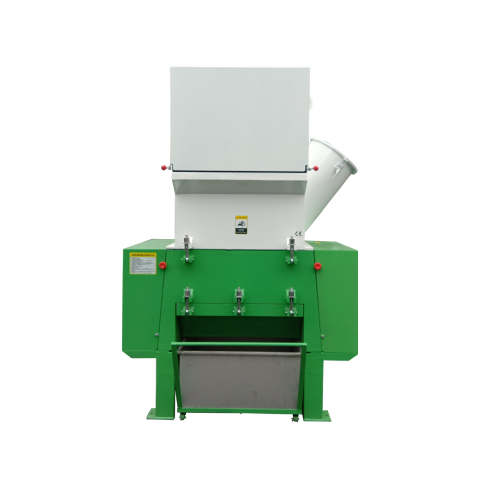
The Core Mechanics of a Water Bottle Crushing Machine
Inside the cutting chamber, brute force meets precision engineering. The operation relies on continuous high-speed cutting rather than just squashing the plastic flat.
Feeding the Chamber
Bottles usually drop in from above via a conveyor belt or a manual hopper. Because plastic bottles are so light and full of air, they sometimes bounce around a bit on top of the rotor before the blades finally catch them. Some systems use force-feeding mechanisms to push the material down faster, which stops the bottles from just dancing around the cutting area.
The Shearing Action
This isn’t a blender, even though it sort of looks like one from the outside. It operates more like a heavy-duty, continuous scissor mechanism. Rotary blades mounted on a heavy spinning shaft interact with stationary knives fixed tightly to the chamber walls. The plastic gets sliced repeatedly. It keeps getting cut until the pieces are small enough to fall through a curved metal screen located at the bottom of the machine.
Wet vs. Dry Operation in a Water Bottle Crushing Machine
Facilities generally choose between running these machines dry or adding water into the mix. Both ways work, but adding water changes the dynamic inside the chamber quite a bit.
Spraying water directly into the cutting chamber of a side-opening plastic crusher acts as a lubricant and cools the blades (which get incredibly hot from constant friction). It also performs a rough pre-wash on the plastic flakes, washing away leftover soda or dirt right at the cutting stage.
| Process Type | Friction Heat | Dust Generation | Blade Lifespan |
|---|---|---|---|
Dry Crushing | Very high | Significant | Shorter |
Wet Crushing | Low (water-cooled) | Minimal | Longer |
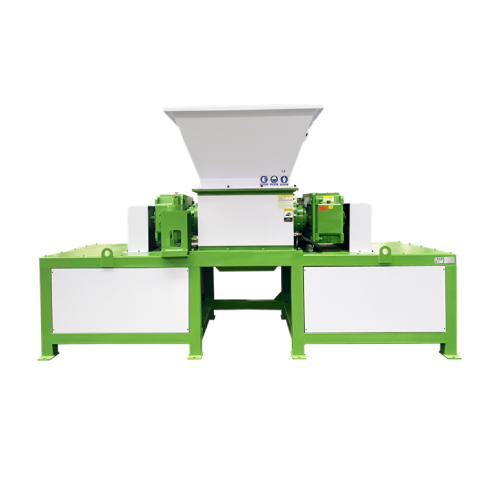
Key Stages in Operating a Water Bottle Crushing Machine
Watching the daily workflow, there is a distinct rhythm to how the material moves through the equipment. A typical cycle looks like this:
Sorting and feeding — making sure rogue metal parts or massive stones don’t sneak into the hopper.
The primary crushing phase where the high-speed slicing happens.
Screening — flakes that are still too large get bounced back up by the rotor for another pass through the blades.
Collection and discharging — moving the finished flakes out via a screw conveyor or an air-blower system.
PREGUNTAS FRECUENTES
Do caps and labels need to be removed before entering the water bottle crushing machine?
It largely depends on the specific downstream process, but usually, no. The machine crushes everything together — bottle body, plastic cap, and paper or plastic label. Later in the recycling line, a float-sink water tank easily separates the heavier PET flakes from the lighter cap and label flakes, since they float while PET sinks.
How small are the plastic pieces after crushing?
The output size is entirely dictated by the screen installed under the rotor. Usually, flakes come out somewhere between 10mm and 15mm. If a different flake size is required for a specific buyer, the maintenance team just unbolts the screen and swaps it out for one with larger or smaller holes.
Is a water bottle crushing machine difficult to maintain?
The mechanical concept is fairly simple, though the physical work is heavy. Changing the blades requires serious muscle and careful gap alignment.

 Spanish
  English
  Russian
  Portuguese
  French
  Arabic
  Japanese
  German