How to Choose the Right Industrial Chiller Machine for Your Factory

Selecting the right cooling equipment is one of those decisions that seems straightforward on paper but quickly becomes a complex puzzle once you step onto the factory floor. It’s not just about “buying a fridge” for your production line. An Industrial Chiller Machine is essentially the lifeblood of thermal management in a manufacturing environment. If the temperature fluctuates by even a few degrees, you might find yourself looking at a bin full of warped plastic parts or a sensitive laser cutter that’s decided to go into emergency shutdown mode. It’s a high-stakes choice where “good enough” usually isn’t.

水冷式チラー

The Core Logic of an Industrial Chiller Machine Selection

Before diving into catalogs, it is vital to understand that every factory has its own unique thermal “personality.” Some shops are humid, some are dusty, and some have strictly limited floor space. When you begin evaluating an Industrial Chiller Machine, the very first thing to nail down is the total heat load. (And honestly, it’s better to slightly over-estimate here; there’s nothing more frustrating than a chiller that runs at 100% capacity all day just to barely keep up).

Calculating Your Cooling Capacity

You have to account for the heat generated by the machinery, the ambient temperature of the room, and even the heat contributed by the chemical processes themselves.

  • BTU/hr or Tons: Most manufacturers will talk in these units.
  • Safety Buffer: Adding a 10-20% buffer to your calculated heat load is a common industry practice to handle those unusually hot summer afternoons.
  • Fluid Requirements: Are you chilling pure water, or do you need a glycol mix to prevent freezing?

Navigating the Different Types of Chillers

In the world of industrial cooling, the “Air vs. Water” debate is eternal. Both have their place, and often, the building’s architecture makes the decision for you.

Air-cooled Chiller vs. Water-cooled Chiller

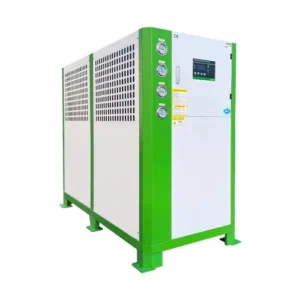
について 空冷式チラー is the most popular choice for smaller to medium-sized setups. It works much like a car radiator, using fans to blow air across condenser coils. It’s simple, it’s self-contained, and you don’t need a cooling tower. However, they do dump all that heat right back into the factory, which might be great in the winter but a nightmare in July.

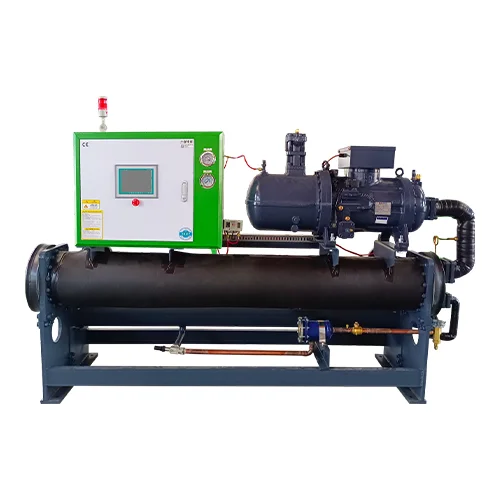
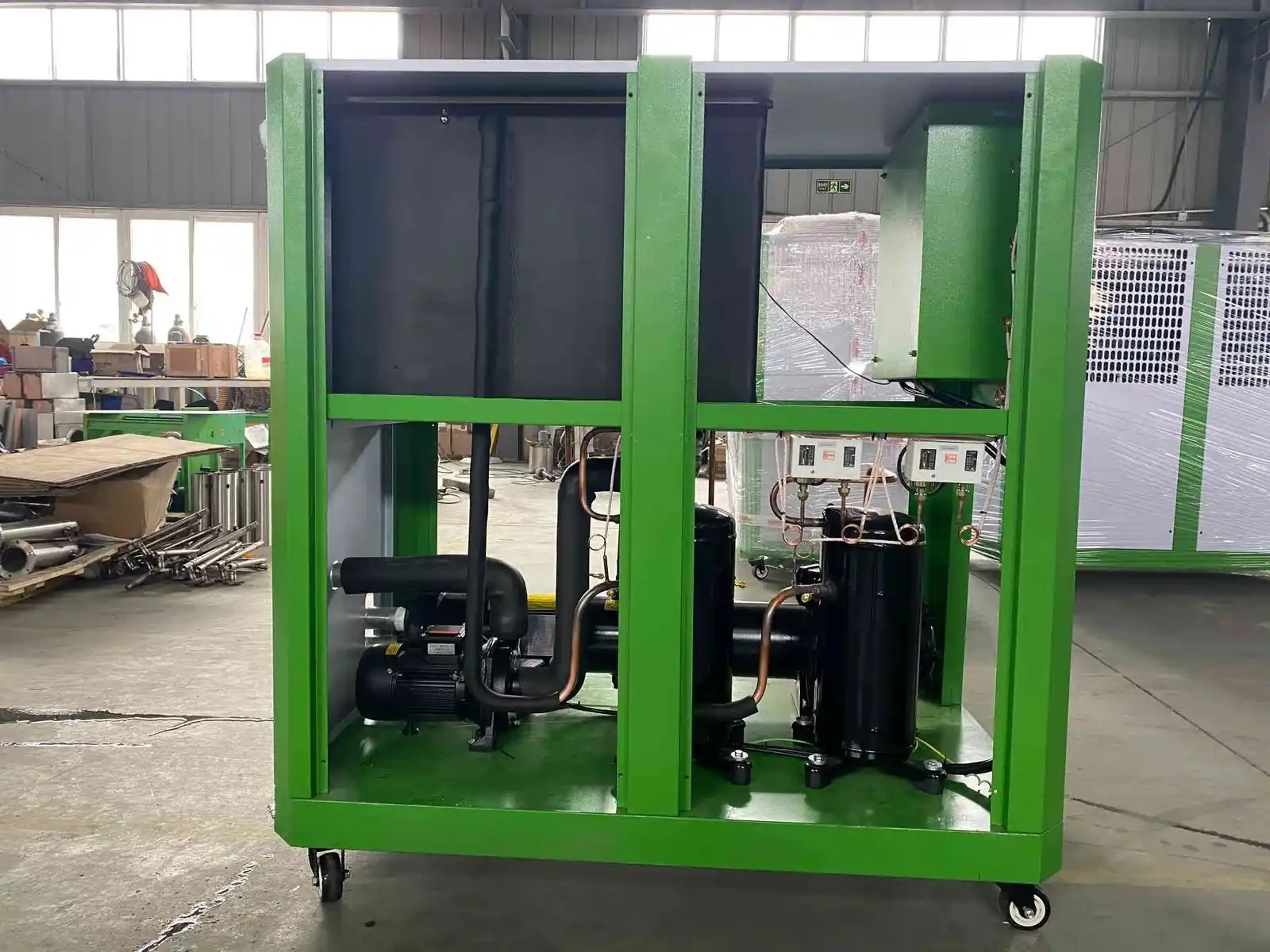
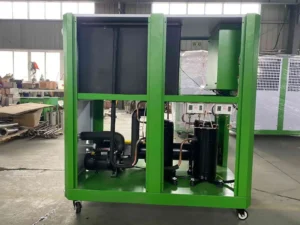
On the flip side, a 水冷式チラー is generally more efficient for massive operations. They use a separate cooling tower to dissipate heat, which means the chiller itself stays quieter and can be tucked away in a small mechanical room. But, you have to deal with water treatment and the extra plumbing costs. It’s a trade-off between initial simplicity and long-term utility bills.

Industrial Water Chiller Machines

Specialized Units for Heavy Lifting

For truly massive cooling demands—think large-scale food processing or chemical plants—the Industrial Chiller Machine market shifts toward screw compressors.

Comparing Chiller Types and Applications

チラータイプ最適長所短所
空冷式チラーSmall/Mid factoriesEasy install, no water towerHeat discharge indoors, noisy
水冷式チラーLarge scale/ContinuousHigh efficiency, quietNeeds cooling tower & chemicals
水冷式スクリュー冷凍機Heavy industrialExtremely durable, stableHigh initial investment
空冷式スクリュー冷凍機High load, water-scarceReliable, modularHigh power consumption

Why Temperature Precision Matters

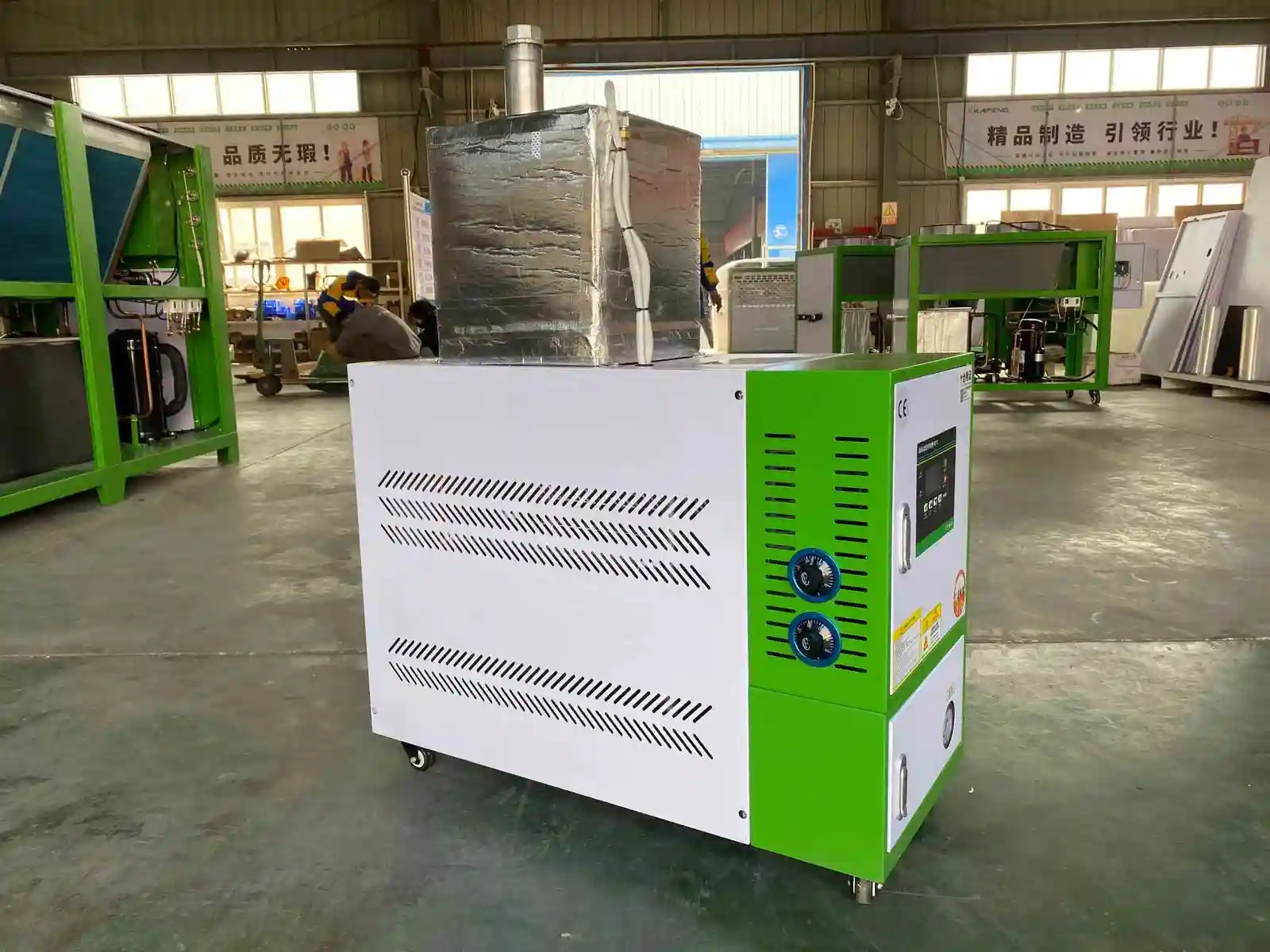
Sometimes, cooling the “process” isn’t just about removing heat; it’s about maintaining a very specific, stable temperature. This is where a Mold temperature machine comes into play, often working in tandem with your chiller. In injection molding, for instance, the chiller cools the mold to solidify the plastic, while the Mold temperature machine ensures the mold is at the perfect temperature before the shot is fired. It’s a delicate dance of thermal control.

金型温調機

The Role of Controls and Connectivity

In 2026, a “dumb” chiller is a liability. You want an Industrial Chiller Machine with a smart PLC (Programmable Logic Controller). Being able to check the water inlet temperature or pressure from a smartphone—or getting a text alert if the compressor trips—is no longer a luxury; it’s a way to prevent thousands of dollars in downtime.

Strategic Placement and Maintenance

Where you put the machine is almost as important as what machine you buy. An Air cooled chiller squeezed into a tight corner with no ventilation will choke and eventually fail. It needs to breathe. Similarly, if your factory floor is oily or dusty, the condenser coils will need frequent cleaning.

  • Clearance: Leave at least 3-5 feet around air-cooled units.
  • Filtration: Use water filters to prevent scaling inside the heat exchanger.
  • Regular Checks: Inspect refrigerant levels and electrical connections every quarter.

Conclusion: Investing in Reliability

Ultimately, choosing an Industrial Chiller Machine is about balancing your current budget against your future production goals. Whether you opt for a compact Air-cooled chiller for a new startup or a massive Water-cooled screw chiller for an established facility, the goal remains the same: steady, reliable performance. Don’t be afraid to ask potential suppliers for references in your specific industry—nothing proves a machine’s worth like a successful track record on a real factory floor.

よくあるご質問

How can a specialized air cooled chiller manufacturer help with custom factory layouts?

A professional air cooled chiller manufacturer doesn’t just sell off-the-shelf boxes; they often provide “split-system” designs where the condenser is placed on the roof while the evaporator stays near the machine. This allows you to keep the noise and heat outside without needing a full water-tower infrastructure.

While they both manage heat, their goals are opposite. A chiller is designed to remove heat as fast as possible to cool a process. A Mold temperature machine, however, is often used to heat the mold to a specific set point or maintain a very precise, warm temperature to ensure the material flows correctly into every corner of the mold.

Refrigerant laws are constantly changing. You should ask about the transition to low-GWP (Global Warming Potential) refrigerants. A forward-thinking air cooled chiller manufacturer will already be offering units compatible with the latest eco-friendly gases, ensuring that your equipment won’t be hit with expensive “phase-out” taxes or maintenance issues in a few years.

目次

お問い合わせ

お問い合わせを送信

jaJapanese

お見積もり